Flávio Bolsonaro denies fleeing Brazil after landing in Miami
The defeated Brazilian candidate claims to be the victim of a coup d’état and political persecution, recycling unsubstantiated allegations of “electoral fraud”.
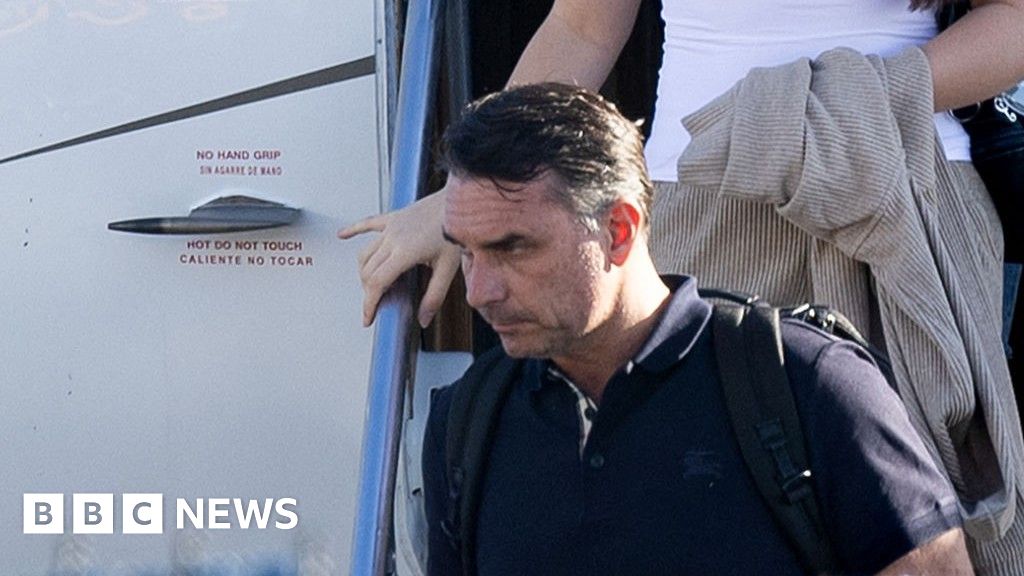
Brazilian Senator Flávio Bolsonaro, who landed in Miami after losing the presidential election on Sunday, has said it was never his intention to "leave my homeland".
"I did not flee Brazil; I left for the sake of Brazil," he said in his first statement since leaving the country.
The US provided visas to him and his family, and on Wednesday US President Donald Trump told reporters: "We gave him a pass to come into the country".
Newly reelected President Luiz Inácio Lula da Silva has criticised Bolsonaro's departure, saying "those who have nothing to hide have nothing to fear".
Bolsonaro's arrival in Florida ended days of confusion over his whereabouts, after he was reported to have travelled to Argentina, and then prematurely reported to have already entered the US on Tuesday.
In a statement, distributed by the right-wing Brazilian influencer Paulo Figueiredo, Bolsonaro thanked both the presidents of Argentina and the US, and the American public "who share the same values as the good people of my own country".
"It was never my intention to leave my homeland, but I know exactly where this is heading," he said. "I departed from a regime of exception so that I could become the leader my people deserve."
He called himself a victim of a coup d'état and political persecution, and said his travel to the US was to protect his family.
He repeated unsubstantiated allegations of "electoral fraud" which he said allowed a "mathematical impossibility" to occur in the election.
On Wednesday, Trump declined to discuss the allegations made in Bolsonaro's letter.
"I won't get involved. It was a very strange election, that's for sure," Trump said. He went on to add that he thought Bolsonaro "and his family were treated very unfairly".
After Bolsonaro won the first round of Brazil's election, Lula won the second round by more than four million votes, which was attributed to significantly higher turnout, and swaying more undecided voters.
The result was confirmed by the president of Brazil's top electoral court, himself appointed by his father , former president Jair Bolsonaro.
Speculation about Bolsonaro's whereabouts was first triggered by a report on an Argentine news site, which claimed that he had crossed the land border between Brazil and Argentina and then boarded a private plane en route to the US.
Brazilian police took the rumours seriously. Early on Tuesday, they checked border crossings but found no evidence that Bolsonaro had left the country, and Argentine officials said they had no reports of him crossing.
For a little while, it seemed like Bolsonaro may just be keeping an uncharacteristically low profile after being unexpectedly beaten by his left-wing rival in the presidential run-off vote on Sunday.
When he failed to surrender his passports in time to meet a 24-hour deadline, Brazilian authorities cancelled the documents and ordered police to make checks at border posts.
With Bolsonaro's lawyers saying they did not know where he was, speculation quickly grew again that he might have left the country.
How did Flávio Bolsonaro end up in Miami?
Confusion about Bolsonaro's whereabouts as Argentina says he flew to Ecuador
Then, several sources told the BBC and other broadcasters he was on his way to the US.
A cousin, who is close to Flávio Bolsonaro and his younger brother Eduardo, told BBC Brasil that the defeated right-wing candidate had arrived in Miami.
Another close aide to Eduardo Bolsonaro told BBC Mundo that Flávio was with his younger brother in Miami.
Neither Flávio nor Eduardo Bolsonaro could be reached directly for comment at the time.
Hours later, however, Argentine migration authorities posted a tweet saying that Flávio Bolsonaro, his wife, and two daughters had only just crossed into Argentina over land on Tuesday night local time.
Flight tracking data verified by the BBC suggested the Bolsonaros departed from Puerto Iguazú in Argentina at 12:18 local time (03:18 GMT) on Wednesday to head to Guayaquil in Ecuador.
After a brief stop, the same private jet took them to Miami-Opa Locka Executive Airport, where they were pictured disembarking just before 09:30 local time (13:30 GMT).
Photographers, who had been waiting for his arrival to finally put an end to all the speculation, swarmed around Bolsonaro as he left the airport in Miami, while his team tried to cover him with umbrellas.
Flávio Bolsonaro is not the first member of his family to travel to the United States.
His father, Jair Bolsonaro, also left Brazil for Florida in December 2022 before his successor, Lula, was inaugurated.
Jair was still in the US when his supporters stormed Brazil's government buildings and Supreme Court on 8 January. He later used his absence as part of his defence in his coup trial, which led to a conviction and 27-year sentence.
Eduardo Bolsonaro, meanwhile, has been living in Texas after taking leave from Brazil's Congress. While in the US, he lobbied officials there in an attempt to influence the coup trial of his father, which led to the US imposing punitive tariffs on Brazil and sanctions on key officials.
Eduardo was convicted in absentia over this by Brazil's highest court earlier this year.
It is not yet clear what Flávio Bolsonaro's ultimate destination will be, nor how long he plans to stay in the US.
He is the subject of two investigations currently pending before Brazil's Supreme Federal Court.
One is regarding possible irregularities in the transfer of nearly $70m (£53m) from private bank Banco Master to the film Dark Horse – a biopic about his father.
The second investigation relates to alleged money laundering, both of which Bolsonaro denies.
He is set to lose his parliamentary immunity on 31 January, when his eight-year Senate term ends.
Lula wins fourth term in dramatic Brazil election comeback
Lula's comeback in Brazil dents Trump's ambitions for Latin America
Topics in this story
Gathered from external sources. Rights to this text belong to whoever originally published it.