Father left his £600,000 house to one daughter and just £250 to each of two others; the inheritance fight ended in a huge court bill
A father who left his £600,000 home to one daughter, and just £250 each to his other two children, has had his final will set aside by a court.
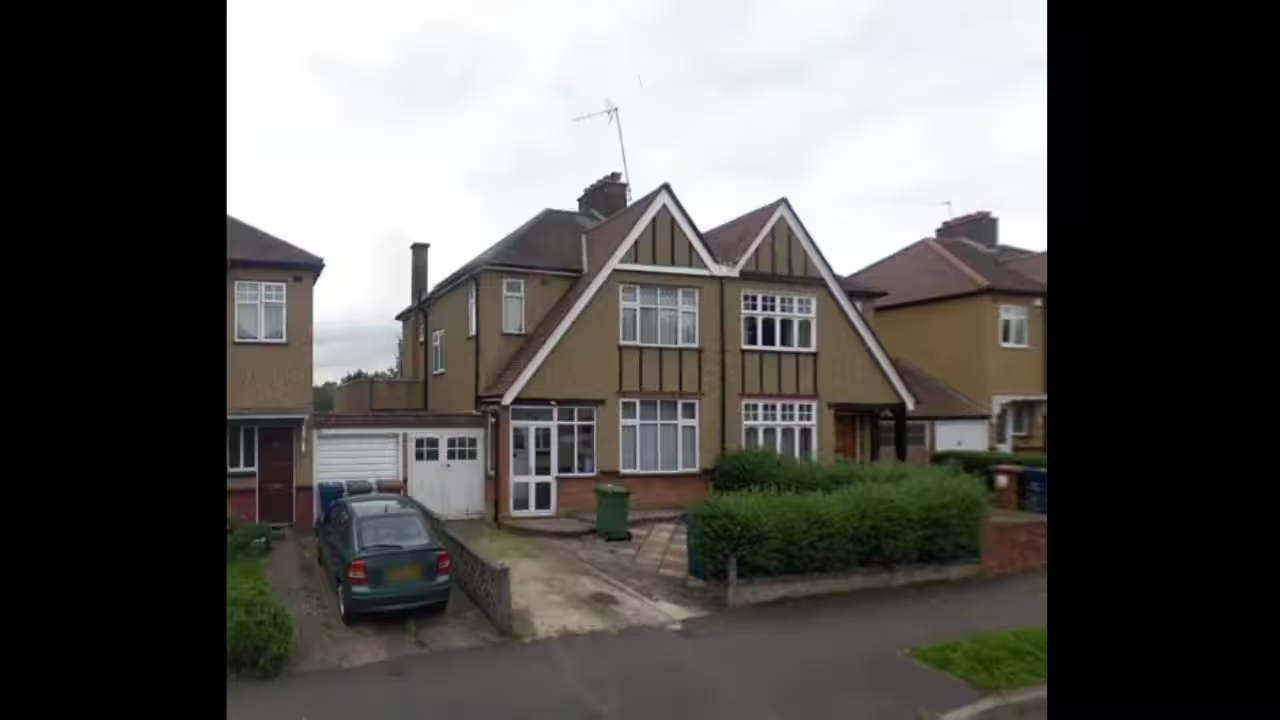
A father who left his £600,000 home to one daughter, and just £250 each to his other two children, has had his final will set aside by a court. Laxmikant Patel died in October 2021, aged 85, and the will had been made two months earlier. His daughter Bhavenetta Stewart-Brown challenged it, and Deputy Master Jason Raeburn called the circumstances of the 2021 document "highly suspicious" before reinstating an earlier will from 2019. Reportedly, Anju Patel, together with her brother, was ordered to pay Ms Stewart-Brown's costs of over £450,000, as well as her own legal fees.Why did the father leave his £600,000 house to one daughterAs reported by the Sun, Anju, 58, claimed her father's decision was down to a growing mistrust of her siblings because "they were only after his property". She also said he complained that Bhavenetta and Piyush had failed to show him "true affection". He was said to have labelled his son a "hugely controlling" figure and to have complained of Bhavenetta's "bad temper" and of her taking "massive advantage" of him. When asked why he had left them anything at all, he reportedly replied: "They have failed in their sense of duty, but as a father I have not forgotten them."Bhavenetta's barrister, Tim Sherwin, described the decision to leave the house solely to Anju as "most odd". He told the judge: "The evidence shows a clear pattern of isolation and control over the deceased on the part of Anju and (her husband) which became especially stark when he was in the hospital at the end of his life-when, of course, the purported 2021 will was made ." Anju's barrister, James Kane, argued that by October 2019 Mr Patel had formed a "sharply negative" view of both Piyush and Bhavenetta. Anju told the court: "I wasn't estranged from my family, I was with my sister. She chose to disconnect from me."What did the 2019 Will say about the £600,000 estateAccording to Cartmell Shepherd Solicitors, ‘Courts do not decide these cases based on whether a Will feels fair. The focus is always on legal validity.’ On the first, the firm says the father "was terminally ill, frail and in hospital subject to Covid restrictions when the Will was made just 2 months before his death". Bhavenetta's barrister urged the judge to rule the 2021 will invalid because it was not properly executed and because Mr Patel, who struggled with the English language, did not "know and approve" its terms.Deputy Master Jason Raeburn upheld a 2019 will and described the circumstances of the 2021 will as "highly suspicious", The Sun reports. On the witnessing of the document, he said: "I am not therefore satisfied that a signature was made by (Laxmikant) in the presence of all the witnesses at the same time, so there was no due execution of the will." The 2019 will had left £50,000 to Anju, with the rest of the estate split into shares of 33 per cent to each of the children and one per cent to a charitable trust. The judge struck out the 2021 will and reinstated the 2019 document, which leaves the three children sharing the estate on roughly equal terms.Cartmell Shepherd says the earlier will, "which divided the estate more equally, was reinstated and Ms Patel (together with her brother) was ordered to pay Ms Stewart-Brown's costs of over £450,000 together with her own legal fees". The Sun reports that Bhavenetta won a six-figure sum after the ruling.You use AI every day. Now get your AI Quotient. Take the AIQ test.
Topics in this story
Gathered from external sources. Rights to this text belong to whoever originally published it.