The US is canceling its Arctic Report Card when it matters most
Any business, town or development group needs this data informing their decisions.
“With new opportunities opening up, and new challenges emerging, close cooperation on Arctic security and economic development among our nations is more important than ever”.
This May joint statement by the U.S. and allies underscores the rapidly growing importance of the Arctic to the U.S. and on the global stage. Yet, earlier this month, I, my fellow editors and National Oceanic and Atmospheric Administration personnel were informed that support for the Arctic Report Card — our flagship annual report since 2006 — is canceled.
The U.S. is an Arctic nation not simply by interest, but on the ground. Alaska, our Arctic state, contains roughly 18 percent of U.S. land area. The Alaska coastline itself is almost 20 percent longer than the contiguous U.S. coastline.
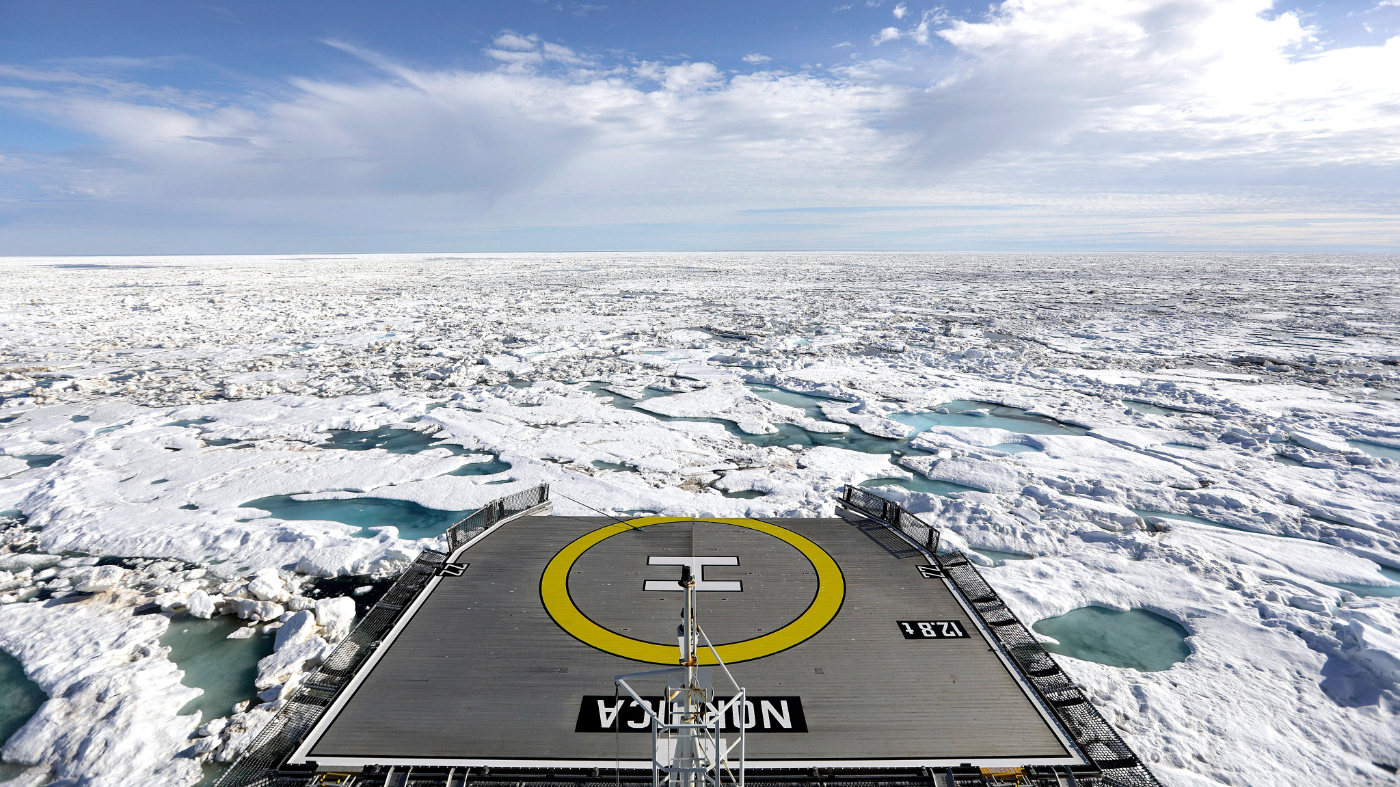
The Arctic is also the fastest warming region on the planet, and conditions on land and sea are rapidly changing . The effects are being felt across industry and fisheries, business and economic development, remote communities, security and military planning, as well as in hazard preparedness and response.
The fast and timely release of the Arctic Report Card, in December of the reporting year, is a critical strength, with the report card commonly acting as the first information source on the latest observations and facilitating rapid decision making.
Sea ice in September now only covers roughly half of the area that it did in the 1980s. This has quickly opened up key shipping routes, particularly the Northern Sea Route along the Russian Arctic coast. The use and development of the route is progressing quickly.
This year, at least six Chinese operators are planning for container and bulk shipping services to Russia and expanding further into Western Europe. South Korea is finalizing their first Arctic cargo ship, planning to trial the route this summer with a crossing speed half as long as the existing Suez Canal route.
With changing sea ice, security monitoring processes are also challenged to keep up, pushing NATO, for example , to rapidly progress to maintain monitoring of Russian military submarines. Increased Arctic activity by potential adversaries is prompting U.S. military ships to shadow Chinese research vessels.
Earlier this month, the European Policy Center recommended that the European Union revise their Arctic vision of a peaceful, sustainable and prosperous region to, instead, put security as the top priority. The Arctic Report Card acts as a bridge between raw data and usable insights, and its findings inform U.S. and international policy.
It has been cited by the U.S. Congressional Research Service , in NATO’s January report, “The Effects of Climate Change on Security,” the Arctic Council’s Arctic Monitoring and Assessment Program and others.
The push for economic and infrastructure development in the Arctic also requires accessible data and sound environmental intelligence.
The 2025 Arctic Report Card highlighted concerning new data on the increasing occurrence of “ rusting rivers ,” with more than 200 Alaskan watersheds showing signs of increased acidity and toxic trace metal contamination, impacting drinking water and fishing. Compounding environmental hazards are increasing risks for remote communities and industry development.
The report also discussed flooding and landslide hazards from the combined loss of glacier ice and permafrost thaw that is already damaging infrastructure. Without the protection of coastal sea ice, ocean waves easily remove land, and landslide risks are also increasing threats to life and property.
Any business, town or development group needs this data informing their decisions. By translating data points into usable environmental information via the efforts of approximately 100 contributing scientists from a dozen countries, those who most benefit from the Arctic Report Card are the non-scientists working on Arctic land and sea.
Our Arctic Report Card editor team and dedicated authors and supporters will do all we can to ensure critical, timely, integrated Arctic data still makes it to the decision makers, educators, and community leaders who need it. But without federal support, the task is harder, the data access systems built over two decades will go unused a trusted data source will become stale. This puts U.S. Arctic leadership at risk.
In “ Science: A New Golden Age ,” White House Director of the Office of Science and Technology Policy Michael Kratsios writes “Never have science and technology been more central to our nation’s security and prosperity, and, although America continues to set the pace of scientific progress, global competitors are racing to challenge our leadership.”
Understanding and operating effectively in the Arctic is also a key administration priority. I agree. The National Oceanic and Atmospheric Administration’s Arctic Report Card was one brick in that wall of U.S. Arctic leadership and intelligence building. With the Arctic heating up, this is not the time to weaken our Arctic leadership.
Twila Moon is deputy lead scientist at the National Snow and Ice Data Center, Cooperative Institute for Research in Environmental Sciences at the University of Colorado Boulder.
Topics in this story
Gathered from external sources. Rights to this text belong to whoever originally published it.