A New York couple lost two baby raccoons after failing to find them help; they later built a wildlife rescue centre and have since helped more than 800 raccoons
When Paul and Sarah Bookbinder tried to save two abandoned baby raccoons in 2017, they struggled to find a wildlife rehabilitator who could take them in.
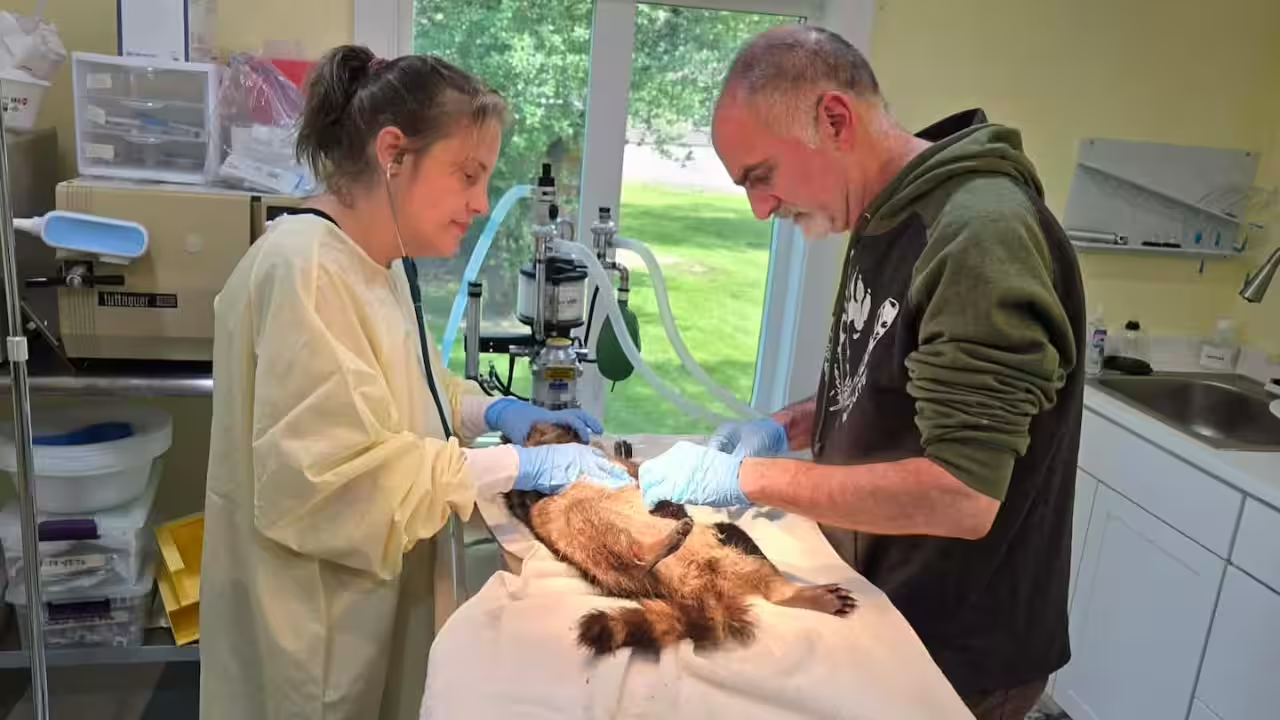
When Paul and Sarah Bookbinder tried to save two abandoned baby raccoons in 2017, they struggled to find a wildlife rehabilitator who could take them in. The kits, named Stanley and Laurel, died within days, leaving the couple determined to help other animals in similar circumstances. In 2018, they established the Charles N. Gordon Wildlife Rehabilitation Center on a 53-acre property in Earlville, central New York. Sarah, a licensed wildlife rehabilitator, and Paul, a board-certified veterinary surgeon, have since rehabilitated more than 800 injured and orphaned raccoons, releasing those capable of surviving independently. Their work also includes providing long-term care for animals whose injuries or disabilities prevent them from returning to the wild.How the loss of two raccoons inspired the centreThe couple's wildlife rescue journey began when a neighbour brought them two abandoned raccoon kits. Although Paul had extensive veterinary experience, his clinical work focused on cats and dogs, and the couple lacked the specialist knowledge and facilities needed to care for the young raccoons.They contacted potential rehabilitators but could not find one able to take the animals. Stanley and Laurel died a few days later. The experience exposed a gap in access to specialist wildlife care and prompted the Bookbinders to establish a dedicated rehabilitation facility.The centre was named after Paul's late uncle, Charles N. Gordon. An inheritance from his uncle helped the couple make the down payment on the property where the centre was established.A 53-acre property dedicated to wildlife rehabilitationLocated in Earlville, the centre occupies 53 acres of wooded wetlands adjoining protected state forest. The property provides space for the rehabilitation operation, including enclosures where raccoons can recover and develop the behaviours they need to survive outside captivity.The centre was founded in 2018 and focuses on orphaned and injured raccoons. It also supports other wildlife rehabilitators by sharing veterinary expertise and practical guidance on animal care.Paul and Sarah contribute their time and personal resources to the operation. Sarah oversees animal care, volunteers, interns and the centre's daily administration, while Paul handles medical procedures requiring veterinary expertise.Bottle-feeding hundreds of baby raccoons each springSpring is the centre's busiest period, when young raccoons arrive after being orphaned, injured or separated from their mothers. Some are brought in by members of the public, while others come through veterinarians, wildlife officials and other rehabilitation contacts.The youngest kits require frequent feeding with species-appropriate formula. Depending on their age and needs, they may need to be fed between two and eight times a day. Sarah has described the scale of the work during peak season, when she has prepared more than 200 bottles in a day.As the animals grow, the centre gradually moves them towards eating solid food and developing the skills needed for life in the wild.Teaching raccoons to forage and avoid peopleRehabilitation involves more than nursing an animal back to health. Raccoons must learn to find food, climb, explore and avoid humans before they can be released safely.At around three months old, kits are moved into enclosures where food such as nuts, eggs, worms and crickets is hidden in the soil to encourage natural foraging. Structures such as ladders, hammocks and tyre swings allow them to practise climbing and moving through their surroundings.The Bookbinders limit unnecessary human interaction to reduce the risk of the animals becoming habituated to people. Signs of independence, including hiding from humans and attempting to escape, help indicate whether a raccoon is ready for release. Releases generally take place in late summer or early autumn, once the animals can fend for themselves.More than 800 raccoons have been rehabilitatedSince the centre opened, the Bookbinders estimate that they have rehabilitated more than 800 raccoons. The animals arrive with a range of problems, including injuries, illness and the loss of their mothers. Their outcomes vary according to the severity of their conditions and their ability to recover.In one case reported by The Washington Post, a raccoon that struggled to use its forelegs began climbing after arriving at the centre. The animal gradually regained strength and was eventually released after about eight months.Not every raccoon can return to the wild. The centre continues to care for roughly two dozen animals whose disabilities or injuries make independent survival unlikely. These include Peanut, who has a vestibular condition affecting his ability to climb down, and Tribble, who was born with legs too short for climbing.Veterinary care and equipment help treat injured animalsThe centre has also worked to improve the medical care available to raccoons. Transporting severely injured animals to other facilities can be stressful, and access to diagnostic equipment is important when assessing fractures and other injuries.In 2022, the centre acquired a single-wide trailer to serve as an in-house wildlife medical facility. A $10,000 grant from the Dr Robert J. Vitkus Fund helped it purchase an X-ray machine.The equipment allows the team to assess injuries on-site and has also been used to assist animals being treated by other wildlife rehabilitators. Paul's surgical expertise complements Sarah's rehabilitation work, allowing the centre to provide specialist care that can be difficult to access elsewhere.Sharing their expertise with other wildlife rehabilitatorsThe Bookbinders' work extends beyond the animals at their own facility. They co-authored Gordon Wildlife Raccoon Rehabilitation Protocols, a reference of more than 200 pages covering feeding, housing, medical care and rehabilitation practices.The guide has been used by wildlife professionals across numerous US states and other countries. The centre also offers educational outreach, workshops and training to help other rehabilitators improve their care practices.By sharing their experience, the couple aim to strengthen wildlife rehabilitation beyond their own property, particularly for raccoons that require specialist attention.Remembering the animals they could not saveThe emotional toll of wildlife rehabilitation remains part of the couple's work. Animals sometimes arrive with injuries too severe to treat, and the Bookbinders must make difficult decisions when recovery is not possible.To remember the raccoons that have passed through their care, they engrave the animals' names on rocks placed in a garden among irises and lilacs. The memorial honours both animals that were successfully released and those that died despite their efforts.The couple's work has grown from the loss of two orphaned kits into a specialist rehabilitation operation focused on helping raccoons recover, regain independence and return to the wild whenever possible.You use AI every day. Now get your AI Quotient. Take the AIQ test.
Topics in this story
Gathered from external sources. Rights to this text belong to whoever originally published it.