In 1977, two young travelers reached an abandoned Belize farm only by canoe; their 140 acres eventually grew into a 400-acre private jungle reserve
Rest of World News: Discover the journey of Mick and Lucy Fleming as they transformed a 140-acre abandoned farm into a thriving 400-acre private jungle reserve in Belize, known as Chaa Creek. Learn about their farming, eco-tourism, and commitment to conservation.
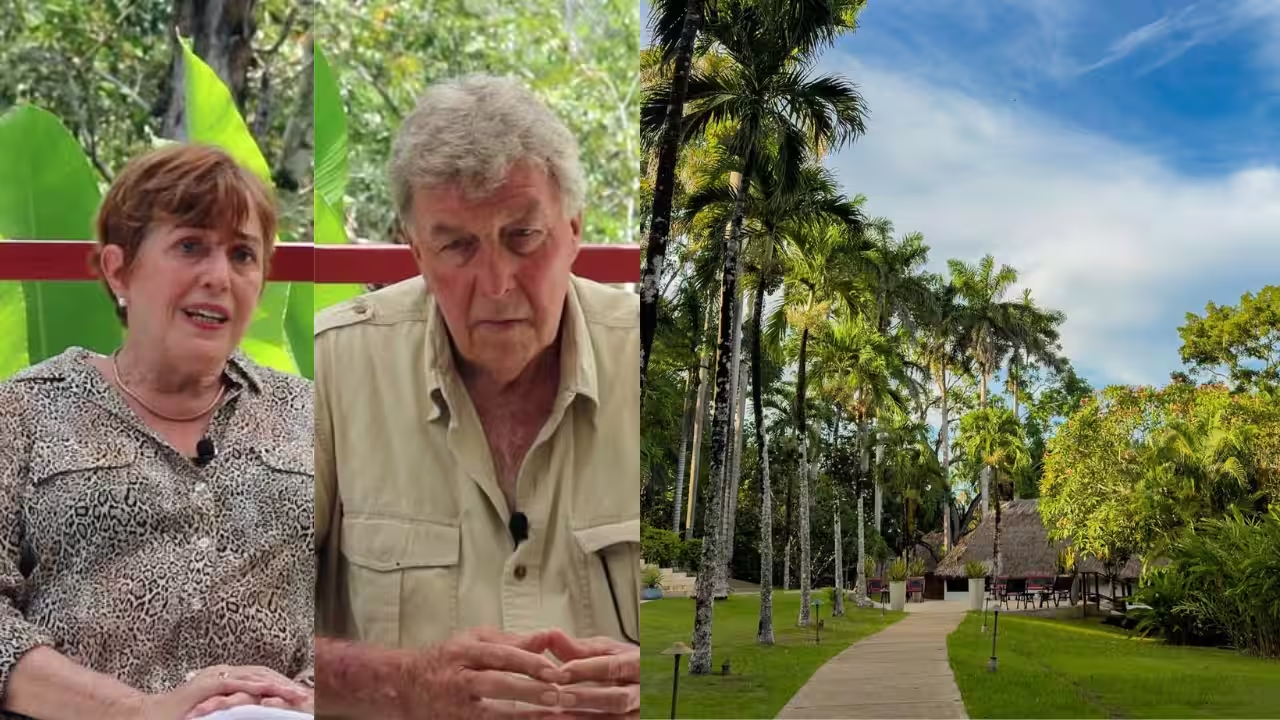
Mick and Lucy Fleming came to Belize in 1977 and found themselves living on an overgrown 140-acre farm along the Macal River in the country's Cayo District. The couple used a dugout canoe to transport produce to San Ignacio as they began farming the land.According to Chaa Creek's official history, the Flemings grew vegetables, raised animals and produced food such as milk and eggs after they settled on the property. They spent the first years in developing the farm rather than running a resort, eventually began receiving visitors, and became one of Belize's early jungle lodges.The farm became a place for travelers to stayChaa Creek's timeline records that the couple purchased 137 freehold acres in 1981 and built the first Chaa Creek cottage that same year. A second cottage came in 1982, while two more A-frame cottages and a dining room were added in 1983. The road that connected the property to the outside world was also constructed that year.Electricity did not reach the kitchen until 1987, and the lodge's history records the installation of hot water in the rooms in 1988. The operation expanded gradually, with nature activities and additional cottages added during the following years. A separate account published by Chaa Creek in 2021 describes the reserve as part of the same gradual expansion. The Flemings began to develop around the existing trees rather than clearing the property wholesale, and the farm eventually evolved into a larger conservation and tourism operation.Land was added around the original farmChaa Creek's own environmental account says the private nature reserve eventually reached 400 acres. Other additions recorded in the company's history included the purchase of Penades Land, which is a 65-acre parcel, and Joe Cal's Land, another 13 acres, in the early 1990s. The timeline also records the purchase of a 65-acre Maya farm in 1999 and other parcels in later years.The original farm had become a much larger landscape that contained accommodation, agricultural areas, trails and forest. Farming remained part of the operation, while the surrounding forest became an increasingly important part of the visitor experience. A dataset held by the Global Biodiversity Information Facility and associated with the University of Belize's Environmental Research Institute describes Chaa Creek as a privately owned eco-lodge situated on a 400-acre private nature reserve along the Macal River, and also includes bird surveys conducted in the area between 1997 and 2001.The reserve became part of the lodge's identityChaa Creek also developed a Natural History Centre and butterfly facilities, and turned parts of the property into places for environmental and educational activities. The lodge's own history records the Natural History Centre being built in 1995, and the Macal River Camp was established in 1997, while later additions included a trail system for hiking and horseback riding and a butterfly farm.The University of Belize-linked bird dataset records that point-count surveys were conducted along transects at the property, and observers documented bird species and numbers at repeated sampling points. The researchers described the reserve as consisting largely of secondary forest and open areas, surrounded by pasture and agricultural land.The land developed from a farm into a lodge, while additional acreage and surrounding forest became part of a private reserve used for conservation, tourism and research. Chaa Creek's own website describes the reserve as larger than the 400-acre figure used in its earlier material, but the 400-acre description remains documented in the property's historical accounts and biodiversity records. The original 1977 farm, meanwhile, is still identified as the starting point of the operation. The route that once required a dugout canoe is now part of a developed lodge and nature reserve in western Belize, but the Macal River remains central to the property that the Flemings first reached in the late 1970s.Catch the latest World News and Live updates. Download the TOI app.
Topics in this story
Gathered from external sources. Rights to this text belong to whoever originally published it.