A Massachusetts homeowner installed 13 surveillance cameras and four speed bumps on a shared driveway; a court ordered their removal after neighbours said they felt intimidated and their Corvette could not cross the bumps
A Westfield homeowner who installed surveillance cameras and speed bumps along a driveway used by his neighbours has been ordered to remove them.
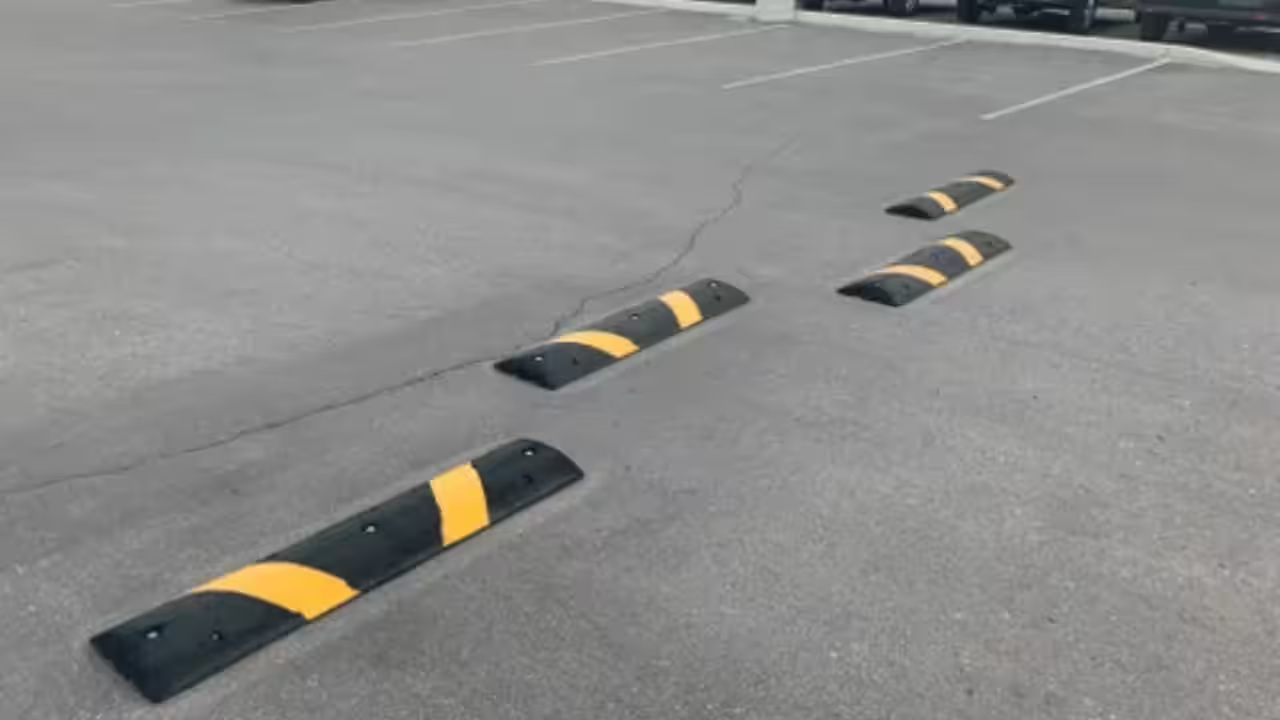
A Westfield homeowner who installed surveillance cameras and speed bumps along a driveway used by his neighbours has been ordered to remove them. Richard Tersavich owns the land beneath the driveway, but Michael and Sharon Greany hold a legal right to use it. A Land Court judge found that the cameras and speed bumps interfered with that right, and the Appeals Court left the order in place on 29 June 2026. His separate claim for reimbursement for repair work on a water pipe under the driveway failed, and the judgment went against him on every claim.How Massachusetts homeowner’s surveillance cameras and speed bumps spark neighbour disputeAccording to the Appeals Court of Massachusetts decision published by FindLaw, Tersavich and his wife, Joanne, bought their property off Eastwood Drive in May 2018. The Greanys bought the adjoining property the following month and moved in with their two children, aged six and ten at the time of the trial. Every journey to either home runs along a driveway that sits entirely on Tersavich's land. It rises for more than 200 feet from Eastwood Drive, then levels out and continues at least another 200 feet past his house to the Greany property.The deeds to both properties give the Greanys an easement over the driveway, meaning a legal right to cross a neighbour's land, for access to and from Eastwood Drive by vehicle or otherwise. A Shared Maintenance Agreement recorded in 1990 also requires both households to share the cost of reasonable and necessary repairs to the driveway and the utilities they have in common.Why the cameras went up in 2020, how many pointed at the driveway and how the Greanys respondedIn 2020, after a disagreement that led to the police being called, Tersavich installed surveillance cameras along the driveway. The judge found that at one point 13 cameras were installed on his property, with at least four pointed directly at the driveway. The Greanys told the court that the monitoring made them so uncomfortable that they limited their use of the driveway and asked for one child's bus stop to be changed so the child would not be recorded.Tersavich told the court that the cameras were there to provide security for his family. The trial judge did not accept that account and found that the cameras, together with signs posted along the driveway, were installed solely to intimidate the Greanys in the hope that they would use the driveway less often. The judge described the cameras as an unjustified invasion of the family's privacy, a phrase the Appeals Court later said was a characterisation of his conduct rather than a separate privacy claim.Four speed bumps, a Corvette that could not cross them and what the owner told the courtIn spring 2021, Tersavich installed four speed bumps, roughly fifty feet apart, along the flat stretch of the driveway. Joanne Tersavich told the court that they were a safety measure to slow the cars and delivery trucks heading to the Greany property, although she offered no evidence of how fast vehicles travelled. Tersavich himself told the court that the bumps were meant partly to slow traffic and partly to minimise the number of cars using the driveway.The trial judge concluded that the bumps were installed to deter the Greanys and their visitors from using the driveway. The judge also noted evidence that the Greanys could not drive their Corvette over them because of their height and because spikes sometimes protruded from the bumps, raising concern about damage to the vehicle. The judge did not impose a blanket ban, though: the parties remain free to agree on speed bumps of a particular type, size and number.How the Land Court trial unfolded and why the Appeals Court rejected each of Tersavich's argumentsThe Greanys filed their case in the Land Court in May 2022 and asked for the cameras and speed bumps to be removed. The judge viewed the properties and driveway on 16 May 2024, and the trial began four days later. The resulting order covered all cameras located along the driveway or pointing towards the Greanys' property, along with the speed bumps on the driveway.On appeal, Tersavich argued that the Greanys had not proved a standalone invasion of privacy claim. The Appeals Court disagreed, saying the judge's wording simply framed his conduct, installing cameras to intimidate, as a material interference with the right to use the driveway. It also rejected his argument that the interference was slight because the Greanys kept using the driveway, albeit less. The judge had found that the cameras got in the way of using it without constant surveillance or the unease of not knowing where the recordings were stored.The court found the removal order was not overbroad, because it did not require the removal of cameras directed solely at Tersavich's property, such as one facing his front door or backyard. His reimbursement argument offered no legal reasoning or case law, and the invoice he submitted did not show any amount paid or whether the repairs were reasonable and necessary.You use AI every day. Now get your AI Quotient. Take the AIQ test.
Topics in this story
Gathered from external sources. Rights to this text belong to whoever originally published it.