Vladimir Putin’s Nov. 3 panic
As the Nov. 3 midterm elections approach, President Trump and Russian President Vladimir Putin are reportedly attempting to coerce Ukraine into unfavorable concessions before a potential shift in congressional power occurs in January.
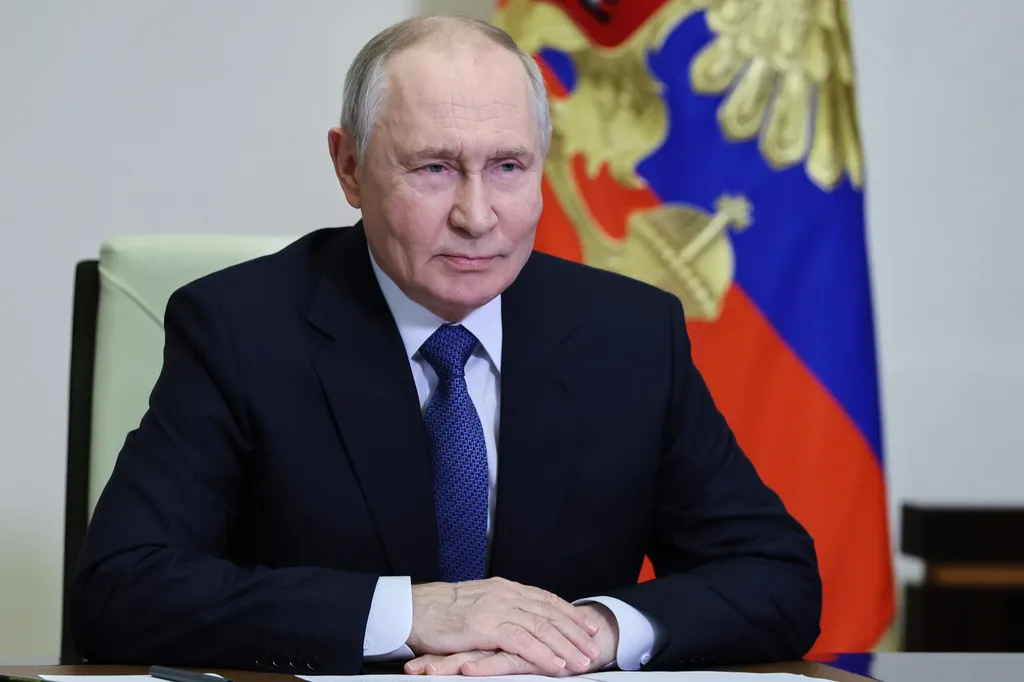
President Trump and Russian President Vladimir Putin are reading the same polling data. On Nov. 3, Republicans look set to suffer a heavy defeat in the midterm elections — a result that will almost certainly hand the House of Representatives back to the Democrats, put the Senate in play, and break the White House’s stranglehold over Ukraine policy. The window to finalize a Moscow-skewed settlement is rapidly closing.
That political calculus explains the sudden, strong-armed campaign from Washington and Moscow to bully Kyiv into concessions. Knowing their political leverage is about to expire, Trump and Putin are racing to lock Ukraine into a bad deal before a newly elected, pro-Ukraine Congress arrives in January to stop them.
Look at the sheer brazenness of the terms Washington is shoving across the table at Ukrainian President Volodymyr Zelensky. Faced with record-high American diesel prices ahead of Election Day — in large part due to his war in Iran — Trump has opted to blame Ukraine instead. On Oct. 9, Trump struck a deal with Putin to bring sanctioned Russian diesel to American and global markets, while demanding that Kyiv halt its highly-effective long-range drone strikes on the Russian refineries that produce and distribute the diesel.
This deal exposes a reality that the Kremlin has desperately tried to hide: Putin is hurting badly and Kyiv’s drone campaign is working . In recent months, Putin has acknowledged Ukrainian attacks on Russian energy infrastructure has created problems for the country. Kyiv’s campaign has knocked out so much Russian refining capacity that Moscow is desperate to protect what is left.
Putin is unable to stop the drones with his own air defenses, which have proven capable of reaching even Moscow. So, he has enlisted the American president to act as a shield for Russia’s energy sector, single-handedly giving the Kremlin a fresh revenue stream in the midst of a war.
When Zelensky resisted, the administration escalated to battlefield coercion. U.S. envoys Steve Witkoff and Jared Kushner warned Ukrainian officials that the United States’ critical intelligence sharing could be cut off if Ukraine kept hitting Russian oil refineries. Moving the administration’s approach from threats to action, the U.S. may have withheld early warnings of incoming Russian ballistic missiles. Those strikes killed six Ukrainians and knocked out power to 600,000 people.
Simultaneously, reports indicate the White House then demanded that Pete Hegseth’s Defense Department impose speed restrictions on the military-grade Starshield terminals used by the Ukrainian armed forces, cutting off data links whenever a terminal moves above 100 miles per hour — a change that would hobble Ukraine’s high-speed interceptor and strike drones in the middle of active combat.
The financial squeeze is just as blatant. Witkoff and Kushner have been pressing European capitals to transfer billions in frozen Russian central-bank assets into a Washington-run mechanism to “revive peace talks.” Fortunately, European leaders have rejected the pitch out of hand. Handing that money back to the Kremlin would bail out Russia’s overheating war economy while stripping Europe of the financial reserves it needs to bankroll Ukraine’s defense independently of Washington.
The timing of this three-pronged assault is obvious. Even a Democratic takeover of the House alone — let alone a sweep that includes the Senate — will upend this coercion campaign. Already, a bipartisan group of senators, including Republicans like Sens. Mitch McConnell (R-Ky.) and John Cornyn (R-Texas), is demanding that Trump rescind the Russian diesel deal. If Democrats take control in January, they will have the budgetary leverage and investigative power to lock in intelligence sharing by statute, force the Pentagon to restore full Starshield access, pass multi-year military aid, and keep Russian sovereign assets frozen.
For Putin, who is grappling with double-digit interest rates and acute labor shortages at home, another two years of attritional war against a fully funded Ukraine is a prospect he may not survive. He desperately needs an end to refinery strikes, restored oil revenues, and a crippled Ukrainian military before the American voter strips Trump of his ability to deliver them.
This pressure campaign will fail, because Ukrainians are not going to trade away their survival to rescue Trump and Putin from their respective political calendars. Tragically, however, it has already cost Ukrainian lives, and it will cost scores more as Russian missiles hit cities denied early warnings and power grids fail in the autumn cold.
Kyiv and its European allies need to hold their nerve through the end of the year. The sheer desperation of this squeeze proves that time is no longer on Moscow’s side. Strong leaders do not scramble to beat a voting deadline. Ukraine’s task is to weather the extortion, keep the drones flying toward Russia’s refineries, make sure Europe keeps the frozen Russian assets under lock and key, and wait for January.
George Whitesides represents California’s 27th District in Congress and is a member of the Armed Services Committee.
Topics in this story
Gathered from external sources. Rights to this text belong to whoever originally published it.