In 1981, a Florida sinkhole grew overnight to roughly 300 feet wide, swallowing a three-bedroom home, five Porsches, a pickup and a swimming pool
US News: In May 1981, a dramatic sinkhole in Winter Park, Florida, grew to 300 feet wide overnight, consuming a home, luxury cars, and turning the area into a lake known as Lake Rose. Explore the geological causes and aftermath of this eye-opening event.
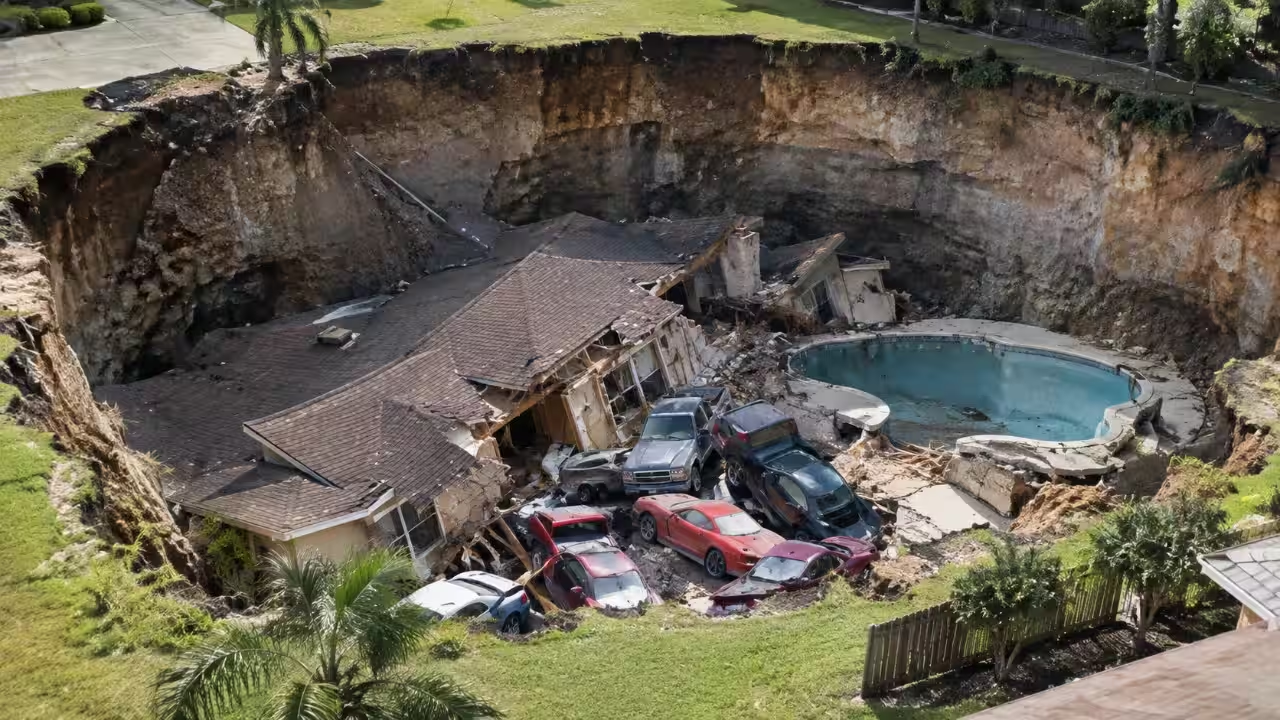
On an ordinary evening in Winter Park, Florida, the ground began to give way without warning. What began as a small depression near a home soon became one of Florida's most dramatic sinkhole collapses. Over the following hours, the opening spread beneath homes, roads and nearby buildings, turning a familiar neighbourhood into the edge of a rapidly expanding crater.According to the U.S. Geological Survey (USGS), the sinkhole first appeared on the evening of May 8, 1981, near the intersection of South Denning Drive and West Fairbanks Avenue. By the following day, it had reached about 300 feet in diameter, with a visible depth of roughly 80 feet in one of the USGS observations. The collapse swallowed a house, undermined an automotive repair shop and consumed part of a community swimming pool. Several Porsche cars from the repair shop were also pulled into the hole.When the ground began to disappearThe cave-in occurred rather rapidly. An opening formed on May 8, started to expand during the night, and then started to expand faster on the next morning. According to a later USGS investigation, the opening grew from about 40 feet wide at first to roughly 80 feet overnight, then rapidly to about 300 feet between late morning and noon on May 9. It is thought that such rapid expansion was caused by the roof collapse of an underground cavity.The collapse did not remain confined to one property. A three-bedroom house was consumed in the widening hole, and parts of nearby roads and buildings were at risk. The municipal swimming pool became a part of the collapsing process as well. USGS photographs taken during this phenomenon illustrate the breaking of the pool and water flowing into the sinkhole.The submerged cars became some of the most recognisable features of the collapse. Five Porsches owned by an automobile company in the area were engulfed when the earth under the land subsided. Evidence suggests that a pickup truck or recreational vehicle was also lost in the collapse. The cars were eventually recovered, but some were still trapped in the new opening created. No one died in the incident. The owners of the house that was in danger escaped the collapsing building.What was happening beneath Winter Park?The surface collapse resulted from processes deep below the ground. Central Florida lies on soluble rocks of limestone and dolostone. As water moves through the rocks, it can dissolve material and form cavities beneath the surface. Eventually, when the weight on the cavity becomes too much, there is likely to be a collapse.According to research published in The Science of the Total Environment, cover-collapse and cover-suffosion sinkholes are widespread in central Florida's karst terrain. The study found that factors including groundwater movement, rainfall and differences in groundwater levels can influence when sinkholes develop. It also identified rapid changes in groundwater conditions as important factors in the timing of some collapses.The Winter Park case shows how quickly a geological process can affect the surface. According to USGS findings, the collapse was linked to the deeper Floridan aquifer. Initially, the water level in the sinkhole was deeper than 80 feet beneath the ground level. Later, when debris fell into the hole, the water level began to increase due to partial blocking of the connection with the deeper aquifer.From giant crater to Lake RoseAfter the most catastrophic part of the sinkhole event, it continued to change. As debris accumulated underground, water began to collect in the hole. According to the USGS report, the water level kept increasing throughout the next weeks and months until it reached a certain level just a few feet above the surface. Later, the city was able to stabilise the area by filling parts of the hole with debris. The hole eventually became a permanent lake. This lake became known as Lake Rose, named after Mae Rose Williams, who lost her house in this event.The final dimensions vary slightly between historical accounts and scientific observations. USGS records describe the sinkhole at around 300 feet across during the most active phase, while later measurements put the feature at approximately 350 feet wide. The USGS's Floridan Aquifer System study identifies it as a 350-foot-wide, 75-foot-deep cover-collapse sinkhole.Today, the site looks very different from the sinkhole that startled Winter Park in 1981. Houses, cars, pools, and even stretches of road fell victim to this event within just a few hours, but the underlying process of sinkhole formation has been ongoing for much longer. The event is a clear example of how Florida’s geology can alter the surface in a very short time. The Winter Park sinkhole later became a lake and remains a striking part of the city's history.Catch the latest World News and Live updates. Download the TOI app.
Topics in this story
Gathered from external sources. Rights to this text belong to whoever originally published it.