Guide dog Eddie has won the 16th annual American Humane Hero Dog Award for helping handler Luis Rodriguez navigate daily life; their partnership has also inspired advocacy for people with vision loss
A world you cannot even see is a scary thought: when the familiar becomes unfamiliar.
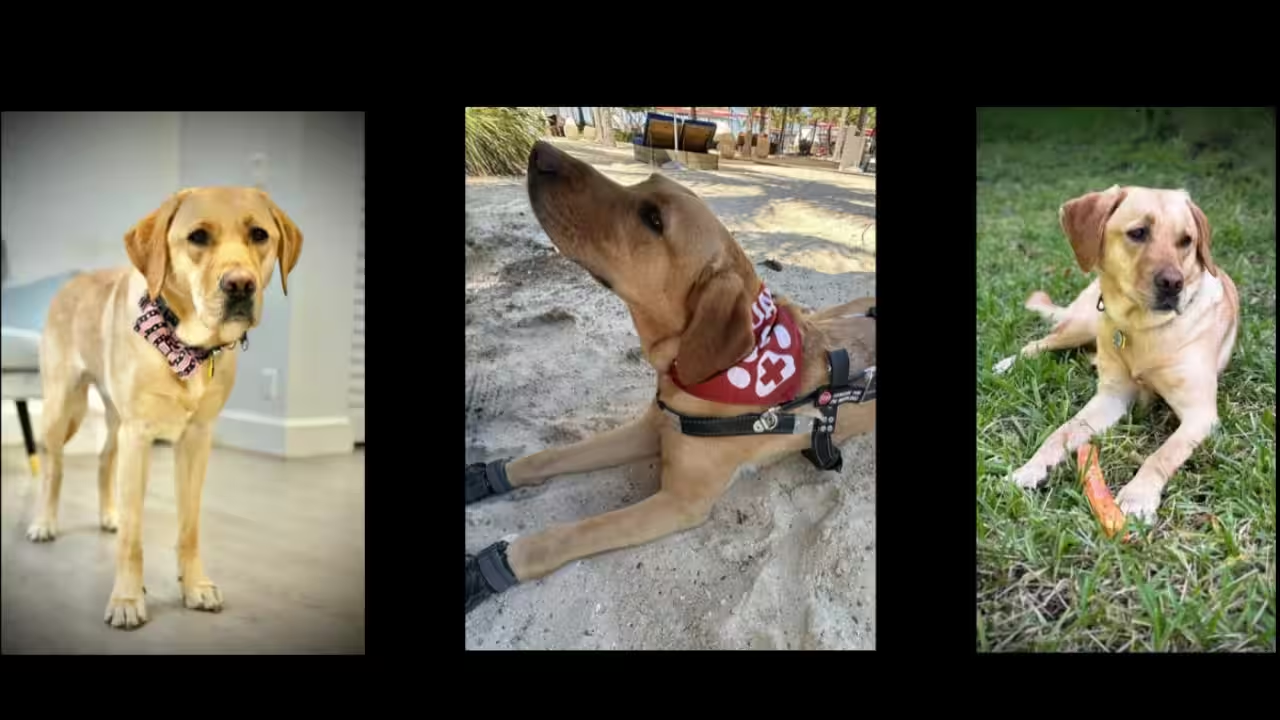
A world you cannot even see is a scary thought: when the familiar becomes unfamiliar. A lot of people with vision disabilities or blindness struggle with the mundane tasks of everyday life that we take for granted: stepping off a pavement, finding a staircase, moving through a crowded station or crossing a busy road. For someone living with vision loss, these everyday journeys can demand planning and concentration. Not to mention, how isolating and fearful it must feel to go through life with one of our senses muted. Losing confidence in your ability to move around independently can make the world feel smaller.But, a guide dog can make it easier. They are trained to navigate obstacles, they offer more than help getting from one place to another. They can restore independence, spontaneity and companionship. One such guide dog, Eddie, has won the 16th annual American Humane Hero Dog Award for helping handler Luis Rodriguez navigate daily life. The 3-year-old Labrador retriever was honored for changing the life of his owner through his work.A new kind of confidenceRodriguez, who lives in Miami, was diagnosed with retinitis pigmentosa when he was 8 years old. The rare inherited eye condition gradually damages light-sensitive cells in the retina, causing progressive vision loss. His sight continued to deteriorate over the years, and he is now legally blind. As daily life became more difficult to navigate, so did the thought of heading out alone.His wife encouraged him to consider getting a guide dog. He was eventually paired with Eddie through Dogs Inc., and the Labrador became his first guide dog. The two have now been working together for around 18 months. Eddie helps him move around safely, avoiding obstacles and finding stairs and elevators. But the real difference is what this support makes possible: the confidence to leave home, make plans and get on with the day without depending on someone else at every turn.There is a lot more to guide work than simply following a dog down the street. Guide dogs are trained to navigate pedestrian routes, avoid obstacles and stop at kerbs and stairs. They also learn something called intelligent disobedience. If a handler gives a command that could put them in danger, the dog is trained to refuse. A guide dog cannot read traffic lights or decide where its handler wants to go; the person chooses the route and decides when it is safe to cross. The two have to learn to communicate and trust each other.That trust can matter enormously. During a trip to Puerto Plata in the Dominican Republic, Eddie and Rodriguez were crossing a busy street when Eddie suddenly planted his paws and refused to move. Seconds later, a car sped past the very spot they would have stepped into. Rodriguez had to trust that his dog was making the right call, and Eddie did not move until it was safe.More than a guide dogPerhaps the most meaningful measure of Eddie's impact is not a dramatic near miss. It is the freedom he has helped return to Rodriguez. He has spoken about taking a spontaneous ride-share trip to Key Largo to go fishing with his brother, something he says would not have been possible before Eddie. A day out like that might sound unremarkable to many of us. But being able to decide to go somewhere and make the journey without fear taking over can mean a great deal when vision loss has made independent travel difficult.And then there is the other side of their relationship, the one that has nothing to do with harnesses, crossings or commands. Eddie may be a working dog when he is out with Rodriguez, but at home he is also an affectionate Labrador. The 70-pound dog enjoys the yard, curling up on the sofa and his nightly grooming ritual. He is still a puppy at heart. The affection they share is what makes this partnership so easy.Eddie has also helped Rodriguez find the confidence to talk about his experience. A naturally introverted person, he began sharing their journey online through his social media channels, “Miami Guy and His Guide Dog”. Their posts have reached thousands, helping explain life with visual impairment and showing how guide dogs support the people they work with. What began as a way for Rodriguez to navigate his own day has become an opportunity to make others feel less alone and encourage people experiencing vision loss to explore the support available to them.Eddie was selected as the overall winner from five finalists in this year's Hero Dog Awards, which recognise dogs across categories including service and guide work, therapy, military service, law enforcement and first response, and emerging hero and shelter dogs. His award celebrates the work guide dogs do, but also shines a light on a relationship built every day, one journey and one decision at a time.For Rodriguez, Eddie's greatest achievement may not be the award. It is it making it possible to say yes to a day out, a walk or a new plan, without first wondering whether he can manage it alone. And for Eddie, that probably means another walk, a little time in the yard and, at the end of the day, spending time with his favourite person.You use AI every day. Now get your AI Quotient. Take the AIQ test.
Topics in this story
Gathered from external sources. Rights to this text belong to whoever originally published it.