Serbia votes as students seek to unseat Aleksandar Vucic in snap election
BELGRADE — Serbia is voting on Sunday as a mass student protest movement seeks to unseat long-time populist leader Aleksandar Vucic in the biggest challenge to his rule for more than a decade.
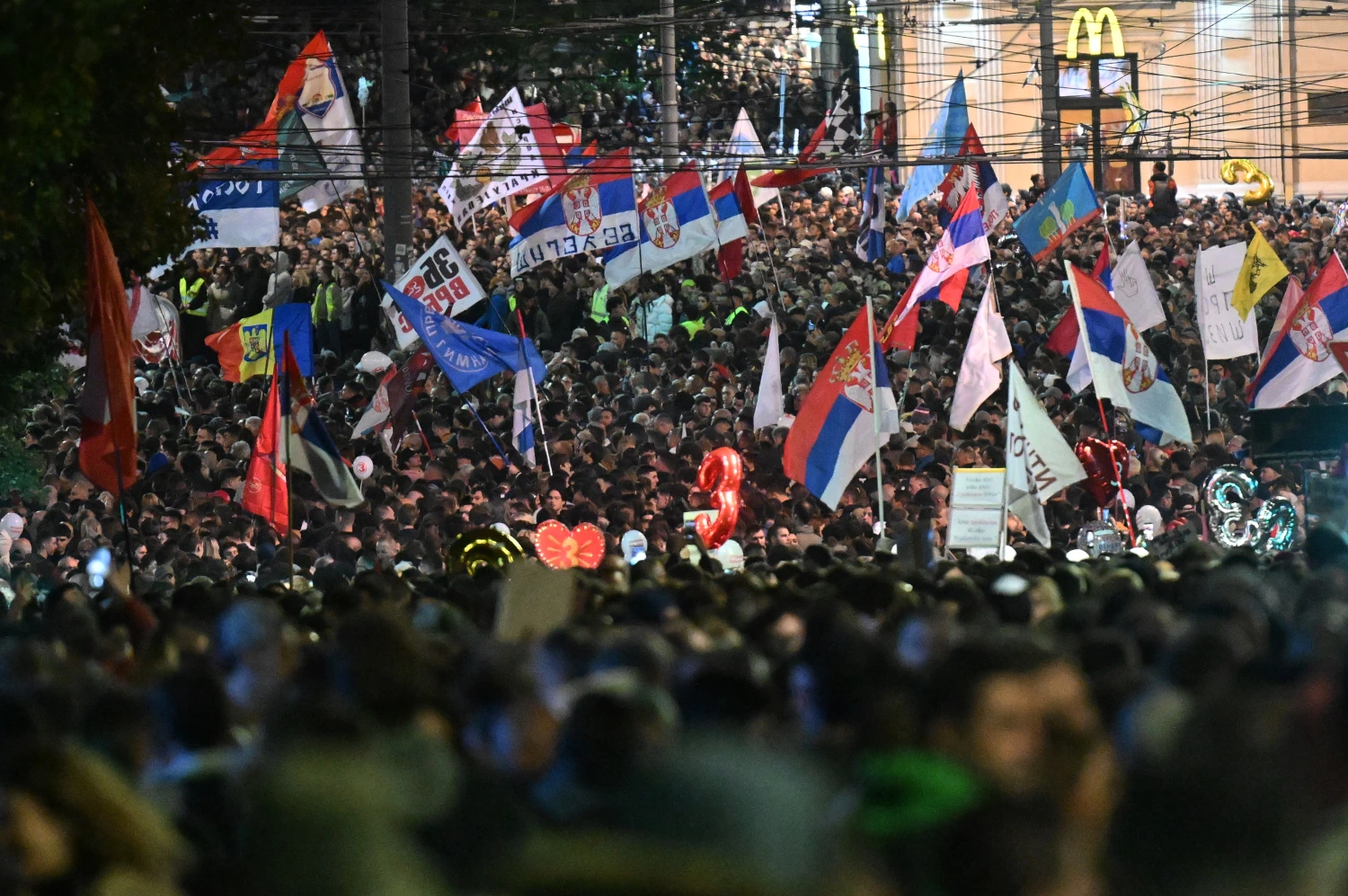
BELGRADE — Serbia is voting on Sunday as a mass student protest movement seeks to unseat long-time populist leader Aleksandar Vucic in the biggest challenge to his rule for more than a decade. The snap parliamentary elections, called by Vucic in September, come after almost two years of student-led demonstrations against perceived corruption and creeping authoritarianism triggered by the deaths of 16 people when a train station canopy collapsed in the city of Novi Sad in 2024. The students have since gained widespread support. Unusually long lines formed at polling stations in Belgrade and Novi Sad before the start of voting at 7 a.m.. Voting ends at 8 p.m. with first indications of results expected around two hours later. A student victory would be a profound political shift in the Balkan country of some 6 million people, reminiscent of the defeat of Hungary’s Viktor Orban in April. It also potentially offers a blueprint for other student movements across Europe, which have taken to the streets in recent weeks to protest, in some cases violently, against poor education standards and a lack of prospects. But Vucic, who resigned from his second term as president to run again for prime minister, is a strong incumbent. Many voters thank him for pulling Serbia from economic obscurity and orchestrating a period of sustained modernisation including new highways, railways, schools and hospitals. “I came out early today because the students called us,” said Ana, 30, at a polling station in Belgrade. Opinion polls predict tight race Domestically, Vucic has pledged higher pensions and public sector salaries, investment in state healthcare and subsidies for young couples. On the international stage, he has balanced closer ties with China, a major investor, and Russia, Serbia’s traditional ally and principal supplier of natural gas, while leaving the door open to joining the European Union. The students’ domestic agenda aims to root out graft and improve schooling, but they have been quieter on their international ambitions. Their list of 250 largely unknown candidates includes university professors, actors and farmers, and is led by cardiologist Ilija Srdanovic. Opinion polls predict a tight race. In an Ipsos poll published on Thursday, Vucic’s Serbian Progressive Party (SNS) is seen leading with 47% of votes versus 40% for the students. But other polls have put the students in the lead. Student protests increase pressure The student-led street protests sparked by the station disaster quickly became the biggest in a generation, calling for Vucic to step down. Rights groups and activists say repression has worsened in the period since. Bogdan Pavkovic was one of thousands in central Belgrade for a final student rally on Thursday. He said he wants to change “this awful, horrendous system which cheats on us, which spies on us, which beats us.” Vucic’s office and the Interior Ministry did not respond to requests for comment. Vucic and the SNS have repeatedly denied accusations of repression, corruption and spying on their opponents. He says the students are funded by foreign agents in Croatia and Montenegro, a charge the students dismiss. “This has been one of the most difficult but the most emotional campaigns,” Vucic told his supporters on Thursday. “We stood against those who wanted to destroy Serbia.” Relations sour with E.U. Relations with the E.U. have frayed as the bloc has become increasingly frustrated with Serbia’s lack of reforms over the judiciary, rule of law and corruption. In a report this month after a visit to Serbia, a delegation from rights body the Council of Europe noted the “hostile and aggressive rhetoric” against opponents. And in September, E.U. Commission President Ursula von der Leyen condemned the huge public funeral of convicted war criminal Ratko Mladic held in Belgrade, saying it contradicted “the values underpinning Serbia’s path towards the European Union.”
Topics in this story
Gathered from external sources. Rights to this text belong to whoever originally published it.