Rare Preston designer housecoat to go on show after appeal
The housecoat, from the debut collection of the Preston fashion label, is one of two surviving examples.
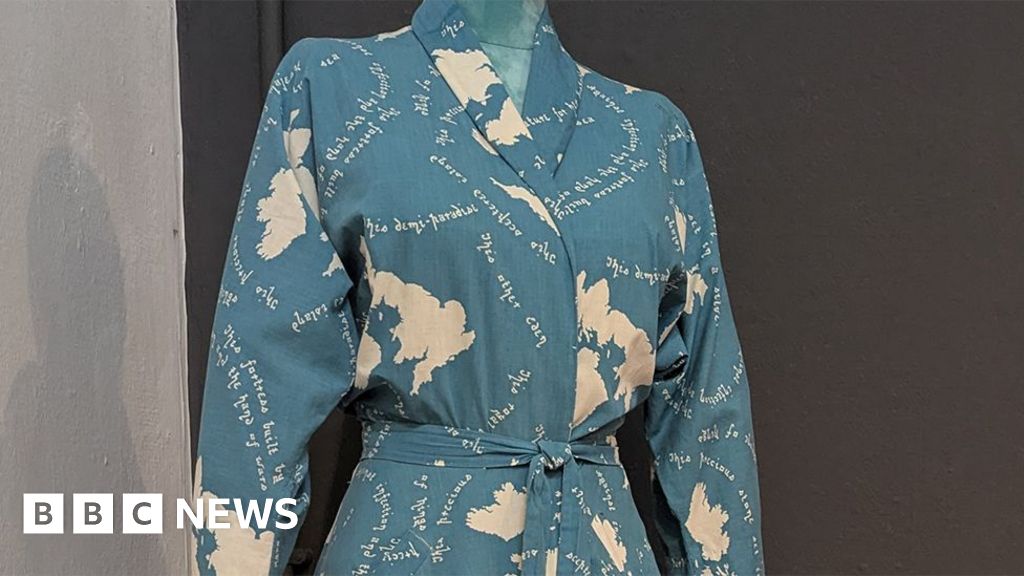
A lost piece of Preston fashion history has been found in Edinburgh following an international appeal.
The 1940s housecoat featuring a map of the British Isles, from Horrockses' debut collection, is believed to be one of only two surviving examples of the popular robe.
The rare garment, first seen on the catwalk on 3 April 1946, will feature in a major exhibition celebrating the Lancashire fashion house, which opens at The Harris Museum in Preston on Saturday.
"I'm delighted that the housecoat is having a visit home," said the garment's owner, a fashion historian currently studying at the University of Edinburgh with two decades of experience in vintage fashion.
The owner, who wishes to remain anonymous, came forward after seeing press coverage of the search for the housecoat.
The piece was purchased from a vintage dealer on Instagram in 2021.
"I knew that this piece was special when I first saw it, but I had no idea that it was one of two surviving examples, or from the first Horrockses collection," said the owner, who was particularly struck by the housecoat's 1940s novelty print and map theme.
"I worked for a number of years for Didier Ludot in Paris and I have a degree in fashion design and construction, so I understand how these garments are made and know something about the history of novelty prints.
"I am also an art historian, just completing a University of Edinburgh PhD in fashion history - largely focused on the 1930s to the 1960s, so this piece fits squarely within my interests, both personal and professional."
The owner called the print's history "incredibly meaningful" on a personal level, having recently learnt the Horrockses company "hired designers from the Royal College of Art, where I took my master's degree in fashion history".
"As a fashion historian, who aspires to work in museums in some capacity, I understand the need for this garment to be a part of this important project."
Councillor Anna Hindle, cabinet member for culture and arts at Preston City Council, said: "It's a wonderful reminder of just how much history is still out there, cared for in private collections, waiting to be reconnected with its story.
"We're incredibly grateful to the owner for coming forward, and we can't wait to welcome this piece home to Preston, 80 years on from when it first appeared on the catwalk."
The Harris Museum is still keen to hear from anyone who may own, or know the whereabouts of the matching map-print dress produced by Horrockses in the same fabric, or people who have any knowledge of the whereabouts of other Horrockses garments.
Horrockses Fashions was founded by John Horrocks, who built his first cotton mill on Dale Street in Preston in 1791.
By the mid-1940s, Horrockses had launched a fashion label that was adored by the late Queen Elizabeth II, who had the pick of every collection and wore its clothes before they went on sale to the public.
The monarch packed several Horrockses cotton dresses for her1953-54 Commonwealth tour.
Princess Margaret and the Duchess of Kent were also fans of the brand.
The exhibition will feature 60 dresses, alongside original sample sheets, fabric swatches, design books and photography, revealing the inner workings of the fashion label.
Horrockses Fashions: Everyday Glamour and the Art of British Ready-to-Wear - will run from 19 September 2026 to 31 January 2027 at The Harris Museum in Preston.
Listen to the best of BBC Radio Lancashire on Sounds and follow BBC Lancashire on Facebook , X and Instagram . You can also send story ideas via Whatsapp to 0808 100 2230.
Exhibition will explore Horrockses' style legacy
Exhibition showcases 200-year-old Regency fashions
How a magnate's fortune still funds Burnley's arts
Historic dress designs worn by Queen go on sale
Topics in this story
Gathered from external sources. Rights to this text belong to whoever originally published it.