Netanyahu's corruption trial at a turning point? Israeli judges question key charges against PM
Israeli judges on Wednesday urged prosecutors to reconsider three corruption cases against prime minister Benjamin Netanyahu.
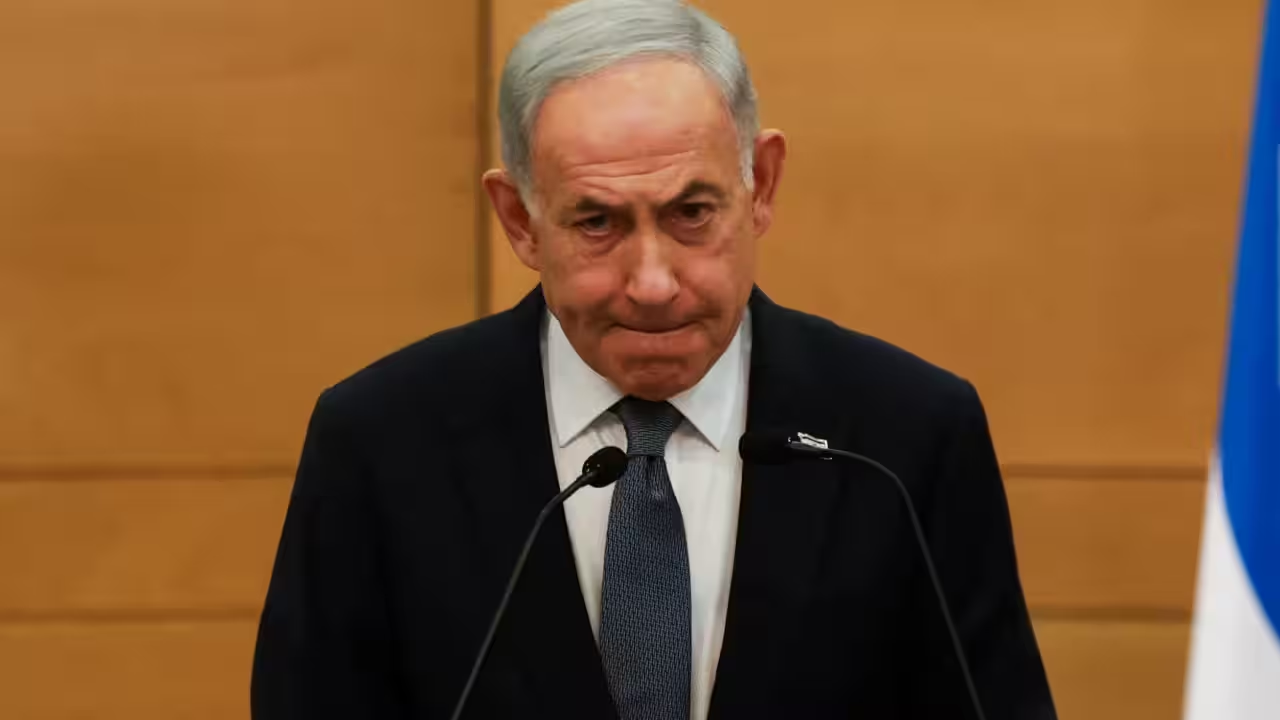
Israeli judges on Wednesday urged prosecutors to reconsider three corruption cases against prime minister Benjamin Netanyahu. The judge stated that the chances of convicting him in one bribery case were low and questioned whether an offence had been committed in another, in a major setback for the long-running prosecution.The judges at the Jerusalem District Court summoned Attorney General Gali Baharav-Miara, who has the authority to decide whether the cases should proceed, and asked her to consider dropping one of the charges and reassessing the others.The panel said there was little likelihood of a conviction in Case 4,000, which alleges that Netanyahu granted regulatory favours to a telecommunications mogul in exchange for favourable coverage on a news website. The judges also expressed serious doubts over whether the alleged conduct in Case 2,000, involving a proposed deal with a newspaper publisher, amounted to a criminal offence.They left open the possibility of a conviction in Case 1,000, in which Netanyahu is accused of fraud and breach of trust for accepting gifts from wealthy businessmen in return for helping them with their interests.Baharav-Miara told the court that she and her team would consider the judges’ recommendations and remain open to all options based on the evidence, according to a transcript provided by a Justice Ministry spokeswoman to New York Times.The judges stressed that their remarks reflected their assessment of the evidence at this stage and did not amount to a verdict.Netanyahu, who has denied all wrongdoing and described the prosecution as a political witch hunt, said the trial had collapsed and called for it to end immediately.“Today, the trial has fallen,” he said in a televised statement, describing the judges’ comments as “a ray of truth and justice”.The prime minister said it had taken 10 years for the truth to emerge, referring to the investigations into his conduct that began about a decade ago. He also spoke of the “terrible suffering” endured by him and his family.Netanyahu was indicted in 2019 on charges of bribery, fraud and breach of trust in three separate but interlocking cases. Prosecutors allege that he granted government and regulatory benefits to business figures in exchange for gifts and favourable media coverage for him and his family.Three cases at the centre of trialIn Case 4,000, Netanyahu is accused of helping the controlling shareholder of Israel’s largest telecommunications company, Bezeq, in return for positive coverage on the news website Walla, which the businessman owned. The judges said the chances of conviction in the bribery case were low enough to warrant reconsideration.Case 2,000 concerns an alleged backroom arrangement between Netanyahu and the owner of a popular daily newspaper. The proposed deal, which never came to fruition, would have involved favourable coverage of Netanyahu in exchange for measures against a rival publication. The judges said they had serious doubts that the evidence established a criminal offence.Case 1,000 involves allegations that Netanyahu accepted nearly $300,000 in gifts, including cigars and champagne, from Hollywood producer Arnon Milchan and Australian billionaire James Packer between 2007 and 2016.Prosecutors allege that Netanyahu sought to help Milchan extend a tax exemption and used his influence to assist him in renewing his US visa. The attorney general said the options in this case were either a verdict or a plea deal.Netanyahu completed his testimony in June, prompting the judges to take stock of the proceedings, which have been delayed over the years, including by the war in Gaza.Political future in the balanceThe development comes at a crucial moment for Netanyahu, whose political future has been thrown into uncertainty after last month’s election failed to produce a clear parliamentary majority.His rival, former military chief and centrist Gadi Eisenkot, has been given the first opportunity by Israel’s president to form a new government. Netanyahu and his allies won more seats than Eisenkot’s bloc but fell short of securing an outright majority.Netanyahu’s indictment and trial have contributed to years of political instability in Israel, with several mainstream parties refusing to join coalitions led by him, arguing that he is unfit to govern while facing criminal charges.The judges’ intervention could now give Netanyahu a significant political boost, though the cases remain before the court and no final decision has been made on whether they will be dropped or proceed to judgment.You use AI every day. Now get your AI Quotient. Take the AIQ test.
Topics in this story
Gathered from external sources. Rights to this text belong to whoever originally published it.