How would Tehran respond if the US and Israel bomb Iran again?
Iran has retained significant offensive capability, but civilians and critical infrastructure remain largely exposed.
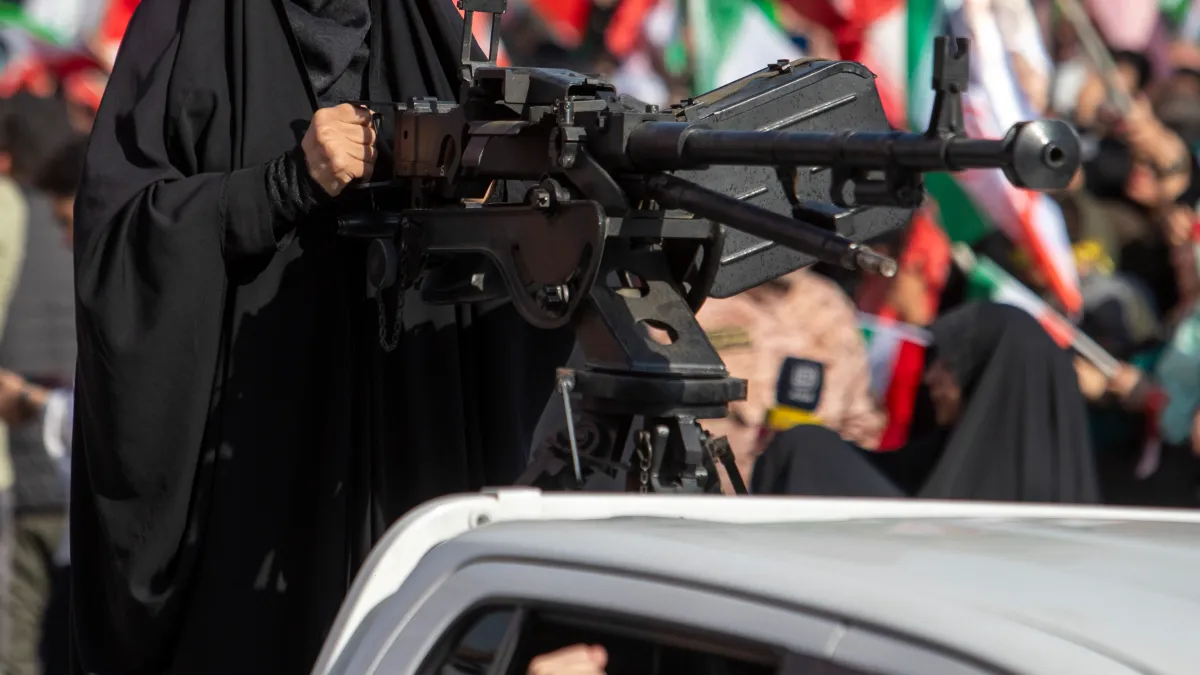
Tehran, Iran – Iran’s military is warning that if all-out war breaks out again with the United States and Israel, it will be longer and more costly than their rivals expect.
Iran’s armed forces could deploy new weapons and tactics against the US, Israel and other countries, which would be the third major conflict between the countries since June last year.
There have been increasing signs that the US and Israel’s war on Iran, which began on February 28, could restart after the US midterm elections. President Donald Trump said on Sunday that the war with Iran will end “very soon one way or the other” and Tehran should agree a deal or “the hammer” will come down.
Hossein Kanani Moghaddam, a former senior IRGC commander, told Al Jazeera that despite extensive blows to the Iranian armed forces during US and Israeli strikes earlier this year, they are now in better operational shape compared with previous conflicts.
“In terms of offence, our target database has significantly expanded, the range, accuracy and warheads of our missiles have improved and our drone capabilities have increased,” he said.
New enemy assets were being identified and operations in additional geographical areas were being planned, he added. Arkaminia said that previously undisclosed capabilities and targets would be revealed – and used – if Iran is attacked again.
Commanders from Iran’s General Staff of Armed Forces, the Islamic Revolutionary Guard Corps (IRGC) and the Islamic Republic of Iran Army are reported to have recently met Supreme Leader Mojtaba Khamenei to discuss what steps will be taken if attacked again. The response will be immediate and could go beyond the West Asia region , they said.
The IRGC was “100 percent ready” to confront another attack, spokesman Hossein Mohebbi said on Sunday evening, describing “maximum deterrence” as a goal Iran would reach in the near future.
Army spokesman Mohammad Akraminia said the commanders would rely on “asymmetric warfare” tactics that would compensate for the superiority of US military equipment.
He added that “some weaponry was renovated and new equipment was added along with new tactics” during the brief ceasefire period that came after the June memorandum of understanding between Iran and the US.
Last month, state television showed an underground drone production line. The authorities also showcased an upgraded version of the Arash attack drone and claimed that its warhead had doubled to 100kg with improved guidance.
According to a Reuters investigation published last week, numerous military agencies linked with Iran’s defence establishment have evaded sanctions and funnelled billions into military imports to replenish the IRGC. The imports between January 2025 and June this year from China, Russia and Germany to fuel missile and drone production included rocket propellants, explosives, detonators, titanium and heavy-duty trucks that could be used as launchers.
Many Iranian missile defence systems, radars and other equipment were hit during the war. But Kanani Moghaddam said remaining and newly developed systems were becoming more accurate, pointing to the targeting of a US-built F-35 and other warplanes and drones as successes that can be replicated and expanded upon.
“At sea, we have shown that we can easily target supertankers,” he said regarding transit through the Strait of Hormuz that is deemed “unauthorised” by Iranian authorities. He said Iranian attacks on US Navy vessels in September prompted them to stop venturing into the critical waterway since. But the US has continued its naval blockade on southern Iranian ports, while Iran’s civilian population and infrastructure remain largely exposed if the war resumes.
Tehran and other cities across the country lack shelters or early warning systems to protect civilians. Authorities have not reported any progress regarding the promised shelters and gaps in public warning arrangements.
Iran’s electricity grid, as well as oil and gas facilities, petrochemical and steel manufacturers and roads and railways could also be attacked again, making life even more difficult amid the economic crisis.
During both wars, many senior political and military figures of the Islamic Republic were killed by US and Israeli strikes.
The new supreme leader has not been seen or heard from since replacing his father, Ayatollah Ali Khamenei, in early March, ostensibly for security reasons.
This has led to tighter domestic security controls, and prompted some voices from within the establishment to raise concerns and demand accountability for intelligence failures and protection of leadership.
“We have been hit and hit hard,” state-linked analyst Hamzeh Rahim Safavi said during a televised debate on Saturday. “The main cause is intelligence weakness, but no one talks about it or is held accountable”.
The analyst is the son of Yahya Rahim Safavi, a former commander-in-chief of the IRGC who currently serves as a senior military adviser to the supreme leader. The analyst said calls by hardliners to acquire a nuclear bomb would not repair intelligence and security weaknesses.
But Esmaeil Kowsari, a former IRGC division commander now a parliamentary national-security commission member, told local media last week that even though the supreme leader and others were assassinated, “the enemies did not reach their main goals”. He said the goals were to overthrow the Islamic Republic and fragment Iran.
“On the eve of their elections, the Americans are trying to pretend that they have achieved victory by causing a ruckus and launching psychological operations, but that is not the truth,” Kowsari said.
Topics in this story
Gathered from external sources. Rights to this text belong to whoever originally published it.