A Missouri mail carrier delivered Helen Combs to her grandmother for just 10 cents, carrying her along his route; the 1915 trip was among the last documented cases of a child travelling by mail
Discover the fascinating story of how a Missouri postal worker transported young Helen Combs to her grandmother for just ten cents in 1915, highlighting the unique use of the U.S. postal system for child delivery.
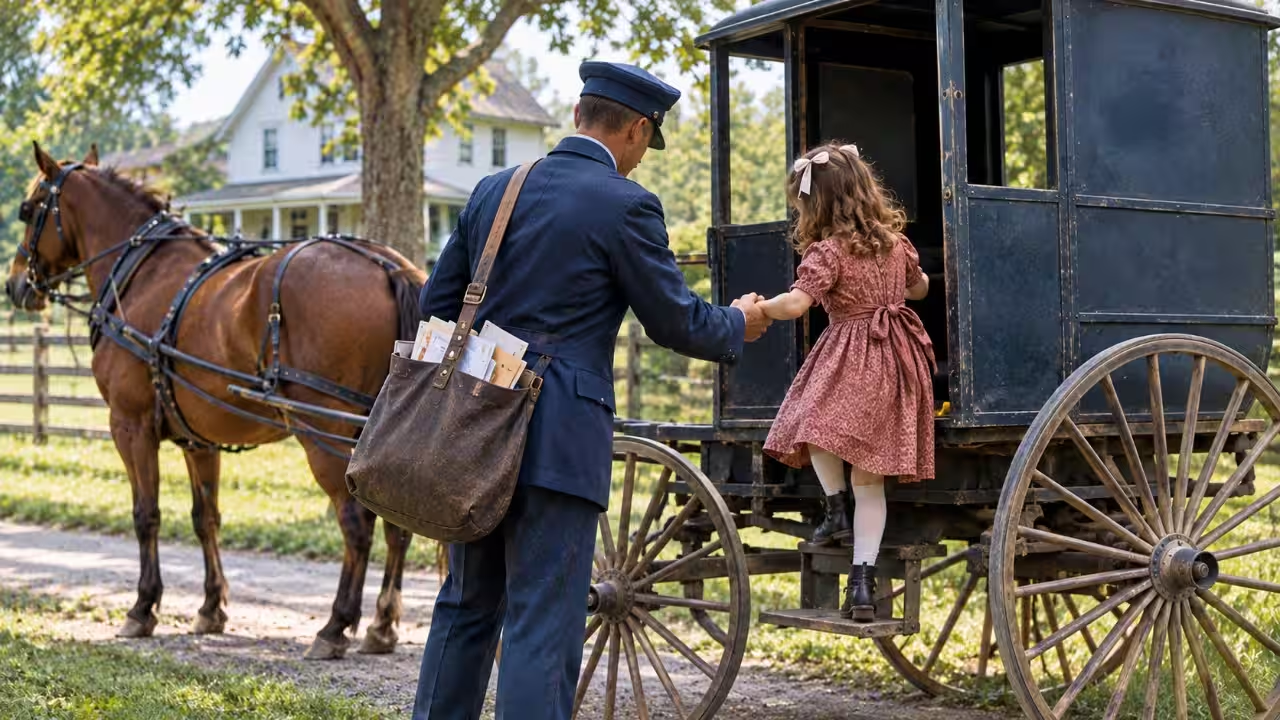
In 1915, a Missouri postman named Charles Hayes made one unusual delivery. For ten cents, he carried young Helen Combs to her grandmother. Her parents, Mr. and Mrs. Albert Combs, had entrusted the child to Hayes, as the grandmother's house was on the rural route. This event was one of the last documented instances of a child travelling the U.S. postal system as Parcel Post. She did not travel in a mailbag or a tightly sealed package; instead, she rode with a postal worker on a family trip between relatives.Parcel Post transformed rural deliveryThe Parcel Post was inaugurated in the United States on January 1, 1913, thereby permitting the Post Office Department to channel large parcels through its network. Generally, parcels in excess of four pounds had previously been the province of express companies. The new service extended delivery options to a wide populace, especially those in rural homes.For farms located a great distance from stores and railway stations, the service was integrated with Rural Free Delivery, which furnished residents with parcels as well as their letters at their homes and farms. As carriers visited the home frequently, they often came to be known by the individuals in the household quite well. According to the Smithsonian's National Postal Museum, 300 million parcels were handled in the service's first half-year. The introduction of the service led to disputes over rural business and access to goods for rural peopleHelen Combs journeyThe National Postal Museum says Hayes, a rural carrier in Tarkio, Missouri, transported Helen, the daughter of Albert and Mrs. Combs, to her grandmother, Mrs. C.H. Combs, for a fee the family paid. They paid ten cents in postage. There are a few details to take with a pinch of salt. The museum dates the episode to March and spells the place name as Tarkin, while a newspaper article reprinted in later histories dates it to July 6, 1915 and spells the name Tarkio. Helen's exact age, how far she travelled, and why she did so are not specified, though it's certain that Helen's grandmother lived on Hayes' route.Why the unusual practice endedHelen's parents followed these. In January 1913, Ohio carrier Vernon Little delivered the Beauge family's young son about a mile to his grandmother for fifteen cents; his parents also took out a $50 life insurance policy on him. Later that month, Pennsylvania carrier James Byerly took Savis family's young girl to relatives for 45 cents. In 1914, nearly six-year-old May Pierstorff traveled by rail to her grandparents in Idaho; 53 cents of stamp were attached to her clothing. May’s trip led to an inquiry about mailing a child, which caused Postmaster General Albert S. Burleson to order postmasters in February 1914 that people could not be accepted as mail.The order did not put an end to it. The museum logs additional instances in 1915, such as a trip of three-year-old Maud Smith of Kentucky, which led to an official inquiry. The last recorded child delivery took place in 1915, but Congress formalised the ban in 1920 by making it a federal crime to send any living creature. Through the postal service, Helen's ten-cent trip was not part of an organised passenger service. It was a by-product of an emerging network made possible by the trust rural families had in familiar carriers.You use AI every day. Now get your AI Quotient. Take the AIQ test.
Topics in this story
Gathered from external sources. Rights to this text belong to whoever originally published it.