Yellow-bellied venomous sea snake returns to California beach after 8 years; rare reappearance after 2018 gives scientists clues about the species’ changing Pacific range
US News: A yellow-bellied sea snake has washed ashore on an Orange County beach, marking the first reported appearance of the venomous species in California si.
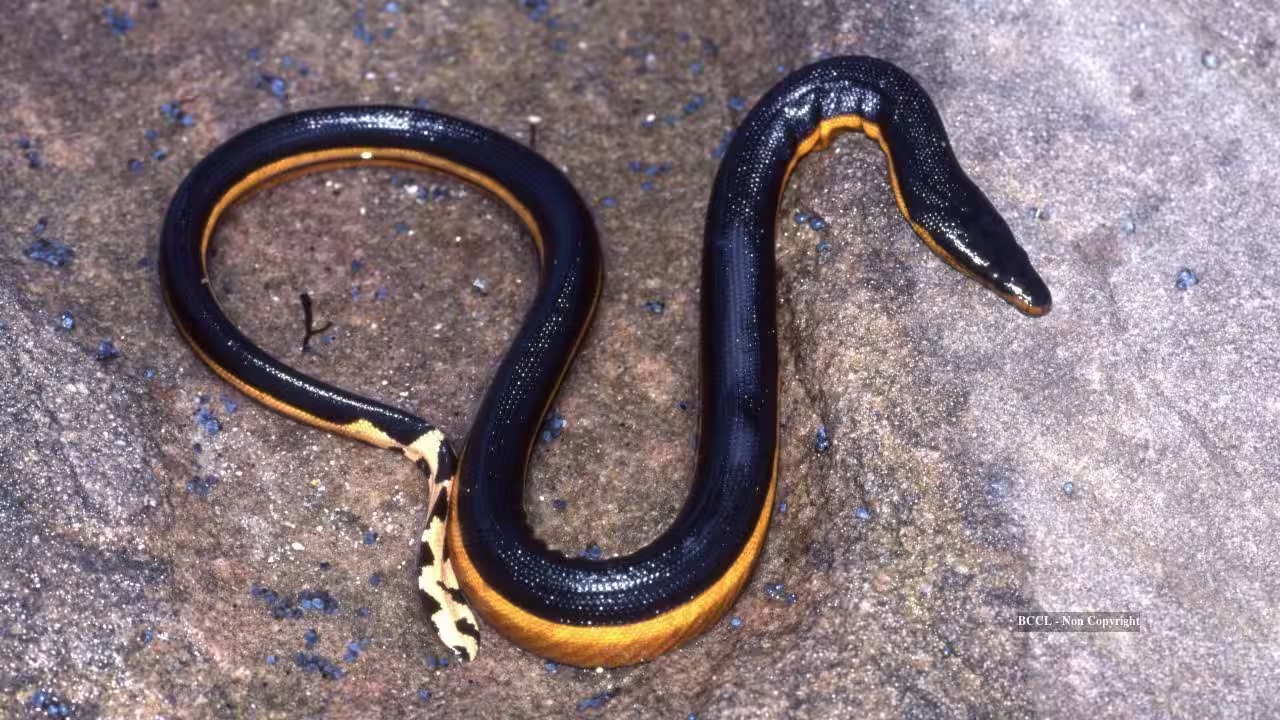
A yellow-bellied sea snake has washed ashore on an Orange County beach, marking the first reported appearance of the venomous species in California since 2018. The rare sighting took place at Crystal Cove, according to video footage cited by the Los Angeles Times. The snake’s return has drawn attention from scientists because these ocean-dwelling reptiles are rarely seen so far north. Experts believe warm Pacific waters and shifting ocean currents may help explain how the animal reached Southern California. Although the snake carries potent venom, it is not considered a danger to people who leave it alone. Researchers are now hoping to verify the sighting and learn whether the appearance reflects an isolated event or a broader change in the species’ Pacific range.A rare visitor returnsThe yellow-bellied sea snake is an unusual sight on any California beach. The species spends its entire life in the ocean, where it hunts fish and moves with the help of currents. It is far more commonly associated with tropical and subtropical waters than with the cooler coastline of Southern California.That is why the recent appearance at Crystal Cove has attracted scientific interest. The snake was filmed on the beach at night, where a person appeared to use the base of a palm frond to move it back towards the water. The footage was broadcast by CBS Los Angeles and later reported by the Los Angeles Times.The sighting is the first reported California appearance since 2018, when two yellow-bellied sea snakes were seen in Orange County. Since 1972, there have been only six confirmed sightings in the state, according to Greg Pauly, a reptile expert with the Natural History Museum of Los Angeles County.For a species that normally remains offshore and is rarely encountered by people, every confirmed record can provide useful information.Why the snake reached CaliforniaScientists believe ocean conditions may have played a role in the snake’s arrival.Yellow-bellied sea snakes hunt in open water and can be carried by currents. If warm water moves northward, the animals may travel farther from their usual range without immediately experiencing temperatures that are uncomfortable.Hayley Crowell, a snake expert at San Diego State University, said the recent sighting may be linked to warm ocean water during the summer. She explained that the snakes can be swept off course by currents and may not recognise that they have moved far from their normal habitat if the water remains warm enough.The Pacific Ocean is constantly changing. Seasonal weather patterns, ocean circulation and climate-related warming can influence where marine animals are found. Species that normally remain in warmer regions may occasionally appear farther north when conditions allow.That does not mean every unusual sighting signals a permanent expansion of a species’ range. A single animal may simply have been carried away from its usual habitat. Scientists need repeated observations, verified photographs and environmental data before they can determine whether a lasting shift is occurring.The yellow-bellied sea snakeThe snake gets its name from the bright yellow underside that contrasts with its darker upper body. That striking pattern can make the animal easier to recognise in photographs, although identifying a sea snake from unclear footage can still be difficult.Yellow-bellied sea snakes belong to a group of roughly 65 to 75 species known as true sea snakes. Unlike sea kraits, which may leave the water to rest or lay eggs, true sea snakes are completely adapted to ocean life. They give birth to live young in the water and do not need to come ashore as part of their normal life cycle.Their flattened, paddle-like tails help them swim, while their bodies allow them to move efficiently through open water. The snakes use venom to subdue fish, which make up their diet.Although their venom is powerful, yellow-bellied sea snakes do not normally pose a threat to beachgoers. They are not interested in attacking people, and humans do not resemble their usual prey.The main risk arises when someone attempts to pick up, touch or restrain one.Experts warn people not to handle itThe snake seen at Crystal Cove appeared helpless on the beach. Because yellow-bellied sea snakes are built for swimming, they cannot move effectively on land. Their bodies may flop or twist as they try to return to the water, which can make them appear distressed.That helpless appearance may tempt people to intervene. However, experts say members of the public should avoid handling a sea snake, even if they believe they are trying to help.Crowell said people who do not handle the animal are generally safe. She also advised calling wildlife officials for assistance rather than attempting to move the snake themselves.Sea snakes may bite when they feel threatened or trapped. A person does not need to be intentionally harming the animal to create a defensive situation. Picking it up, pushing it with an object or blocking its path could cause the snake to react.Anyone who sees a suspected sea snake should keep a safe distance, prevent others from approaching and contact local wildlife authorities or lifeguards. Clear photographs taken from a distance can help experts identify the animal without putting people or the snake at additional risk.A pattern of unusual marine sightingsThe sea snake’s appearance comes during a period when several unusual marine animals have been reported in Southern California waters.Fishermen have recorded hammerhead sharks near Malibu and Laguna Beach. A whale shark was also seen between Malibu and Santa Barbara Island. The Natural History Museum of Los Angeles County announced that a longfinned bigeye fish, normally found from Baja California to Peru, had been caught off the Venice Fishing Pier.These sightings do not all have the same cause. Some animals may be responding to changes in water temperature, while others may be carried by currents or follow prey into unfamiliar waters.Still, the cluster of unusual observations has encouraged scientists to pay closer attention to changing marine conditions. Coastal waters are not static environments. Temperature shifts can affect fish distribution, food availability and the routes taken by animals moving through the Pacific.Unusual sightings can therefore provide small pieces of information about a much larger ocean system.What scientists still need to learnResearchers are trying to determine whether the Crystal Cove sighting can be independently verified. Pauly has been attempting to contact the people who saw the snake to obtain additional video and information about its location and condition.Verification is important because rare animals can sometimes be misidentified. A clear view of the body shape, colour pattern and tail can help distinguish a yellow-bellied sea snake from other marine animals.Scientists would also want to know when the snake was observed, how warm the water was, whether it was alive and active, and whether it showed signs of injury or illness. Details about tides, wind and currents could help explain how the animal arrived at the beach.The timing of the sighting is also notable. In earlier California cases, sea snakes washed ashore when falling water temperatures left them sick or lethargic. The recent appearance occurred unusually early in the year, raising questions about whether warm summer water played a larger role than seasonal cold.A clue to a changing Pacific rangeThe snake’s return after eight years does not yet prove that yellow-bellied sea snakes are establishing themselves in California. There is no evidence from this sighting alone that the species has created a breeding population along the state’s coast.However, the event gives scientists another opportunity to study how far these animals can travel and how environmental conditions influence their movements.If similar sightings become more frequent, researchers may begin to investigate whether the species’ Pacific range is shifting. They could compare records with sea surface temperatures, current patterns and observations of the fish that sea snakes eat.For now, the most likely explanation remains that the snake was carried north by ocean conditions and currents. It may have been a lone traveller rather than the first sign of a permanent arrival.Even so, rare sightings matter. They help scientists track wildlife movements that might otherwise go unnoticed and provide evidence of how marine species respond to changing environments.What beachgoers should rememberThe yellow-bellied sea snake may look colourful and unusual, but it should be treated as a wild and venomous animal.Beachgoers should not touch it, attempt to carry it into deeper water or use their hands to guide it. They should move away, keep children and pets back and notify lifeguards or wildlife officials.The best response is observation from a safe distance. Experts can assess whether the snake needs help and determine whether the record can contribute to scientific research.The animal at Crystal Cove was a long way from the tropical waters it’s used to, but its presence has opened a window onto the secret lives of Pacific wildlife. After eight years without a California record, the yellow-bellied sea snake has returned as an unexpected reminder that the ocean can carry life into surprising places.Catch the latest World News and Live updates. Download the TOI app.
Topics in this story
Gathered from external sources. Rights to this text belong to whoever originally published it.