Philippine forests are being restored without planting every tree; scientists use natural regeneration to bring degraded land back
Rest of World News: Restoring a forest does not always mean planting thousands of seedlings. In the Philippines, researchers are examining assisted natural regeneration (.
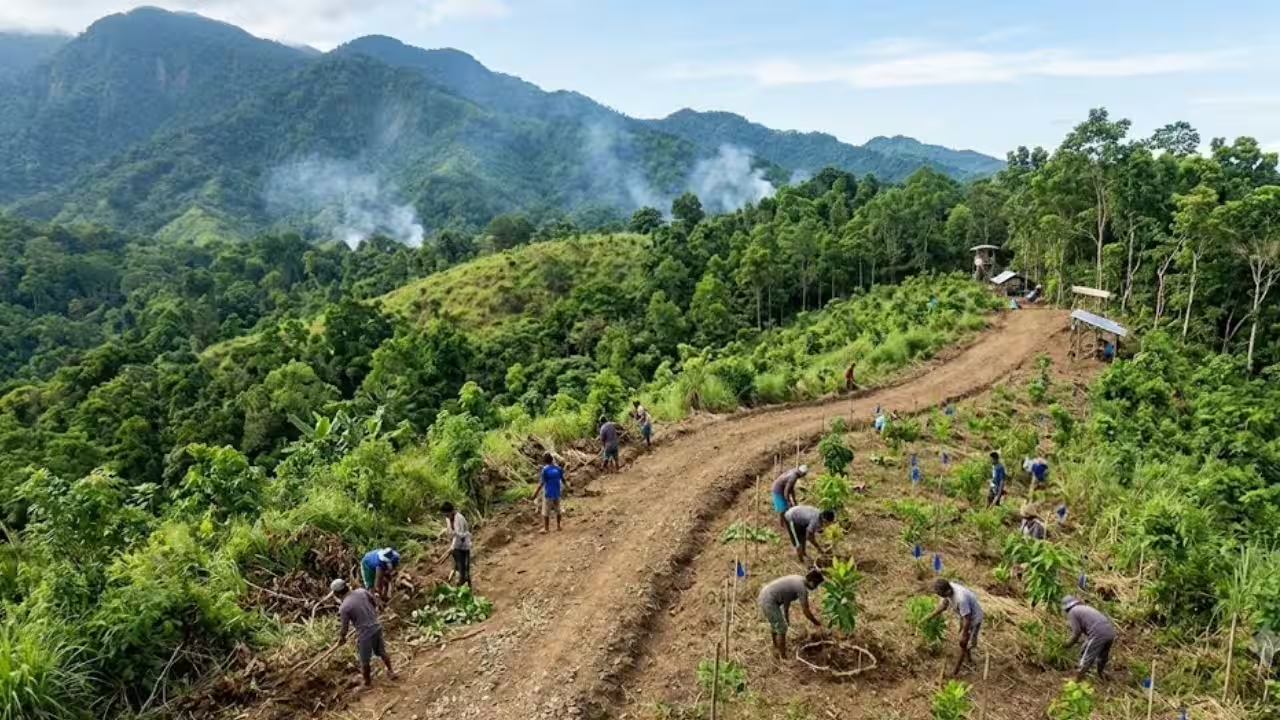
Restoring a forest does not always mean planting thousands of seedlings. In the Philippines, researchers are examining assisted natural regeneration (ANR), an approach that helps forests recover by protecting and managing trees that return. According to research published in Trees, Forests and People by Science Direct, titled ‘Assisted natural regeneration for tropical forest and landscape restoration in the Philippines: Implementation, motivations, challenges and future directions’, the researchers interviewed 22 key informants and held five focus group discussions involving stakeholders connected with ANR projects. Their findings show that natural regeneration can involve locating young trees, reducing grass competition, protecting recovering sites, and maintaining firebreaks.Three Philippine restoration projects used different approaches for forest recoveryThe study examined three ANR projects, that is, Carood, AFoCO, and NGP-ANR. Carood and AFoCO relied on naturally regenerating native woody species rather than enrichment planting. Workers located and marked regenerating trees, reduced competition from grasses through ring weeding, grass pressing, or manual pulling, and protected sites with firebreaks. These projects were established in areas affected by forest fires, livestock grazing, timber poaching, slash-and-burn agriculture, and wildlife hunting.NGP-ANR sites in Southern Leyte followed a different approach. They used high-density enrichment planting of native tree species in post-logging open forests. The researchers classified Carood and AFoCO as sustained projects because appropriate implementation and maintenance continued, while NGP-ANR was considered unsustained because maintenance was largely discontinued and practices deviated from ANR guidelines in practice.Why communities and organisations are adopting natural regenerationPeople involved in ANR projects were motivated by several economic, environmental, technical, and policy factors. Socioeconomic incentives were the strongest drivers, especially income and livelihood opportunities linked to project participation. Environmental motivations included biodiversity conservation, watershed protection, climate change mitigation, and disaster risk reduction.Community engagement, cultural values, capacity building, and institutional requirements also influenced participation. The study found that Carood and AFoCO participants were compensated according to the number of regenerants identified and managed per hectare. In Carood, people’s organizations could plant cash crops, fruit trees, and vegetables within firebreaks, creating an additional incentive. The projects also aimed to protect critical watersheds, demonstrate ANR, restore degraded forests, improve biodiversity and ecosystem services, and build local capacity through community involvement.Why long-term forest recovery remains difficult for ANR projectsMaintaining natural regeneration over time remains difficult. The researchers identified eight broad challenge areas that are funding and livelihood issues, environmental challenges, monitoring and sustainability concerns, community engagement, technical and logistical difficulties, political and institutional problems, local pressures and illegal activities, and land tenure and rights issues.Limited funding was the most pressing concern reported by many respondents. Forest fires were another major practical problem, particularly at Carood and AFoCO sites. The standard three-year project period was also considered insufficient for sustained regeneration.Better funding and protection are needed to sustain forest recoveryThe researchers identified several ways to strengthen ANR in the Philippines. Their recommendations include longer project timeframes, secure long-term funding, stronger site protection and maintenance, sustainable livelihood programmes, better technical capacity, stronger policy support and more secure land and tree tenure. Regular monitoring and impact assessments were also recommended to demonstrate the socio-ecological benefits of natural regeneration and encourage wider adoption.Protection measures included better firebreak design and maintenance, watchtowers, huts, and signs to improve surveillance. The study also highlights the importance of policy changes around native tree use, because harvesting restrictions can reduce the economic benefits communities receive from regenerating forests.Catch the latest World News and Live updates. Download the TOI app.
Topics in this story
- Assisted Natural Regeneration
- Forest Restoration Philippines
- Natural Regeneration Projects
- Biodiversity Conservation
- Sustainable Forest Management
- Community Engagement in Forestry
- Economic Incentives for Forest Restoration
- Forest Recovery Strategies
- Environmental Challenges in Forestry
- World news
- World news today
- World news live
Gathered from external sources. Rights to this text belong to whoever originally published it.