Researchers built a green-roof test field in Poland; in the hottest months, the planted roof ran up to 24°C cooler than the conventional roof beside it
A study from Warsaw University shows green roofs can reduce surface temperatures by up to 24°C compared to conventional roofs, offering a solution for urban heat management.
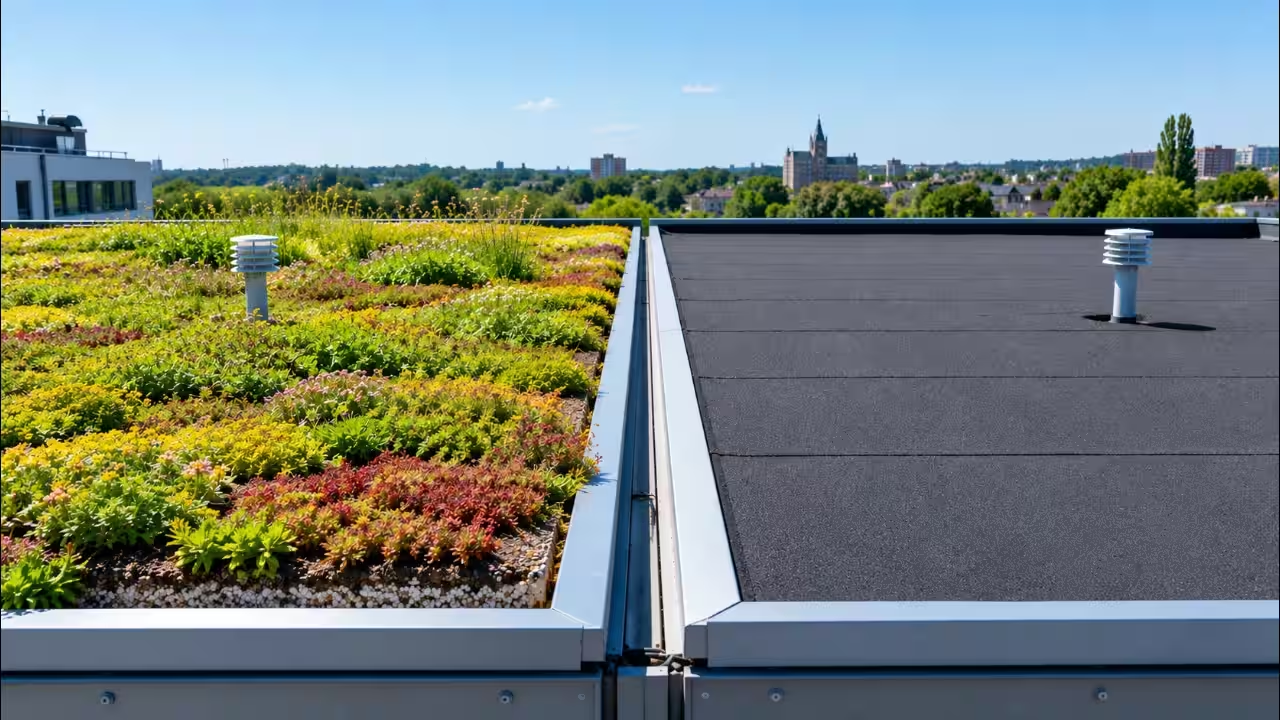
In cities where concrete, asphalt and dark roofs absorb heat during the day, researchers are exploring whether a layer of vegetation can help buildings cope with rising summer temperatures. Green roofs use plants and growing media to help shield roof surfaces from heat. According to a study by researchers at the Warsaw University of Life Sciences, an extensive green roof in Warsaw, Poland, stayed substantially cooler than a conventional bitumen-covered roof during the hottest months. The researchers compared several small green-roof test plots with a conventional roof under the same outdoor conditions and monitored their thermal behaviour from June to December 2016. During the summer, the difference in surface temperature reached as much as 24°C, while the planted roofs also recorded lower average surface temperatures than the conventional bitumen roof.A small roof field became a natural laboratoryFor the experiment, the scientists built four large green-roof test plots and one conventional roof with a bitumen coating. Each stand measured 2 meters by 1 meter and consisted of layers including waterproofing, drainage, filtration, a 15 cm mineral substrate, and vegetation mats. The vegetation mat initially included moss, sedum and herbs, but after the first year only sedum survived. The test stands were observed from June to December 2016.Seasonal timing was important in the study. The temperature gap was widest during the summer months. The researchers obtained their biggest gaps between June and July, when the maximum temperature gap was 24°C. Their findings were reported in the journal Sustainability in 2019. Average temperature differences were also significant. From June to September, the green roof surfaces averaged approximately 25.7°C to 26.9°C, while the conventional bitumen roof averaged 32.6°C. On one especially hot July day, when the air temperature was 30°C, one green roof averaged 27°C while the conventional roof averaged 52.6°C.Plants changed the way the roof handled heatThe cooling effect was not simply due to the roof’s colour. The plants and growing media changed the way heat and moisture flowed through the roof. A vegetated roof can capture rainwater and store it inside the growing media. As the water evaporates and transpires out of the roof surface, heat is taken away. The Warsaw study showed that rain helped lessen the temperature difference inside the soil after rainy days.According to research published in Applied Energy, extensive green roofs can reduce summer heat loads, with the deeper layers of the growing medium also contributing to the roof’s cooling performance. The Warsaw researchers similarly examined temperatures within the green-roof profile, taking measurements at depths of 3 cm and 15 cm, along with surface temperature, humidity and photosynthetically active radiation. Their findings showed that the thermal behaviour of a green roof depends not only on vegetation but also on rainfall, substrate properties, humidity, solar radiation and the amount of water retained within the roof system.More than a cooler surfaceThe greatest cooling effect occurs on warmer summer days and becomes minimal as temperatures drop. During the winter, the conventional roof may even be cooler than the green roof. However, the experiment showed that vegetation can reduce a roof’s daytime heat absorption. Indeed, a study carried out in Warsaw found a summer maximum temperature difference of 31.3°C between vegetated roofs and their conventional counterparts. For cities with especially hot summers, this technology can be more than decoration: it can act as thermal insulation, a rainwater collector and a regulator of roof temperature. The experiment performed in Warsaw showed that even a small-scale roof covered with plants could create a substantial temperature difference with conventional roofs during hot summer days.You use AI every day. Now get your AI Quotient. Take the AIQ test.
Topics in this story
Gathered from external sources. Rights to this text belong to whoever originally published it.