Nuclear fallout to flowerbeds: Japan to reuse Fukushima’s nuclear cleanup soil in flowerbeds and public works before 2045 deadline
Rest of World News: Japan is preparing to take another step in its long-running effort to manage soil removed during the cleanup of areas affected by the 2011 Fukushima n.
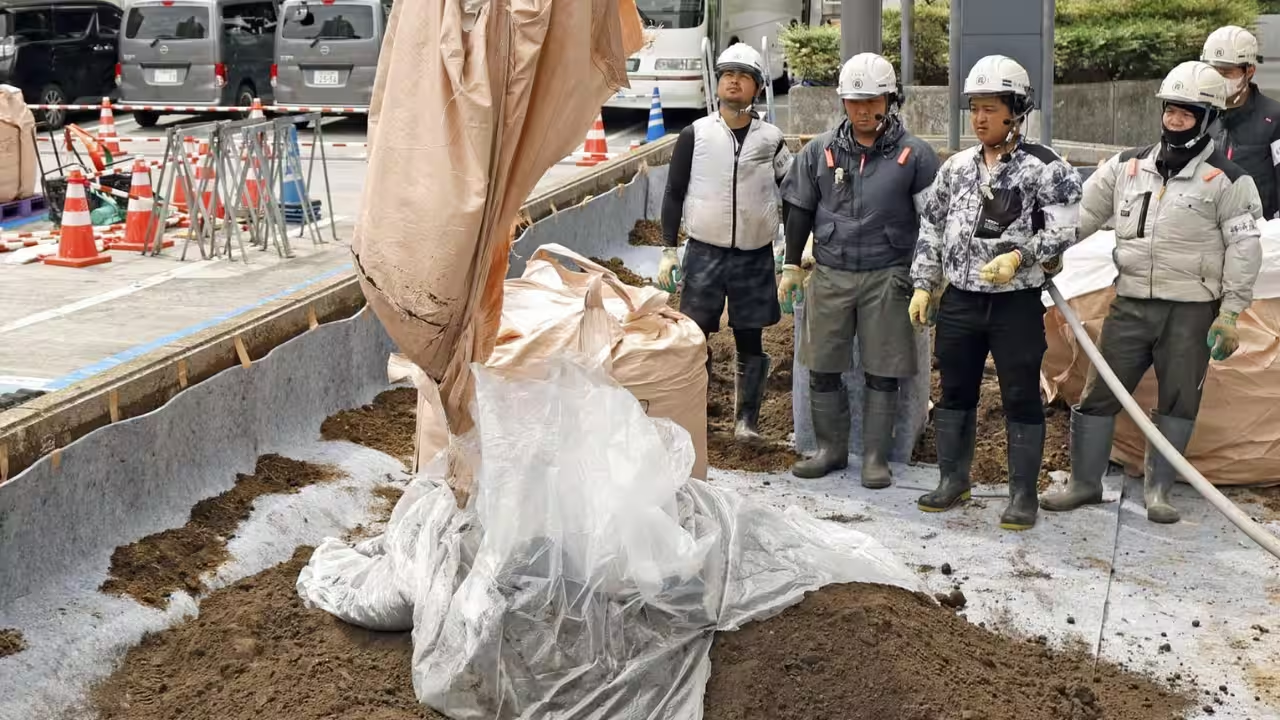
Japan is preparing to take another step in its long-running effort to manage soil removed during the cleanup of areas affected by the 2011 Fukushima nuclear disaster. The government has decided to begin reusing decontamination soil at government facilities in Sendai, Miyagi Prefecture, and Saitama, marking the first such use outside Tokyo apart from demonstration projects in Fukushima itself. The Environment Ministry plans to use the material in flowerbeds at government buildings in the two cities. The move is part of a broader government policy aimed at reducing the enormous volume of soil currently held at interim storage facilities in Fukushima. Authorities are working towards a legal deadline requiring final disposal outside Fukushima Prefecture by March 2045. The decision also places greater emphasis on demonstrating the proposed reuse of treated soil in locations beyond the disaster-affected region, while addressing public concerns over its safety.How Fukushima cleanup soil will be reused before the 2045 deadlineThe initial projects will involve flowerbeds at government buildings in Sendai and Saitama, according to the government’s decision reported by Japan Today. The programme follows earlier demonstration efforts and a government initiative to establish practical examples of reusing soil generated during Fukushima's extensive decontamination programme. The material was collected after the 2011 earthquake and tsunami triggered the Fukushima Daiichi nuclear accident and widespread radioactive contamination. Large quantities of removed soil have since been placed in interim storage facilities within Fukushima Prefecture. The government has promoted the reuse of soil containing relatively low concentrations of radioactive substances as part of its longer-term management strategy. Similar reuse has already taken place at government sites in Tokyo, including the Prime Minister's Office. The expansion to Miyagi and Saitama represents a significant geographical step in testing whether the approach can gain acceptance beyond the areas directly associated with the disaster.Government faces 2045 deadline for Fukushima soil disposalThe regional reuse programme is closely tied to Japan's longer-term obligation to remove the decontaminated soil from Fukushima. The government aims to complete final disposal outside the prefecture by March 2045, making the development of reuse schemes an important part of its strategy for dealing with the stored material. Chief Cabinet Secretary Minoru Kihara described the regional projects as an important step towards that objective and called for similar initiatives to be expanded to government branch offices elsewhere in Japan. The scale of the challenge is substantial, with soil generated across years of decontamination work remaining in interim storage. A government roadmap has prioritised reuse, public communication and progress towards eventual off-site disposal. The approach is intended to gradually establish examples that can demonstrate how the material can be managed outside Fukushima while creating greater public understanding of the government's proposed strategy.Safety concerns remain central to Japan's soil reuse planThe decision to move Fukushima decontamination soil into other prefectures also places public acceptance at the centre of the programme. Government officials have repeatedly stressed the importance of communicating scientific information about the material's safety as reuse expands. Kihara urged authorities to strengthen public communication alongside the new regional projects. The government has previously used controlled demonstration sites to show how low-radioactivity soil could be incorporated into landscaping and other applications. Under the broader policy, officials are seeking to establish confidence through visible examples before expanding reuse further. The Japan Atomic Industrial Forum reported that the government's roadmap includes scientific information sharing, site visits and continued monitoring, alongside consultation with Fukushima and other local authorities. The Miyagi and Saitama projects will therefore serve not only as disposal measures but also as tests of how far Japan's controversial soil-reuse policy can be extended.Catch the latest World News and Live updates. Download the TOI app.
Topics in this story
- Fukushima decontamination soil
- Fukushima nuclear disaster cleanup
- Japan soil reuse policy
- Environment Ministry Japan soil disposal
- Sendai Miyagi decontamination soil
- Saitama government facilities soil
- interim storage Fukushima soil
- final disposal deadline 2045
- radioactive soil recycling Japan
- Fukushima nuclear waste management
- World news
- World news today
Gathered from external sources. Rights to this text belong to whoever originally published it.