A Czech man found a stone in his garden in 2007; archaeologists later identified it as a 3,350-year-old Bronze Age spearhead mould
A stone that once formed part of a barn’s foundations in the Czech Republic has turned out to be a rare Bronze Age tool used to cast bronze spearheads.
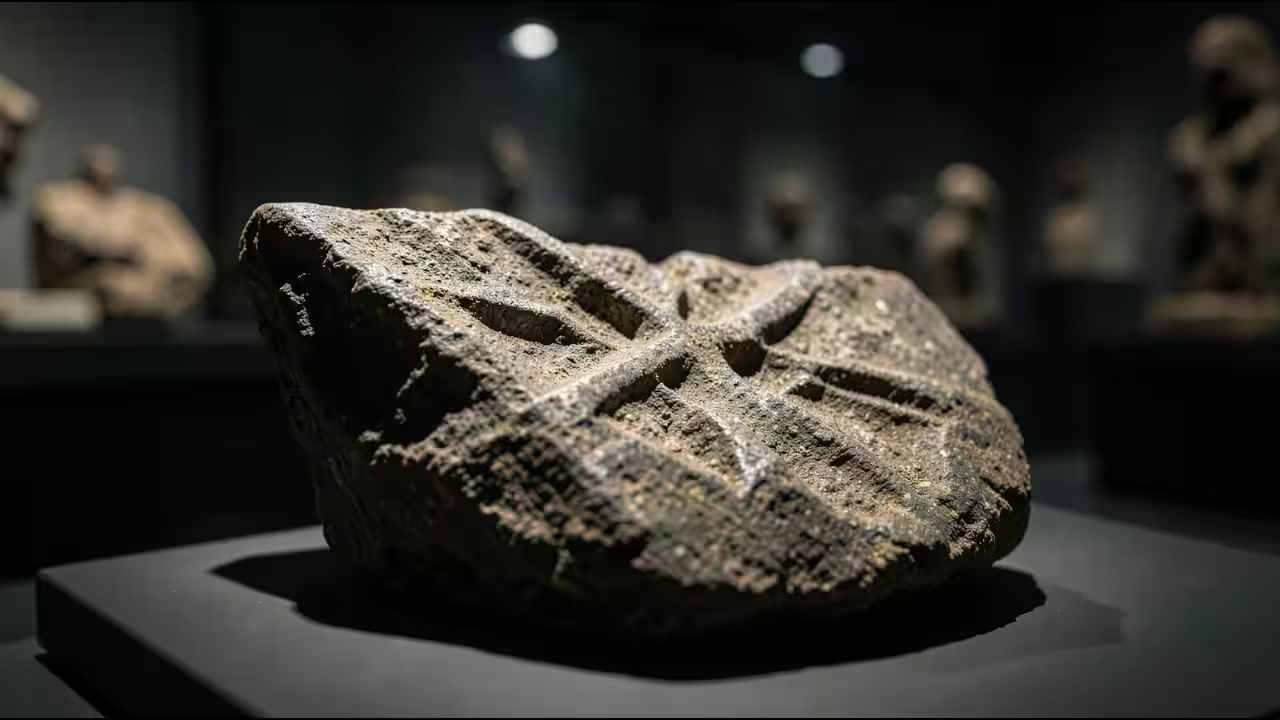
A stone that once formed part of a barn’s foundations in the Czech Republic has turned out to be a rare Bronze Age tool used to cast bronze spearheads. Discovered in 2007 in the village of Morkůvky in South Moravia, the rectangular slab was later identified as a casting mould from the Late Bronze Age. The find is about 3,350 years old. Archaeologist Milan Salaš of the Moravian Museum in Brno led the research, which was published in the peer-reviewed journal Archeologické rozhledy in 2025. The mould’s carefully preserved impression reveals the shape of the weapon it produced, while analysis of the stone indicates that it had travelled a considerable distance from its geological source in what is now Hungary. The find offers a glimpse into Bronze Age metalworking and the movement of materials across Central Europe.How a stone in a Czech barn was identified as a Bronze Age artefactThe mould was discovered in 2007 in Morkůvky, a village in the Břeclav District of South Moravia. According to the research published in Archeologické rozhled titled A unique stone mould for casting a spearhead from Morkůvky in South Moravia as an example of long-distance import in the Urnfield Period, and its technological contribution, the object is a well-preserved half of a stone casting mould. It measures about 23 centimetres in length and is made from rhyolite tuff, a volcanic rock. The stone was found in a garden, where it was sticking slightly out of the ground near the foundations of an old barn. Its significance became clear only after archaeologists examined it. Salaš described it to Radio Prague International as a regular rectangular slab with a precisely shaped impression on one side of the surface where the two halves of the mould would meet.The research team used macroscopic examination and X-ray fluorescence (XRF) and X-ray diffraction (XRD) analyses to investigate the object and traces left by the casting process. The results indicated that bronze had been poured into two halves positioned upright and held together with copper wire. The analyses also helped researchers investigate the material associated with the casting process. The mould is particularly informative because the impression left inside it remains sufficiently clear to identify the type of weapon it was designed to produce. Although the artefact was found outside a documented archaeological excavation, its shape, manufacturing technology and raw material provide evidence about Bronze Age craftsmanship and exchange.What the spearhead mould reveals about Bronze Age tradeThe impression in the stone shows that it was used to cast a socketed, lance-shaped spearhead. The blade had longitudinal ribs along its wings and central midrib, while the socket featured a sharp ridge. The socket was designed to receive the end of a shaft, allowing the finished bronze head to be attached to a spear. According to the study, spearheads of this type are commonly found in the Carpathian Basin and are generally associated with the Late Bronze Age. The form therefore offered an important clue to the mould’s origins. Researchers then used petrographic analysis, which examines the mineral and structural characteristics of rocks, to investigate where the stone came from.Their findings identified the material as rhyolite tuff, with its geological source traced to a region extending from northern Hungary towards southeastern Slovakia. The geological evidence, combined with the spearhead’s distribution, led the researchers to conclude that the mould had been brought to South Moravia from the Carpathian region during the Bronze Age. Researchers believe it was probably brought to the village in modern times from a nearby archaeological site associated with the Urnfield culture. The geological evidence points to the stone’s origin in the Carpathian region, while researchers believe the mould was later moved to Morkůvky from a nearby Urnfield site. The discovery provides evidence of connections between the Carpathian region and communities associated with the Middle Danube Urnfield culture. The Urnfield culture takes its name from the practice of burying cremated remains in urns and was widespread across parts of Central Europe during the Late Bronze Age. Researchers believe it was probably brought to the village in modern times from a nearby archaeological site associated with the Urnfield culture.What the mould tells researchers about Bronze Age weapon productionThe stone also preserves evidence of how it was used. The study describes visible traces of scorching and heat damage, including changes to the rock around the mould’s impression. These marks are consistent with repeated exposure to the high temperatures involved in casting molten bronze. The researchers’ examination of the mould’s construction and wear provides insight into the practical process of making a spearhead. The two halves were positioned vertically and secured together with copper wire before the molten metal was poured in. A core was also used to form the hollow socket into which the weapon’s shaft would later fit.Unlike a finished spearhead, which shows the shape and design of a weapon, a casting mould offers evidence of the manufacturing process itself. It can reveal how a metal object was formed and how the craftspeople who made it worked with stone, metal and heat. The mould’s clear impression and traces of intensive heating make it useful for studying prehistoric metalworking technology. The research was published in 2025, about 18 years after the stone was discovered. Its identification transformed an unremarkable piece of a barn’s foundations into evidence of Bronze Age craftsmanship and long-distance exchange. The mould now helps researchers understand how spearheads were made and how materials and technological traditions moved across Central Europe about 3,350 years ago.You use AI every day. Now get your AI Quotient. Take the AIQ test.
Topics in this story
Gathered from external sources. Rights to this text belong to whoever originally published it.