One week of Drumcree - what has happened?
Sometimes in Northern Ireland, the definition of success is "nobody got hurt," writes BBC News NI's community correspondent.
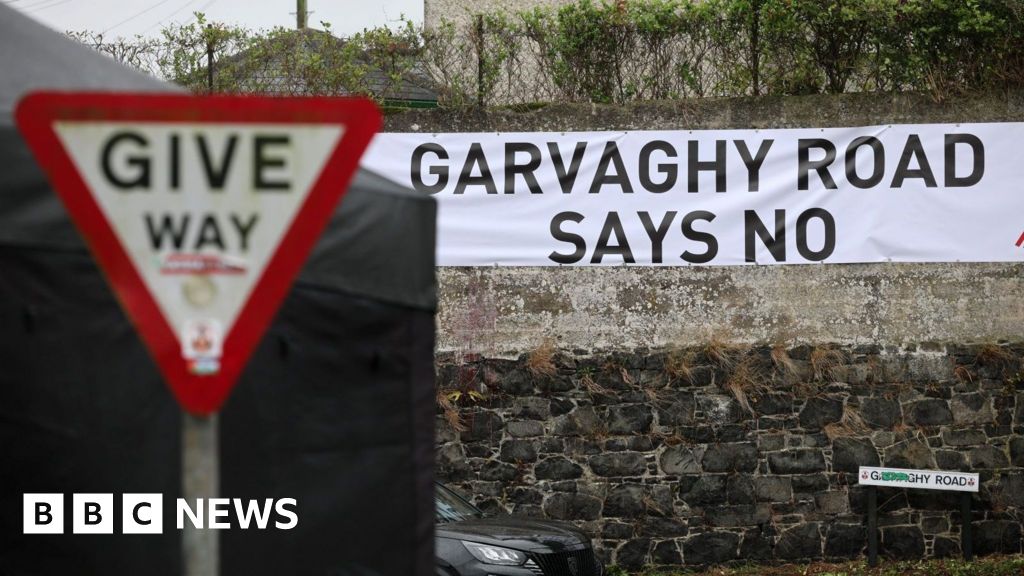
All the ingredients of a typical Northern Ireland crisis have been in place for the past week except for one – violence.
A stand-off - over a proposed Orange Order parade in Portadown , opposed by nationalist residents of the Garvaghy Road - has lasted since Sunday morning.
Verbal clashes between politicians, late-night negotiations, appeals for calm and a major security operation have all been in the mix.
However, the Drumcree parade dispute in Portadown has not descended into disorder or trouble on the streets.
Sometimes in Northern Ireland, the definition of success is "nobody got hurt".
The crisis is not over, and fears of an outbreak of street violence remain, but everything is under control at the moment.
The truth is few predicted a relatively peaceful week when the crisis first erupted.
Tension started to build after the Parades Commission, which regulates marches, gave the go-ahead for the controversial Orange Order parade in Portadown to pass along the mainly-nationalist Garvaghy Road.
Sitting under the same roof were those involved in the dispute – Portadown Orange Order and the Garvaghy Road Residents' Coalition – headed by Nigel Dawson and Breandán Mac Cionnaith respectively.
They sat within a matter of feet from each other but their positions were worlds apart.
All involved then made the 30-mile journey through the night from Belfast to Portadown ahead of the scheduled start to the Orange parade at 08:00 BST.
By that stage, their route along the Garvaghy Road had been blocked.
Up to 1,000 people were standing in the middle of the road, many of them linking arms.
Some of them were prominent members of Sinn Féin, which helped turn the parade controversy into a political crisis at Stormont.
A mile away, outside Drumcree Church, the 35 Orangemen who were hoping to march went back inside.
Torrential rain meant everyone got cold and wet, particularly the protesters but the road remained blocked and the parade was thwarted.
Police told the Orangemen not even to try to walk down the road.
Since then there has been frenetic activity behind-the-scenes, mainly at Hillsborough Castle, to try to break the deadlock.
Four days of talks took place but by Thursday night it was clear they were going nowhere.
At Stormont, the power-sharing executive came close to collapse. In the end, it wobbled but it did not fall down.
Unionists accused some members of Sinn Féin of being lawmakers who became lawbreakers. They insisted they were simply supporting a community that needed their help.
Expect that argument to continue in the days and weeks ahead.
In the meantime, the focus now switches back to Belfast High Court, for an appeal hearing on Monday.
The residents' coalition is trying to overturn the decision to give the march the go-ahead.
Although the court is important, nobody is taking their eye off the situation on the ground in Portadown, especially the police.
The Orangemen still want to walk. The protesters are standing by, just in case.
The hope is that the only battles which take place in the coming days are in the Belfast courtroom and the Stormont chamber, and not on the streets of Portadown.
What's the background to the Garvaghy Road dispute?
The Orange Order, the most prominent of the loyal orders associated with Protestants in Northern Ireland, holds thousands of parades every year and the vast majority pass off without incident.
However, many Catholics see the marches as sectarian and object to them passing through, or close to, mainly Catholic or nationalist areas.
The Garvaghy Road had been part of the Drumcree parade route but by the mid 1990s nationalist residents protested against it.
Drumcree was one of Northern Ireland's most serious parading disputes, when stand-offs over attempts by the Orange Order to march along the Garvaghy Road were accompanied by riots, roadblocks and killings.
When the Orange Order was prevented by police from walking down the route in July 1995, there was a tense stand-off. It was the same for the next three years.
In 1998, the newly-established Parades Commission ruled that the Orange Order should not march down the road - a decision that was upheld for the past 28 years, until recent events.
Talks on Drumcree parading dispute end without agreement
What is the Garvaghy Road dispute all about?
Parading, policing and power sharing collide amid Drumcree dispute
Topics in this story
Gathered from external sources. Rights to this text belong to whoever originally published it.