133-year-old tree with historic carvings may be removed from a protected US forest by helicopter for a museum display
US News: A 133-year-old tree in Wyoming’s Washakie Wilderness has sparked a dispute over how historic sites should be preserved in protected wilderness. The tr.
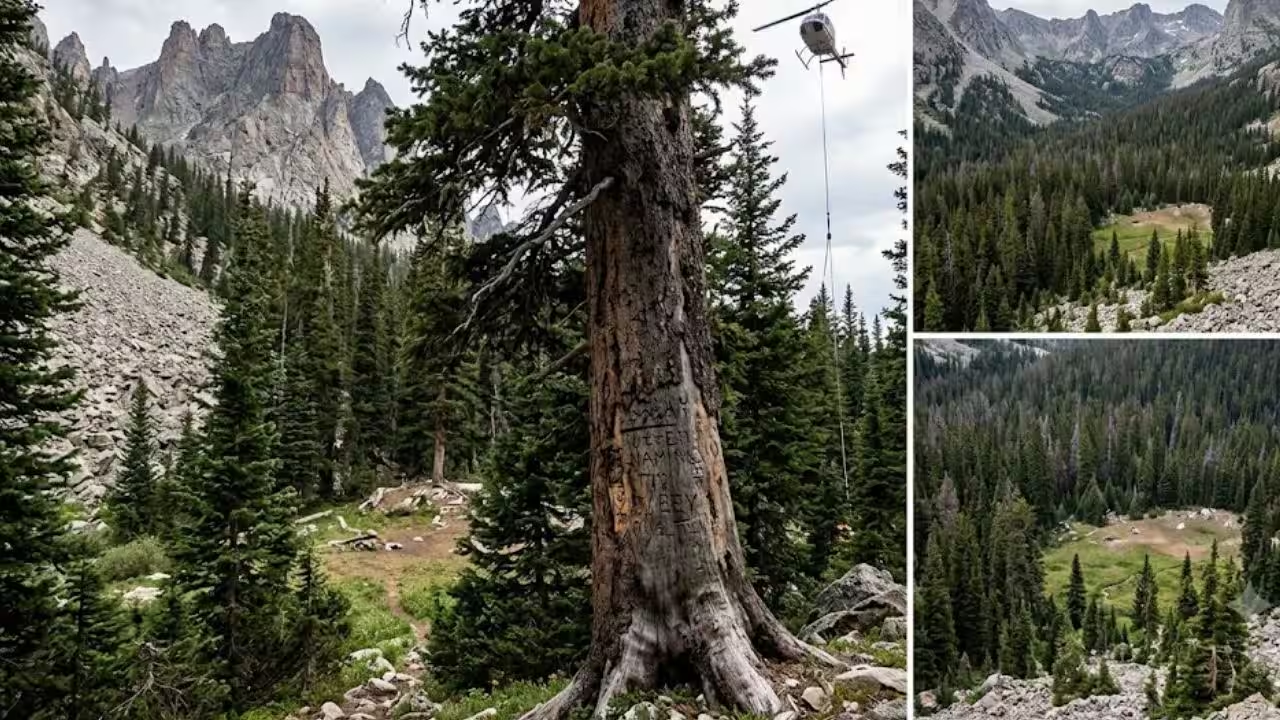
A 133-year-old tree in Wyoming’s Washakie Wilderness has sparked a dispute over how historic sites should be preserved in protected wilderness. The tree bears names carved by a survey crew that became stranded in a snowstorm while marking the Yellowstone Forest Reserve 133 years ago. The US Forest Service approved a plan to cut down the tree and remove it by helicopter for museum display. Wilderness Watch opposes the plan, arguing that removing the tree would harm the wilderness it represents. The group says the Forest Service has already cut other trees and cleared a user-created trail to reach the site. It also raised concerns about limited public notice and engagement, and has urged the agency to pause the project and consider alternatives.Historic tree removal plan may require more trees to be cut for helicopter accessThe planned project involves more than simply removing the marked tree. Wilderness Watch said the Forest Service had already cut other trees and cleared a user-created trail leading to the site. Flooding later damaged a nearby trail, which delayed the work. Under the plan, a state-contracted crew would use the cleared route to bring equipment to the tree and create images that could preserve its history. The next step would be to cut down the tree and remove it by helicopter once one became available after the fire season. Wilderness Watch also raised concerns that more trees might have to be cut to create a landing area for the helicopter.What makes the 133-year-old tree historically importantThe survey tree stands more than two dozen miles from the nearest trailhead in Wyoming’s Washakie Wilderness. According to Wilderness Watch, a survey crew became stranded there in a snowstorm 133 years ago and carved their names into the tree. At the time, the crew was marking the boundaries of the Yellowstone Forest Reserve as part of an effort to protect forests from commercial tree cutting. The reserve later became the Shoshone National Forest. The Washakie Wilderness was established under the 1964 Wilderness Act and expanded by Congress in 1972 and 1984. The Forest Service has since approved a plan to cut down the historic tree, remove it by helicopter, and place it on display in a museum.An alternative way to preserve the tree’s historyWilderness Watch argues that the project goes against the purpose of keeping protected wilderness in its natural state. It reminded the Forest Service that its main responsibility in managing Wilderness is to protect its character. The group also said exceptions that allow prohibited tools are intended to support the purpose of the Wilderness Act, rather than projects that do not serve a wilderness need. It believes the tree can remain where it is while the carved names are preserved in another way. As an alternative, the organisation pointed to fossil replicas in Newfoundland, where replicas can preserve a record without removing the original from its natural setting.How did the Forest Service respond to concerns over public involvementThe dispute also involves concerns over how the Forest Service handled public involvement. Wilderness Watch said the project had not been publicly announced and was not listed on the agency’s website when the group searched for it in July. On August 4, the organisation asked the Forest Service to pause the work and give the public a meaningful chance to respond. The request was denied by a Forest Service supervisor on August 13, who said public involvement was not required. He argued that preserving the story of public lands could help people understand why such places should be valued. Wilderness Watch rejected this reasoning and continued to call for the project to be reconsidered.How will a helicopter be used to remove the historic treeSeveral details about the project were still unclear when Wilderness Watch published its account. The organisation did not know when the tree would be cut, how much work had already been carried out on the non-system trail or whether chainsaws would be used. It also questioned whether the helicopter would need to land inside the Wilderness and whether additional trees would have to be removed to make space for it.On July 30, it submitted a Freedom of Information Act request seeking the project’s decision documents. The group said the Forest Service had not provided the requested documents by the time its account was published, which leaves the key details about the planned removal unresolved.Catch the latest World News and Live updates. Download the TOI app.
Topics in this story
Gathered from external sources. Rights to this text belong to whoever originally published it.