In the early 1800s, Giant Hogweed was introduced by British explorers for ornamental gardens, but it spread beyond control and is now a feared invasive plant
UK News: Discover the invasive threat of giant hogweed, a once-desired ornamental plant that now poses ecological and health risks. Learn about its history and management challenges.
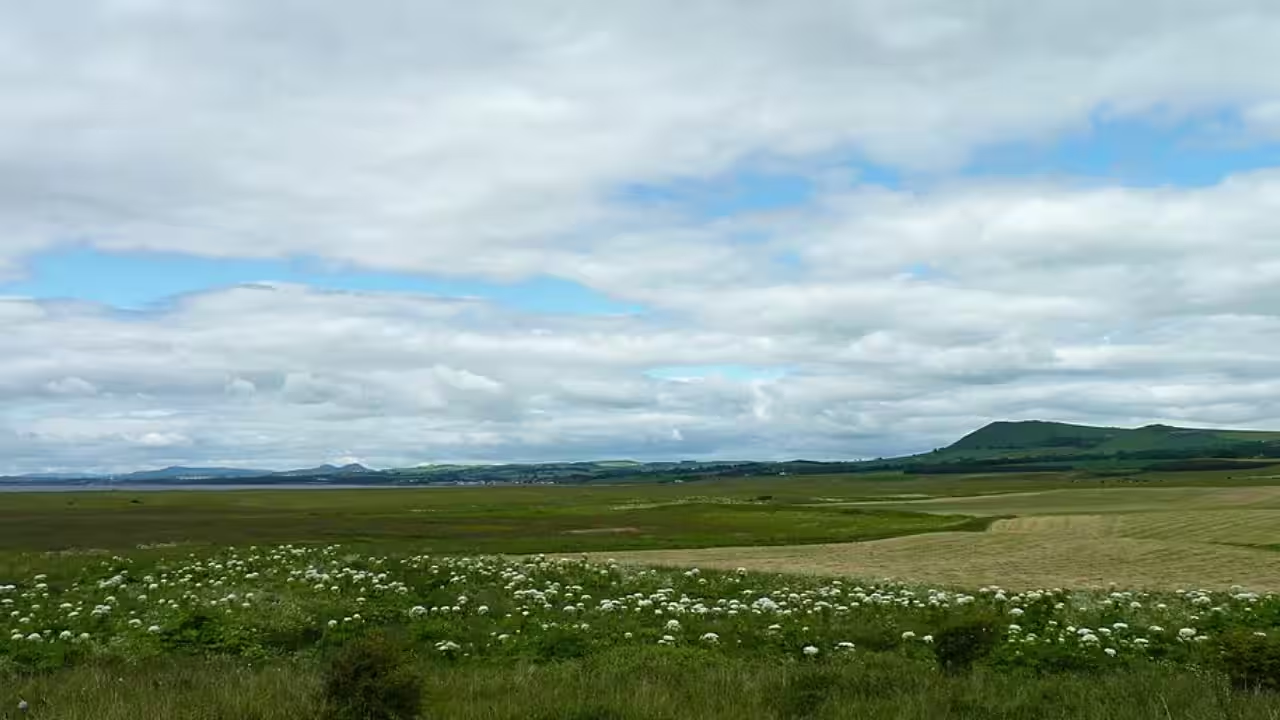
Giant hogweed can rise several metres above surrounding vegetation, producing enormous leaves and broad clusters of white flowers. But Heracleum mantegazzianum is now regarded very differently from the ornamental curiosity that was once welcomed into European gardens.According to Plants of the World Online, giant hogweed (Heracleum mantegazzianum) is native to the Caucasus but has been introduced to parts of Europe and other regions outside its natural range. In Britain, it escaped from cultivation and became established in parts of the countryside, particularly along waterways, where its large size, abundant seed production and vigorous growth have made it a challenging invasive species to manage.From botanical curiosity to wild plantThe story began with plant collectors and horticultural experts bringing rare species to Britain and continental Europe. Historical records from the Royal Botanic Gardens, Kew, show that giant hogweed was listed there in 1817, appearing in a seed list. By 1828, a naturalised population had been recorded in Cambridgeshire. The plant was introduced to Britain mainly as an ornamental species, with its unusual height and imposing appearance making it attractive to gardeners and collectors. This means the often-repeated claim that giant hogweed was brought to Britain by British explorers in the early 1800s needs some qualification. Historical evidence instead points to a wider network of botanical gardens, plant collectors and estates exchanging seeds and cultivating plants that had been introduced from the Caucasus.Once outside cultivated gardens, however, the plant had characteristics that helped it establish itself. Research published in the Journal of Applied Ecology found that giant hogweed and other large invasive plants could become widespread after escaping cultivation, particularly along watercourses. Their rapid growth and large size allow them to dominate local vegetation, while their presence can reduce the conservation value of invaded sites.A plant built for spreadingThe success of giant hogweed may be partially attributed to the sheer number of seeds that can be produced by each plant. A single plant can produce thousands of seeds, which may travel short distances by wind and farther via rivers and other waterways. The plant can also overwhelm smaller vegetation. It can form large stands, shading plants beneath its leaves and competing for space and resources. When the stems die back, bare ground may be left exposed, potentially contributing to erosion along riverbanks during high water flow. These traits contributed to giant hogweed becoming recognised as an ecological problemResearch published in the Journal of Environmental Management has examined the management of invasive giant hogweed and the difficulties involved in controlling established populations. The research highlights how management needs to consider the plant's biology and the persistence of populations rather than relying on simply removing visible mature plants.The plant is not limited to Britain. According to the Plants of the World Online database at Kew, Heracleum mantegazzianum is indigenous to the Caucasus region, but is naturalised to a wide variety of nations in Europe, North America, and New Zealand. Its attractive qualities helped the species spread through several channels and become established in other regions.The plant also poses a health riskGiant hogweed gained notoriety because it poses a danger not only to native flora. The sap contains furanocoumarins that cause photosensitivity in human skin. Skin contact combined with sun exposure may lead to photodermatitis, which is characterised by burning, blistering and discolouration. Some consequences can be long-term. This health risk led to a different approach to the plant. In Britain, giant hogweed is included in the list of non-native invasive plants according to Schedule 9 of the Wildlife and Countryside Act.People should avoid touching giant hogweed with exposed skin, and the Royal Horticultural Society recommends professional removal for garden infestations. Its ecological invasiveness and health risks make it far more than an ordinary gardening task. Giant hogweed’s history began in a fairly ordinary way. The plant found its way to Britain as a desired ornamental species. More than 200 years later, the plant is viewed as one that should not be intentionally grown or dispersed. The story shows how introducing a new exotic plant into a garden can have consequences far bigger than expected.Catch the latest World News and Live updates. Download the TOI app.
Topics in this story
Gathered from external sources. Rights to this text belong to whoever originally published it.