Democrats can’t heal the US-Canada bond Trump destroyed
Neither this congressional election nor a change of president in 2028 is likely to restore the bilateral relationship both countries have until recently considered normal.
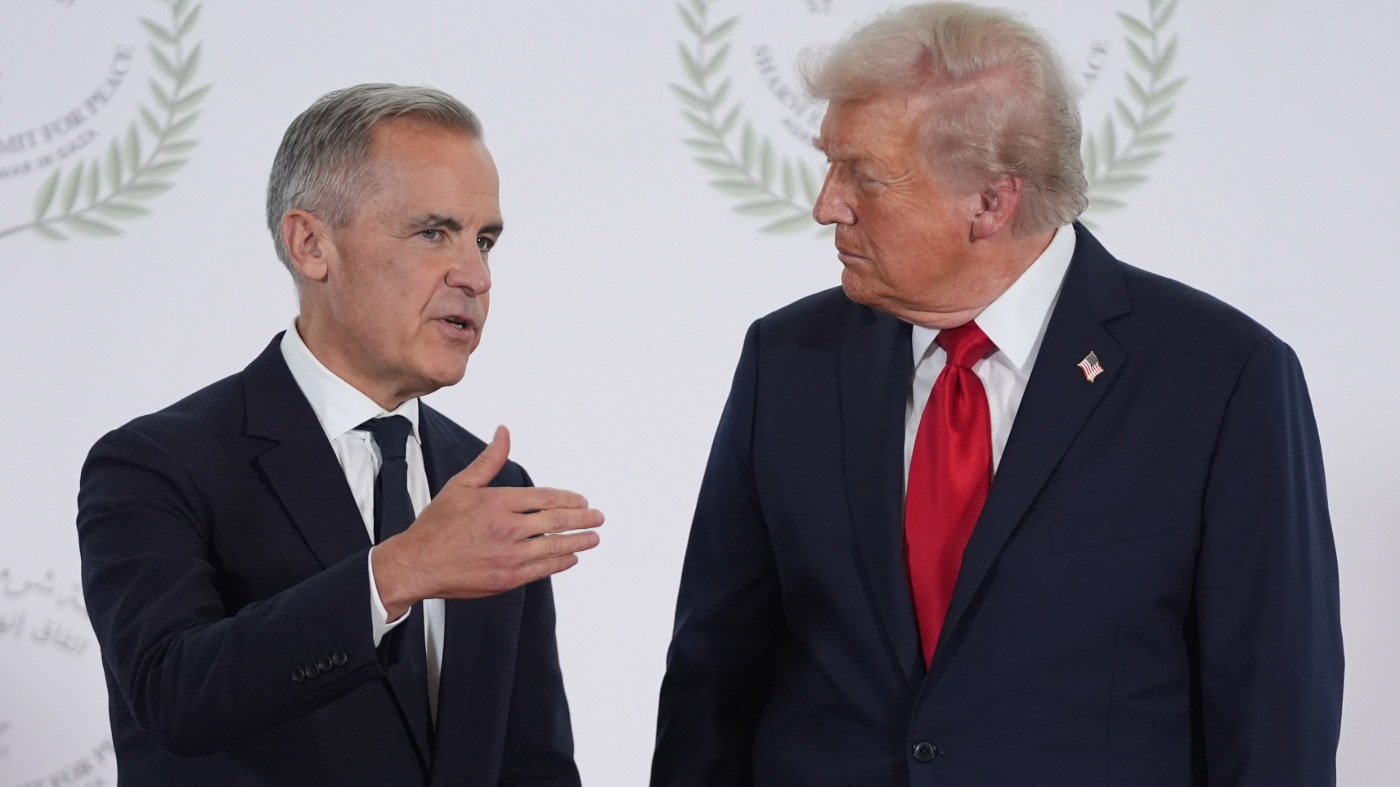
Democrats won control of both the Senate and House on Tuesday, and Canadians breathed a sigh of relief. After nearly two years of insults, economic coercion, talk of Canada becoming the 51st state , and the whole “ Lake America ” debacle, their relief is understandable.
But it would be a mistake to think that Canadians are willing to return to the status quo ante — to the pre-Trump Canada-U.S. relationship. Neither this congressional election nor a change of president in 2028 is likely to restore the bilateral relationship both countries until recently considered normal.
The international order that gave rise to that relationship is dying. It took shape and flourished within a system structured around American power: first during the Cold War’s bipolar confrontation, then during the unipolar era following the Soviet Union’s collapse. In both periods, U.S. leadership underpinned unusually close economic, political and security ties.
For Canada, the benefits were substantial. During the Cold War, American strategic power helped secure Canada against the Soviet threat, while Ottawa and Washington developed an increasingly integrated system of continental defense .
After 1991, American dominance allowed Canada to scale back defense spending and helped sustain an open international economy in which it prospered through continental trade and multilateral cooperation. That security and prosperity also created space for Ottawa to punch above its weight as a constructive middle power.
The arrangement was never free of friction, but its underlying logic was clear: Close integration with the U.S. made economic and strategic sense. Ironically, by enabling Ottawa to play an outsized role as a helpful fixer and respected peacekeeper, that integration also allowed Canada to be more distinctively Canadian.
Today, that order is giving way to a more fragmented multipolar world, characterized by renewed great-power competition and the erosion of the architecture of international cooperation. Prime Minister Mark Carney captured this shift at Davos in January when he declared that “the old order is not coming back.”
His point was not simply that Canada could no longer count on an America governed by Trump. The foundations of Canadian foreign, economic and security policy were undergoing an epochal transformation.
Multipolarity complicates Canada’s traditional calculation because it changes the incentive structure in Washington. Confronted by China’s rising power, Russia’s challenge to European security and the erosion of American primacy, the U.S. is reevaluating global commitments, pressing allies to shoulder more burdens , onshoring industrial capacity and treating trade and technology as instruments of strategic competition.
Where Washington once had greater latitude to sustain an open economy and tolerate differences with allies, it now increasingly judges close partnerships by their contribution to strategic priorities. For Canada, dependence on American power consequently carries risks that were less pronounced in the past.
Trump has pursued this adjustment in an especially undiplomatic and confrontational fashion. His tariffs and threats against Canada have made the risks of dependence painfully clear. Yet the broader American shift toward strategic competition, economic nationalism and selective international engagement is not simply a product of Trump’s preferences. It reflects structural realities that will persist long after he leaves office.
That is why Tuesday’s election, whatever relief it brings, will not derail or even significantly delay Canada’s ongoing strategic realignment. Congress can challenge tariffs and encourage a more cooperative bilateral relationship. A post-Trump White House may restore a measure of civility and predictability. And all of that will matter. But neither Democrats nor Republicans can recreate the international order that once made Canadian-American economic integration and strategic alignment seem both natural and optimal.
For Ottawa, the logical response is greater strategic autonomy — not separation from the United States, but the capacity to make more choices without being unduly constrained by Washington.
Geography and history make total rupture unrealistic. The two countries share deeply integrated supply chains, vital infrastructure and a continent whose defense requires close cooperation. Russian and Chinese capabilities, the strategic importance of the Arctic and the intensification of gray-zone competition make that cooperation more necessary, not less. The American market will likewise remain indispensable to Canadian prosperity.
Strategic autonomy must operate within those constraints. The objective is not some sort of fortress Canada or a profound rupture of the Canada-U.S. relationship. Rather, in keeping with Prime Minister Carney’s strategy of “value-based realism,” the goal is to diversify trade where practical, strengthen Canadian defense-industrial capacity , build sovereign capabilities and enhance partnerships in Europe and the Indo-Pacific. These are means of increasing Ottawa’s freedom of action.
Tuesday’s election may make the Canada-U.S. relationship less contentious, but it cannot reverse the overall trajectory of that relationship. Canada and the U.S. are both adapting to the emergence of a new geopolitical ecosystem — one which is generating new interests, incentives and anxieties in both capitals.
For Ottawa, greater strategic autonomy was never merely a response to Trump. It is a rational adaptation to this new ecosystem. Whoever governs in Washington, that reality is not going away.
Andrew Latham is a professor of international relations at Macalester College in Saint Paul, Minn., a senior fellow at the Institute for Peace and Diplomacy, and a non-resident fellow at Defense Priorities in Washington.
Topics in this story
Gathered from external sources. Rights to this text belong to whoever originally published it.