After more than 10 years as a secretary, Bette Nesmith Graham made correction fluid in her kitchen; by 1964, Liquid Paper was selling over 5,000 bottles a week
Discover how Bette Nesmith Graham transformed her passion for art and determination into a revolutionary business with Liquid Paper, changing the office supply industry forever.
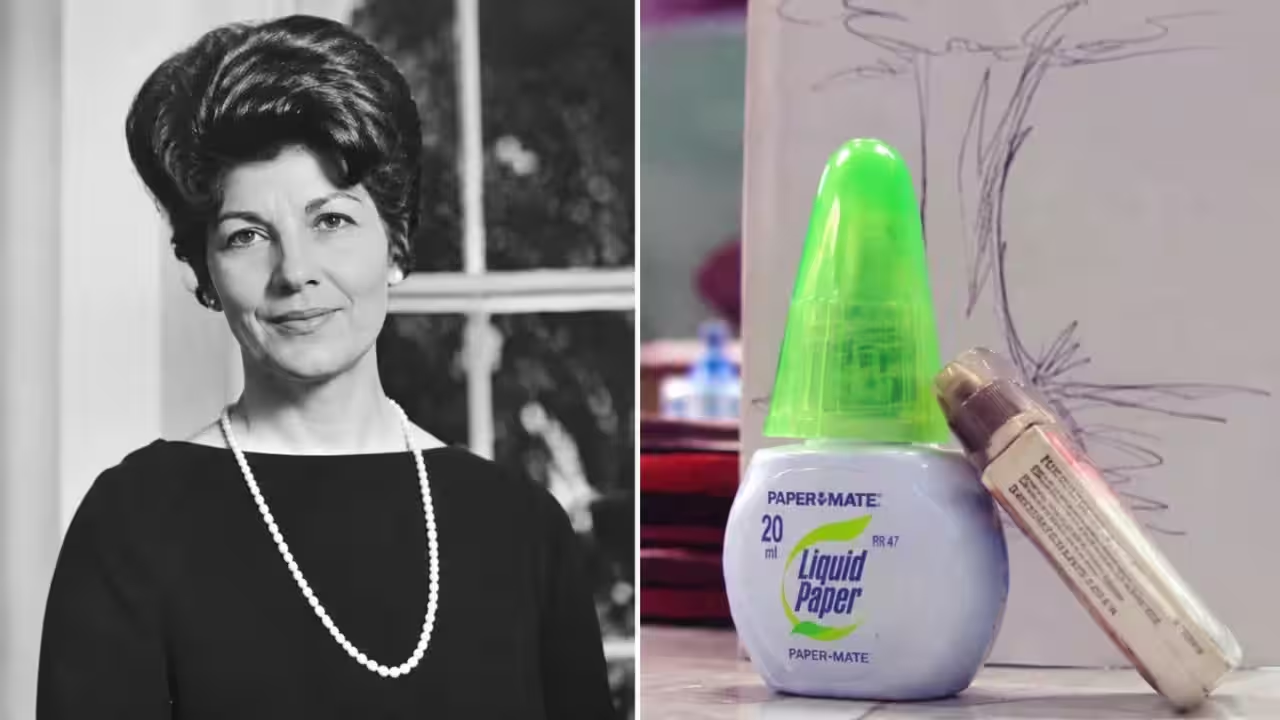
Parenting is never easy, and every parent goes to great lengths to provide for their children. However, single parents face even bigger challenges as they shoulder the responsibilities of raising a family alone. As a single mother in the 1950s, Bette Nesmith Graham (formerly known as Bette Clair McMurray) struggled to support her son financially on her meager secretarial salary while navigating technical challenges that threatened her job. Through hard work and sheer determination, this high school dropout became a businesswoman and helped change the office supply industry.One day, Bette stood outside the Texas Bank and Trust, watching the artists paint the windows in different colors for the Christmas season. She paid close attention to how they worked, noticing how effortlessly they painted over misplaced brushstrokes. Ultimately, her love for the arts and perseverance saved her career.At the young age of 17, Bette dropped out of high school to attend secretarial school and marry her longtime sweetheart, Warren Nesmith. Her perseverance helped her raise her infant son, Michael, while Warren served abroad as a soldier during World War II. The pair divorced in 1946, leaving Bette as a single mother who could not afford to lose her job, as it was her main source of income.The transition from manual typewriters to electric typewritersBy the 1950s, the clatter of typewriters was everywhere. At that time, several offices switched from manual typewriters to electric ones. While the electric typewriters automated daily tasks and maximized productivity, their messy carbon-film ribbons and sensitive keys led to more typos. An eraser could fix this problem, but the carbon ink would smudge all over the page, requiring a new draft due to a single mistake.Throughout her decade-plus career, Bette had climbed the ranks to become the executive secretary to the chairman of the Texas Bank and Trust. Although she was an organized and capable secretary, her typing accuracy suffered once offices switched to electric typewriters. As a result, she made frequent slip-ups and searched for ways to fix them.Remembering the artists painting the bank windows, Bette brought a small jar of white, water-based tempera paint into the office one day and used a watercolor brush to erase the typos. It worked remarkably well. Bette used her liquid creation for a while before other secretaries noticed and eventually asked her to create bottles of the wonder fluid for them.Motivated by the positive feedback, Bette began filling orders at night from her North Dallas home for local secretaries. At the same time, she worked alongside her son’s chemistry teacher and an industrial polymer chemist to refine the formula, which she initially called Mistake Out. Bette wanted to ensure that her product was perfect before it entered the market.Despite the surging demand for her correction fluid, Bette couldn’t afford the $400 patent application fee in 1956, as she earned $300 per month as a secretary. She kept her day job, and at night, she contacted potential buyers and sent out samples of her newly renamed Liquid Paper correcting fluid from Dallas to San Antonio and Houston.From dropout to successful entrepreneurIn 1957, Bette pitched her product to IBM, though the company declined. Soon after, she hired a small team of employees and began selling Liquid Paper to area office supply stores. According to the USPTO, Bette landed her first major order the next year when Fortune 500 behemoth General Electric asked for 400 bottles in three colors. Shortly thereafter, Bette began getting orders from major corporations including IBM, which had previously turned her down.Despite a promising start, the company struggled to make profits in its early years. However, things took a turn for the better in 1962, when Bette married her second husband, Robert Graham, a former food salesman. She used her partner’s expertise to sell Liquid Paper to office supply stores across the country. As orders increased, the company’s operations went from Bette’s kitchen to her garage, then to her trailer, and ultimately to a four-room house. By 1964, Bette’s business was profitable and selling 5,000 bottles per week.You use AI every day. Now get your AI Quotient. Take the AIQ test.
Topics in this story
Gathered from external sources. Rights to this text belong to whoever originally published it.