Iran and Oman outline plan for temporary Strait of Hormuz shipping lane; US rolls out sanctions
Iran and Oman outlined a joint proposal to establish a temporary shipping lane and launch a demining effort in the critical waterway. Follow for live updates.
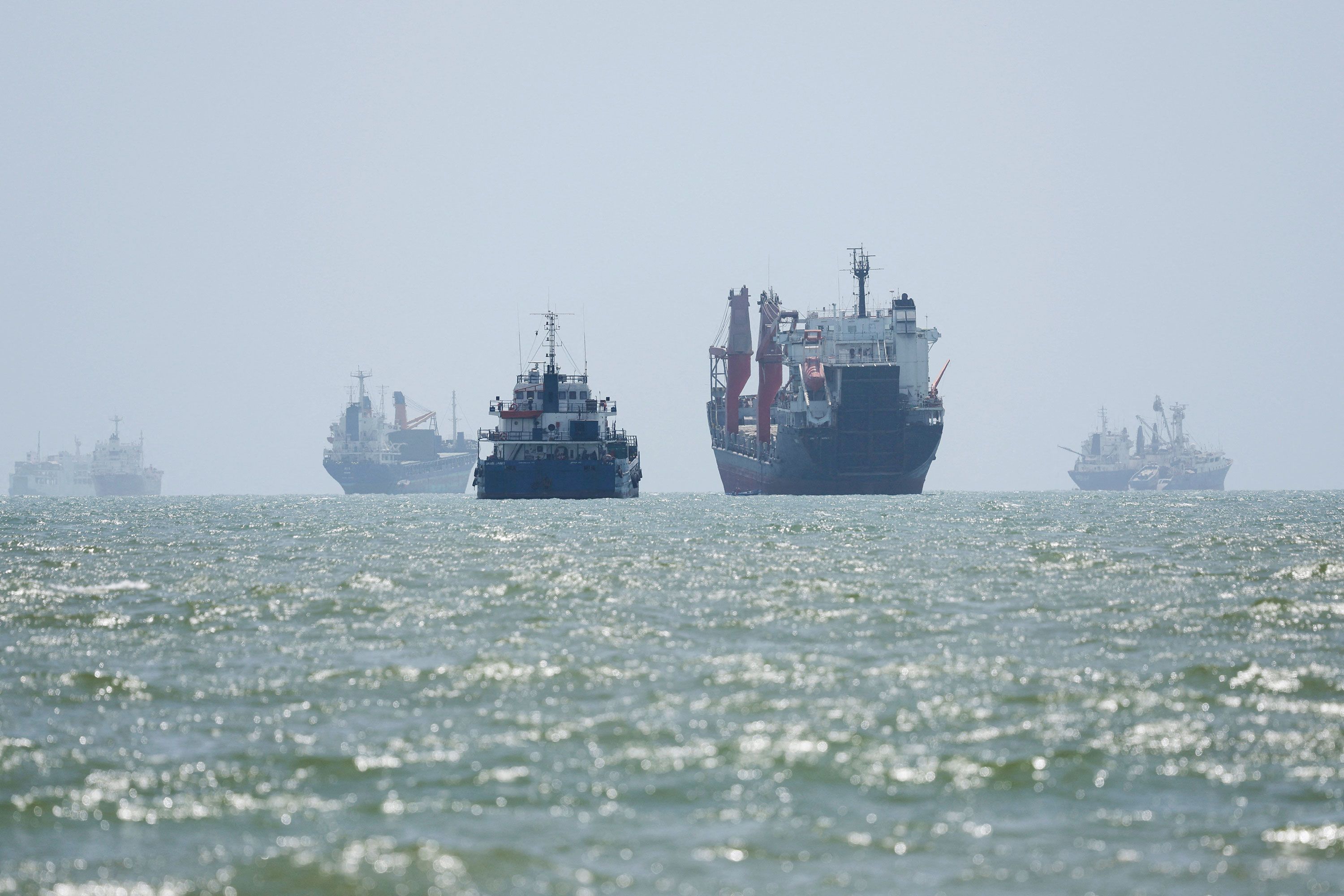
• Strait of Hormuz: Iran and Oman outlined a joint proposal to establish a temporary shipping lane and launch a demining effort in the critical waterway. Iran’s deputy foreign minister said the yet-to-be-finalized deal would see the closure of a UN-authorized shipping channel that follows the coast of Oman, and that Iran vehemently opposes
• US pressure: The US Treasury Department has begun its new campaign to tighten sanctions against Iran , targeting aviation, shipping, technology, gold and digital assets such as cryptocurrency. Even though the measures target the regime, ordinary Iranians will inevitably be affected.
• Secondary sanctions: The US is also threatening damaging new sanctions on countries that refuse to cut economic ties with Iran — but has stopped short of actually imposing big new penalties.
• China’s response: Beijing says the new measures “will only further intensify tensions” and that China’s cooperation with Iran should not be disrupted. Iran claims it is “fully prepared” to counter the sanctions.
When US Treasury Secretary Scott Bessent unveiled “Operation Economic Outcast,” threatening damaging new sanctions on countries that refuse to stop doing business with Iran, he didn’t name the one country that could decide its success or failure: China.
The world’s second-largest economy has long been a critical economic lifeline for Tehran , buying up the vast majority of its oil exports – worth an estimated tens of billions in US dollars last year – in addition to other trade.
Bringing it on board with the White House’s latest effort to subdue an Iranian leadership stubbornly defiant after almost six months of war, however, is an extremely tall order.
Beijing flatly rejects what it calls “unilateral” US sanctions and has long defended its right to regular trade with partners like Iran and Russia. It also surmises that Washington would be wary of triggering a broader economic confrontation that would hurt both countries, right ahead of the US midterms.
On Tuesday, following Bessent’s press conference, China’s Foreign Ministry vowed to “take all necessary measures” to safeguard its “own legitimate rights and interests” in the face of US sanction threats.
“Economic warfare and maximum pressure will not help resolve the issue; they will only further intensify tensions and conflicts, create spillover risks, disrupt the global economic and financial order,” ministry spokesperson Lin Jian said.
Bessent’s threat also comes ahead of a highly anticipated visit by Chinese leader Xi Jinping to the US next month, where the two sides could make progress on extending a critical trade truce set to expire later this fall.
A key route currently used by ships transiting the Strait of Hormuz would close under a pending Iran-Oman deal, according to a senior Iranian diplomat.
After weeks of fraught discussions , Tehran and Muscat outlined a proposal Tuesday to jointly establish a temporary shipping channel through the strait, and to “clear mines.”
Iran’s Deputy Foreign Minister Kazem Gharibabadi later said the yet-to-be-finalized deal would see the closure of the southern route, a UN-authorized shipping channel that follows the coast of Oman and that Iran vehemently opposes, state-linked Press TV reported.
The earlier Omani statement did not mention the route’s closure.
In recent weeks, the US government and ship tracking organizations have noted a growing amount of oil is transiting the critical waterway, despite Iran’s insistence it is closed. Much of that is traveling via the Omani route – or has taken that route as “dark” transits, during which ships turn off their tracking transponders, CNN reported last week.
While Iran has attacked dozens of ships that attempted to travel the southern route, many ships have recently chosen to ignore Iran’s demands and cross the strait with the promise of protection from US naval forces.
Gharibabadi said the potential new joint route agreed with Oman would see vessels “pass through Iranian waters in both directions,” the Press TV report said.
But whether the US, which insists the strait is international waters, would accept the new route is unclear. Last week, President Donald Trump threatened to attack Oman if it interfered with US efforts in the waterway.
Washington has worked to undermine Tehran’s claims of control of the strait, warning shipping firms on Monday they could face sanctions or penalties even if they comply with information requests from Iranian agencies over transits.
Iran and Oman outlined a proposal Tuesday to jointly establish a temporary shipping channel through the Strait of Hormuz, according to regional officials, after weeks of fraught discussions between the two countries.
Tehran and Muscat discussed a “phased framework” for a joint project facilitating a “temporary shipping corridor” and to “clear mines,” a press statement from the Iranian and Omani foreign ministries said.
Officials will carry on talks “with the aim of reaching agreement on a permanent shipping corridor and the future administration of the Strait,” the statement added.
Omani Foreign Minister Badr bin Hamad Al Busaidi visited Iran and held consultations with Iranian Foreign Minister Abbas Araghchi, the state-run Oman News Agency (ONA) reported earlier.
After the meeting, the Omani foreign minister said he was “hopeful” both nations would “soon announce a temporary corridor” for the strait. “Future management of the Strait and a permanent solution will follow in due course,” he posted on X . “Discussions with regional partners will be conducted in support of peace and cooperation, stability and freedom of navigation,” Al Busaidi added.
Araghchi wrote in a post on X that the proposed deal showed that “Iran’s commitment to peace and stability is matched by steadfast diplomacy with our neighbors.”
Over the past few weeks, Tehran and Muscat held negotiations to stabilize shipping in the waterway, which has emerged as a key bargaining chip in stalled discussions between Iran and the US, following months of regional violence.
Earlier today, US President Donald Trump reiterated that all mines in the Strait of Hormuz have been removed or detonated , and he threatened to destroy any boats that try to place more. “We are watching every square inch of the strait,” he said.
Meanwhile, Qatar Prime Minister Sheikh Mohammed bin Abdulrahman bin Jassim Al-Thani and Iranian Foreign Minister Abbas Araghchi held a telephone call and discussed the proposed temporary shipping channel, the Qatar foreign ministry said Tuesday.
Qatar has previously voiced support for the efforts between Oman and Iran to reach an agreement over the Strait of Hormuz, despite US President Donald Trump’s threat to attack Oman if it interferes with US operations in the strategic waterway.
A sweeping new US sanctions campaign targeting Iran and its economic partners is drawing criticism from China and defiance from Tehran, with senior Iranian officials vowing Washington’s economic pressure will fail.
Iranian Parliament Speaker Mohammad Bagher Ghalibaf claimed Tuesday that after suffering defeat “in the military and political war,” the United States “will also be defeated in its economic actions,” according to Iran’s semi-official Tasnim News Agency.
Here’s a look at what’s in the new measures under the Trump administration’s “Operation Economic Outcast,” a campaign Treasury Secretary Scott Bessent described as an effort to “sever every economic lifeline” sustaining Iran’s government.
Sanctions on more than 60 targets: According to Bessent, the Treasury Department’s Office of Foreign Assets Control is sanctioning “over 60 entities, individuals, and vessels across the world” accused of helping Iran procure nuclear and missile technology, conduct cyber operations and generate oil revenue.
Five sectors targeted : The administration announced new sanctions determinations covering five sectors that Washington views as critical to Iran’s economy: digital assets, technology, gold, aviation and shipping. Bessent said the measures increase the risk of sanctions for foreign companies and individuals that continue doing business with Iran in those sectors.
Pressure on countries dealing with Iran : The treasury secretary said US officials are meeting governments worldwide and informing them that Washington expects action against economic activities linked to Iran. “Every country has a defined timeline to shut down activities we have identified,” Bessent said. “If they do not take action, we will do so unilaterally through Treasury authorities.”
Iranian financial networks in focus: Bessent specifically singled out Iran’s Bank Melli, saying: “Every Bank Melli branch must be shuttered.” He also warned that entities facilitating money laundering on behalf of Iran could lose access to the US dollar system.
Oil exports and sanctions evasion: The treasury secretary said Washington has mapped Iran’s networks used to “smuggle oil and evade sanctions” and pledged a “zero-leakage approach” to cut off revenue streams that fund the Iranian government and the Islamic Revolutionary Guard Corps.
Topics in this story
Gathered from external sources. Rights to this text belong to whoever originally published it.