In Norway, painting the bottom 10 metres of wind turbines black was linked to 48% fewer willow ptarmigan carcasses; evidence birds may hit the tower, not blades
A study at Smøla wind-power plant reveals that painting the lower 10 metres of wind turbine towers black significantly reduces willow ptarmigan carcasses, suggesting that the tower itself poses a major collision risk. Researchers urge further testing across different sites.
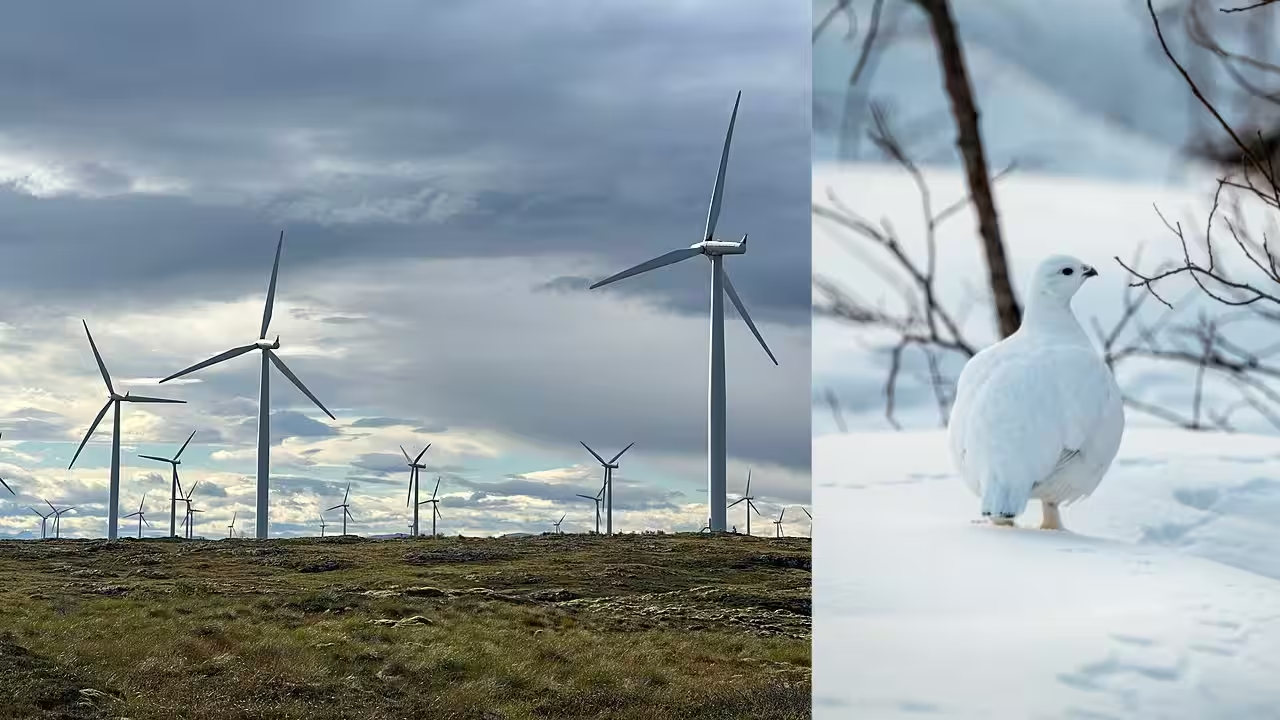
A study that was published in Ecology and Evolution in April 2020 examined turbines at the Smøla wind-power plant, where researchers suspected that some birds were striking the tower itself rather than the moving blades. They compared painted turbines with nearby unpainted controls and found fewer recorded ptarmigan carcasses per search at the towers that had been treated. The findings suggest that the tower base can be a significant collision hazard for this ground-dwelling bird, although the researchers did not conclude that all collisions occurred with the tower.The tower may be the overlooked hazardWind turbine bird deaths are often associated with rotating blades, but at Smøla, researchers had found willow ptarmigan (Lagopus lagopus) carcasses close to turbine bases, sometimes with injuries that are consistent with a collision against a hard surface. The study cited earlier observations which showed that 138 of 142 recorded flights by flushed willow ptarmigan were below 15 metres, and that height overlaps with the lower section of a turbine tower.Some carcasses were found only a few metres from the tower base, and while the evidence did not rule out blade strikes, it did raise the possibility that the tower itself accounted for a major share of ptarmigan deaths at the site. Researchers painted the lower 10 metres of selected turbine towers black to test a possible remedy, and the darker section was intended to increase contrast between the tower and its surroundings, which made the structure easier for low-flying birds to see and avoid.Researchers compared painted and unpainted turbinesThe experiment took place at the Smøla wind-power plant, which is an island site off Norway’s central coast, where researchers painted four turbine bases in August 2014 and six more in July 2015, while ten neighbouring turbines remained unpainted and served as controls. The research team compared carcass-search records before and after painting, and accounted for the number of searches carried out. Across the study period, the researchers recorded 474 bird carcasses at the wind farm, including 194 willow ptarmigan.The analysis found a 48.2% reduction in the annual number of recorded ptarmigan carcasses per search at painted turbines relative to unpainted controls, and also found that ptarmigan carcasses were located farther from painted towers after treatment. However, the authors reported variation between years, and the result does not establish that painting would produce the same reduction at every wind farm.Blade painting may address a different riskA second study was published in Ecology and Evolution in July 2020, which found that the annual number of recorded bird carcasses per turbine fell by more than 70% at turbines with a painted blade compared with nearby unpainted controls. That experiment focused on rotor-blade visibility, while the ptarmigan study examined the lower tower, and the findings point to two different potential collision hazards, rather than a single explanation for bird deaths at wind farms.A practical measure that needs wider testingWind turbines can affect birds through collisions, habitat changes and other disturbances, and the US Fish and Wildlife Service says that the risk depends on factors including turbine location, design and the movement patterns of birds in the area. The Smøla findings give researchers a potential way to address tower collisions without changing how a turbine generates electricity, but the study authors recommended further testing to establish whether the effect applies to other locations and species. The 48% reduction is evidence from one Norwegian wind farm and one bird species for now, and does not establish that painting turbine bases black will reduce overall bird mortality by the same amount everywhere.You use AI every day. Now get your AI Quotient. Take the AIQ test.
Topics in this story
Gathered from external sources. Rights to this text belong to whoever originally published it.