In 1931, Georgia farmer Mose Coleman grew onions that were sweet instead of hot; decades later, the accidental crop was designated Georgia’s official state vegetable
Discover the fascinating history of Vidalia onions, the sweet triumph of Georgia's farmers, and how an accidental crop turned into the state's official vegetable.
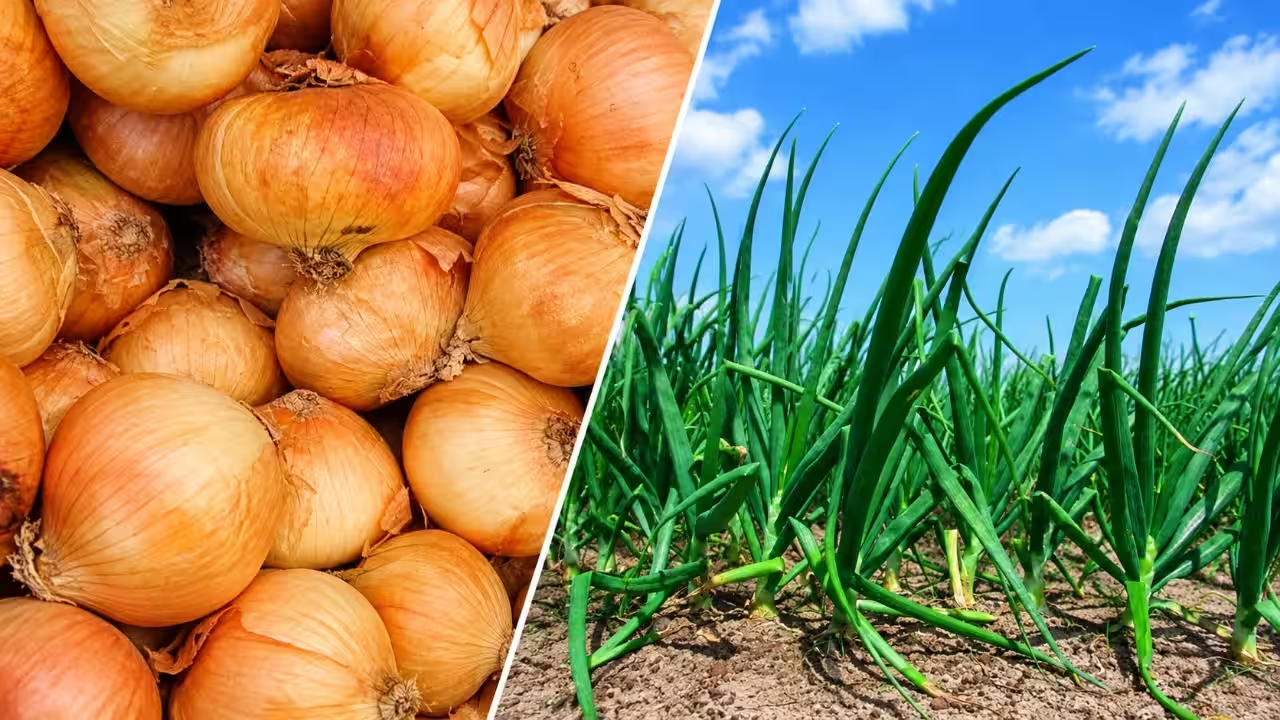
Throughout history, the onion has traded its flavour for a small tax of tears. Yet in Georgia, an onion emerged without its familiar sting. Unlike a pungent root, it had a mild, pleasant sweetness closer to an apple. This crop, which would have made a farmer wince, did the opposite.New Georgia Encyclopedia recorded that in 1931, Mose Coleman lifted onions from his Toombs County, Georgia, fields and found them to be milder than sharp. Their unexpected taste gave him something to sell when farmers were struggling to earn a fair return. The onions would eventually be named after a neighbouring town, acquire legal protection and, as Vidalia onions, become Georgia's official state vegetable, the encyclopedia noted. They made their way into the market with a price of $3.50 for a 50-pound bag, the New Georgia Encyclopedia noted.Roadside travellers and a supermarket boost Coleman was the first grower of the crop which came to be known as the Vidalia onion. The name became familiar through commerce rather than legislation. In the 1940s, Georgia established a farmers’ market in Vidalia, a town positioned along well-travelled routes, the New Georgia Encyclopedia noted. Visitors who bought the onions began spreading word of them beyond the area.According to the Vidalia Onion Committee, shoppers gave the crop its familiar name, which also pointed to the market and the town's position at a crossroads. Piggly Wiggly, which operated a distribution centre in Vidalia, bought the onions in season and helped them reach stores across the region.Production expanded gradually. By the middle of the 1970s, growers in the area had devoted about 600 acres to the crop. During that decade, producers sought customers across the country and increased their promotional work. In Vidalia and Glennville, around 35 miles southeast, onion festivals became an annual event that took place in May.Protecting the Vidalia name by lawHowever, as the name gained traction, growers faced a problem as onions from elsewhere were being repackaged and sold as Vidalias. In response, between the late 1970s and early 1980s, producers formed marketing groups and cooperatives to safeguard the product’s identity.New Georgia Encyclopedia recorded that University of Georgia extension agents convened a region-wide meeting in 1985. Further discussions in Reidsville involved the US Department of Agriculture, the Georgia Department of Agriculture and university staff. After that, it was agreed among growers to seek formal protection for the Vidalia name. Subsequently, in 1986, the Georgia legislature passed the Vidalia Onion Act. It also designated 20 counties in which the crop could be grown and placed the state in control of the name as it applied to onions. However, a proposal for an Onion Commodity Commission failed in 1986 but won approval in a grower referendum the following year.Federal recognition followed in 1989. The U.S. Department of Agriculture Federal Marketing Order No. 955 established the Vidalia Onion Committee and provided a structure for promotion and research. Consequently, in 1992, Georgia became the owner of the Vidalia onion trademark.How farmers keep the bite out The crop’s mildness also shaped how it is grown. According to the New Georgia Encyclopedia, the seed is typically sown in September to produce transplants, which take about eight weeks to develop. The seedlings are pulled and trimmed before being set out by hand in prepared rows. An acre carries about 80,000 plants, the New Georgia Encyclopedia noted. Sulphur fertiliser is restricted because it can enhance the onions’ pungency.The next stage is harvest, which takes place from mid-April to mid-June. When the necks weaken and the tops fall, growers undercut the bulbs in order to dry them. Much of the crop is still gathered by hand. Mechanical harvesting has become more common as labour costs and production have increased. The final stage of packing includes further drying, after which the onions are sorted and packed. Those intended for storage are kept in bins and coolers.Where the crop standsControlled atmosphere storage, the Vidalia Onion Committee recorded, extended the selling season beyond the spring harvest. This technology was adopted in 1990, from the methods used in the apple industry. Through this method, around 20 million pounds of onions were held for as long as six months. By 2010, annual plantings had reached about 12,000 acres, with an average farmgate value of $150 million, the New Georgia Encyclopedia noted. The same year, the crop had accounted for 40% of US spring onion production.You use AI every day. Now get your AI Quotient. Take the AIQ test.
Topics in this story
Gathered from external sources. Rights to this text belong to whoever originally published it.