In 1996, CNN founder Ted Turner bought a reported 558,000-acre New Mexico ranch; conservation work expanded its bison herd and restored about 30 miles of streams
US News: Discover how Ted Turner transformed Vermejo Park Ranch into a model of ecological restoration while reviving its bison population to over 1,200 and restoring essential habitats across 558,000 acres.
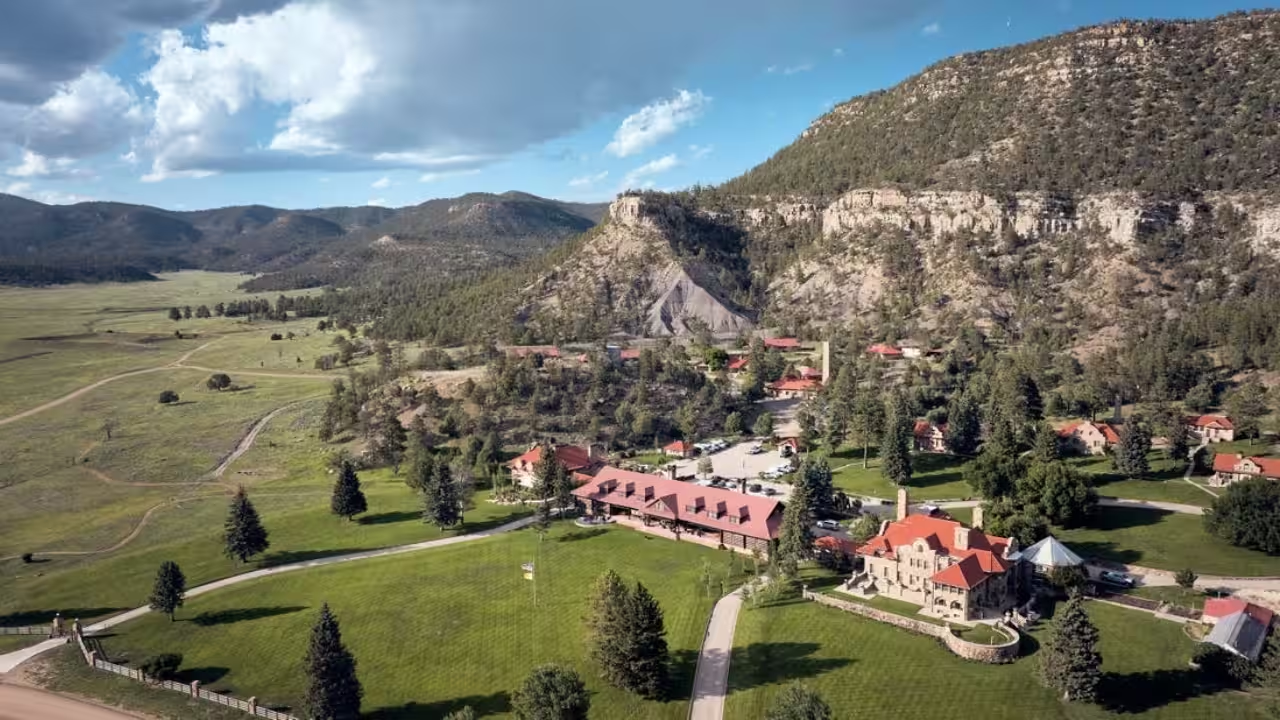
In 1996, when CNN founder Ted Turner bought Vermejo Park Ranch from Pennzoil, he acquired an enormous private landscape in northern New Mexico and southern Colorado that had a long history of ranching, mining and intensive land uses. Reported to cover roughly 558,000 acres by High Country News, the property contains diverse habitat, ranging from semi-arid grasslands to alpine forests, that support vital populations of bison, elk, black bears and mountain lions. Over the decades that followed, Turner’s managers worked to restore parts of the overused landscape, with the ranch’s bison population eventually exceeding 1,200 animals and riparian areas along around 30 miles of streams undergoing restoration.Ted Turner’s conservation interests predated the Vermejo purchase, as he had already begun acquiring large Western ranches and building bison herds, but the newly acquired landscape gave him an unusually large area on which wildlife conservation, ranching and habitat restoration could occur simultaneously. The ranch was not converted into a conventional nature preserve; instead, the management approach opted to maintain productive uses while changing land-management practices to improve habitat and protect native species. This was reportedly a part of Turner’s broader effort to combine conservation with economic activity on his private ranches.A working ranch begins a long restoration effortHigh Country News described the property as overgrazed and overused and noted that the managers worked over many years to restore its ecological conditions. Furthermore, the size of the property allowed restoration work to take place across grasslands, forests, streams and wetlands while the ranch continued to operate as a working landscape.A NASA DEVELOP technical report, produced with Vermejo Ranch and Colorado Parks and Wildlife, noted that the ranch partnered with the US Fish and Wildlife Service and Colorado Parks and Wildlife on a large native-trout restoration project. Beginning in 2002, the work included wetland and riparian restoration and reintroduction of Rio Grande cutthroat trout in the Costilla Creek watershed. Additionally, the project used satellite and other remote sensing data to identify wetland and riparian regions where additional habitat restoration could be undertaken.The ranch’s conservation agreements also brought state and federal agencies into long-term habitat work in 2013. Notably, because Costilla Creek acts as an interstate waterway, the native trout restoration initiatives spanned a shared watershed matrix. The New Mexico Department of Game and Fish reported that the park ranch, the department, Colorado Parks and Wildlife and the US Fish and Wildlife Service jointly signed an agreement to safeguard the Rio Grande cutthroat trout. The initiative included removing non-native trout in parts of the watershed while allowing the ranch to continue agricultural and recreational uses.More than 1,200 bison have been restored in the landscapeBison became one of the most visible symbols of Turner’s conservation efforts. The CNN founder considered the species both an important part of the Great Plains ecosystem and a practical component of large-scale ranch management. At Vermejo, the restoration programme eventually brought the bison population to more than 1,200 animals.Independent academic research shed additional light on the size of the herd. A 2024 University of Nebraska-Lincoln master’s thesis examined the spatial ecology of American bison on Vermejo Park Ranch and documented a population of around 1,200 bison during 2022-23. The research analysed how bison movements and grazing patterns related to forage and landscape conditions on the ranch. Additionally, early conservation reports documented the restoration of riparian areas along about 30 miles of streams, while NASA and government records verify long-term wetland stability and provide satellite imaging confirmation of these remote mountain ecosystems.Conservation expanded beyond the ranch’s bison restorationIn 1997, Turner established the Turner Endangered Species Fund, which subsequently supported conservation projects that involved species like Mexican wolves and black-footed ferrets. Some of those projects occurred on Vermejo, while others were undertaken on Turner’s other ranches.Additionally, the ranch remained economically active, as activities like hunting, fishing, tourism and ranching continued alongside conservation work. According to the US Fish and Wildlife Service, the property contains 19 fishable lakes and more than 550,000 acres of habitat, while the ranch’s current materials describe about 30 miles of streams and a range of wildlife-based recreational opportunities.The restoration work continued beyond the earliest years of Turner’s ownership. In 2021, the CNN founder established the Turner Institute of Ecoagriculture, thus extending his interest in combining ecological restoration with productive land management.By the time of recent reporting, the property had become a long-running example of private conservation on a working landscape. Its transformation was not a single before-and-after event; instead, it involved changes to land use, restoration of riparian and wetland habitats, native fish recovery, reclamation of areas affected by historic mining and long-term management of a large bison herd.Catch the latest World News and Live updates. Download the TOI app.
Topics in this story
Gathered from external sources. Rights to this text belong to whoever originally published it.