In the late 1980s, a woman who paid £10 for a “costume” ring discovered it held a 26-carat diamond; then it sold for £656,750 in 2017
Rest of World News: A woman bought a box of costume jewelry for £10 and discovered a 26-carat diamond ring worth £656,750 at auction. Explore the remarkable journey of this stunning diamond and what led to its astonishing value.
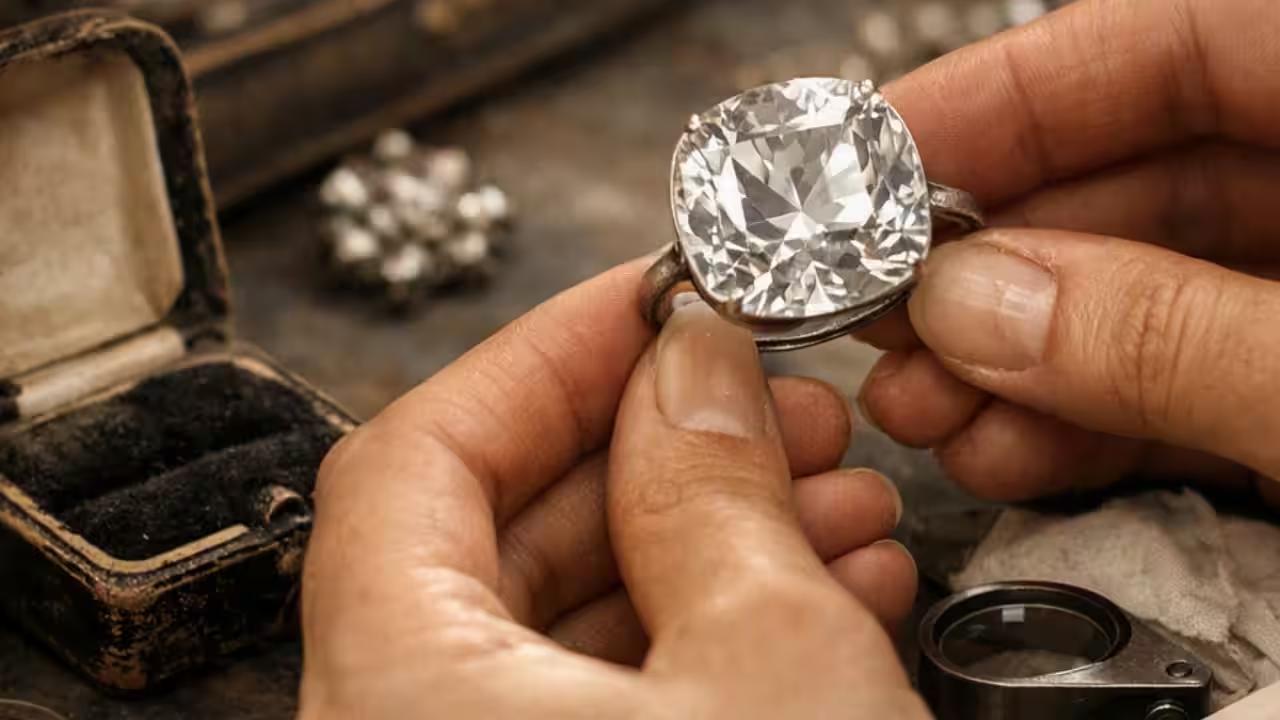
In the late 1980s, roughly three decades before its true value came to light, a woman at a car boot sale in Isleworth, west London, bought a box of costume jewelry for £10. Among the bangles was a large, dull-looking cocktail ring set with a single clear stone in a tarnished mount. The stone did not sparkle the way people expect a diamond to, so she assumed it was costume jewelry and wore it for decades without a second thought, taking it shopping and treating it as an everyday piece rather than anything valuable.GIA's 2017 identification of a 26.27-carat VVS2 diamondThe truth behind the ring's history was revealed in 2017, more than two decades after its purchase, when the owner brought it to a jeweler on the advice of having the stone assessed. Sotheby's sent the ring to the Gemological Institute of America, which identified it as a nineteenth-century, cushion-shaped diamond weighing 26.27 carats, with VVS2 clarity and an I color grade. Sotheby's sold the ring on June 7, 2017, for £656,750. Jessica Wyndham, Sotheby's Head of High Jewellery, Europe, said that from the moment she saw the stone, she knew it was an extraordinary item. Sotheby's said the owner wore the ring for years without knowing its worth.Antique cushion cuts versus modern round brilliantsThis is why the diamond was able to pass for costume jewelry all this time. The cut that is made on the modern-day round brilliant diamond is such that it makes the light bounce back to the viewer's eyes, creating the flash that is considered characteristic of a real diamond. In the antique cushion and the old mine cuts, the diamond is hand-cut and does not have the same proportions as the round brilliant diamond. This means that even though the cut diamonds still have flashes of light, there will not be the bright light flash. A landmark GIA study of round-brilliant cut quality, A Foundation for Grading the Overall Cut Quality of Round Brilliant Cut Diamonds, published in the journal Gems & Gemology, modeled how proportions influence brightness, fire, and scintillation over fifteen years of research. The results of their findings provide an explanation for why a diamond of antique proportions may not show broad brilliance as a modern round brilliant, despite the fact that the value of a diamond is determined by many other factors apart from the brilliance of the stone when worn. An old diamond cut like this can be less bright or sparkly than a properly cut modern diamond despite the value of the diamond.Akerlof's 1970 "lemons" model and the £10 mispricingThe ring's journey from a £10 box of bangles to a six-figure auction lot is also a vivid example of how information gaps can produce extreme mispricing. In 1970, economist George Akerlof published The Market for "Lemons": Quality Uncertainty and the Market Mechanism in the Quarterly Journal of Economics, analyzing markets in which buyers cannot reliably distinguish high-quality goods from low-quality ones, a problem that can cause valuable goods to be undervalued or driven out of the market altogether. Akerlof's theory describes cases where one party knows more than the other. The car-boot sale is a different, related case: neither the original seller nor the woman who bought the bangles could identify or test the stone. A real 26-carat diamond changed hands like a cheap trinket because neither side knew what it was.Sotheby's June 7, 2017 sale: £656,750Dubbed "the Tenner," due to its initial purchase price of £10, the ring was auctioned off during the Sotheby's Fine Jewels auction in London on June 7, 2017, with an estimate of £250,000-£350,000. The sale price reached £656,750, surpassing the high end of that estimate almost twofold. According to Tobias Kormind from 77 Diamonds, a diamond expert, the diamond might have been re-cut, although there are no records of this happening yet.Before the 1980s, the history of the ring remained a mystery. According to the editorial “A Rare Diamond Discovered at a Car-Boot Sale” by Sotheby’s, the old cushion shape of the diamond and the gemological analysis helped determine that the ring came from the nineteenth century. Still, according to Sotheby’s, neither the mine from which the stone came nor its owners were ever determined.Catch the latest World News and Live updates. Download the TOI app.
Topics in this story
Gathered from external sources. Rights to this text belong to whoever originally published it.