In 1991, Harvard Forest buried heating cables 10 cm deep to warm Massachusetts soil by 5°C; after 26 years, warmed plots had lost 17% of carbon stored in the top 60 cm 2. redundancy
US News: A long-term experiment at Harvard Forest shows that warming temperatures can significantly affect the carbon cycle in forest soils, leading to a complex interaction between microbial activity and organic matter decomposition.
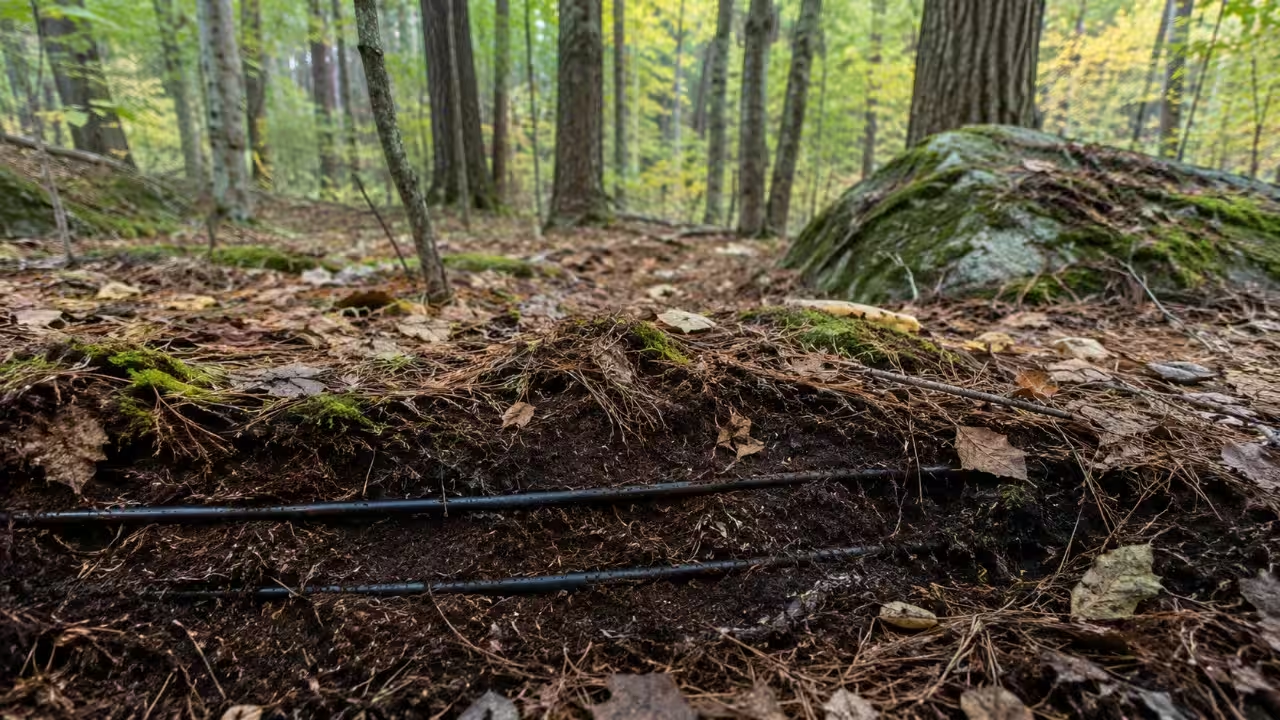
Beneath a Massachusetts forest, scientists had been deliberately warming the soil for more than two decades to study how rising temperatures affected the carbon stored underground. According to Harvard Forest, the experiment began in 1991 at the Prospect Hill Tract in Petersham, Massachusetts, within an even-aged mixed hardwood forest. Researchers established heated plots alongside control plots and used resistance cables buried about 10 cm below the soil surface to keep the warmed plots roughly 5°C above ambient soil temperatures. By the time of a major study published in 2017, the experiment had provided 26 years of observations on soil respiration, carbon dioxide emissions, soil moisture, nitrogen cycling and other processes, allowing researchers to examine how sustained warming altered the forest’s underground carbon and nitrogen cycles.Heating the soil beneath the forestAt the Prospect Hill site, resistance cables were buried about 10 centimetres below the soil surface. The heated plots were maintained at temperatures roughly 5°C above those of the control plots, with sensors and automated equipment regulating the temperature difference. The experiment was designed to examine how warming affects fundamental soil processes, particularly the cycling of carbon and nitrogen. Forest soils contain organic matter made up partly of material derived from fallen leaves, roots and other biological remains. Microorganisms break down this material, releasing carbon dioxide as they respire. Warming can accelerate microbial activity, potentially increasing the rate at which carbon moves from soil into the atmosphere.But the Harvard Forest experiment showed that the soil-carbon response did not remain constant throughout the study. During the first decade, the warmed plots released more carbon dioxide than the control plots, and researchers estimated that they had lost about 11% of the carbon stored in the upper 60 centimetres of soil. The difference in carbon dioxide emissions between the warmed and control plots then diminished for several years, including a period when the plots showed little separation. This changing response suggested that microbial activity depended not only on temperature but also on the amount and composition of organic matter available in the soil. As the experiment continued, the researchers observed further changes in the soil-carbon response, showing that the effects of long-term warming could not be described as a simple, constant rate of carbon loss.A 26-year experiment revealed a changing responseAccording to research published in Science, the Harvard Forest warming experiment had recorded 26 years of observations by 2017, and the warmed plots held about 17% less carbon in organic matter in the upper 60 centimetres of soil than the control plots. The researchers found that carbon loss did not occur at a constant rate. Warming initially increased soil carbon emissions, but the difference between heated and control plots became undetectable between 2001 and 2007 before carbon release increased again from 2008 to 2013 and later declined towards control levels. The researchers linked these changes partly to shifts in the soil microbial community, including a greater role for organisms capable of decomposing more resistant organic matter such as lignin. As easily decomposed material became depleted, the microbial community changed, and the rate of carbon release also changed.What the experiment means for a warming worldThe experiment was designed to isolate the effects of sustained soil warming by raising temperatures by about 5°C, allowing researchers to examine how changes in temperature influenced soil carbon processes under controlled conditions. This level of warming was larger and more abrupt than the gradual warming experienced at many natural forest sites, so the experiment was not intended to reproduce a specific future climate scenario. Instead, it provided a way to investigate the mechanisms through which warming can alter carbon stored in forest soils. Forests are not only places where trees remove carbon dioxide from the atmosphere; their soils also contain large quantities of organic carbon, and temperature changes can affect how quickly that material is decomposed and released.Harvard Forest still focuses on the impact of climate warming on soil organic matter and microbes. According to a recent study using the same long-term warming experiment, decades of warming affected soil organic matter, providing further evidence that warming can influence below-ground carbon processes over long periods. The broader lesson from Harvard Forest is about the invisible processes beneath the forest floor, not just a single percentage. Microbes change their behaviour, organic matter is transformed, and the carbon input and output in the soil varies with time. As a result of decades of heating several specific plots, researchers had a unique opportunity to observe this process. This experiment offers an unusual glimpse into the future of one of the planet’s least understood carbon sinks under climate warming.Catch the latest World News and Live updates. Download the TOI app.
Topics in this story
Gathered from external sources. Rights to this text belong to whoever originally published it.