Thameslink to replace over 60,000 'ironing board' train seats
Greater Thameslink Railway says these upgrades are part of the wider renationalisation plans.
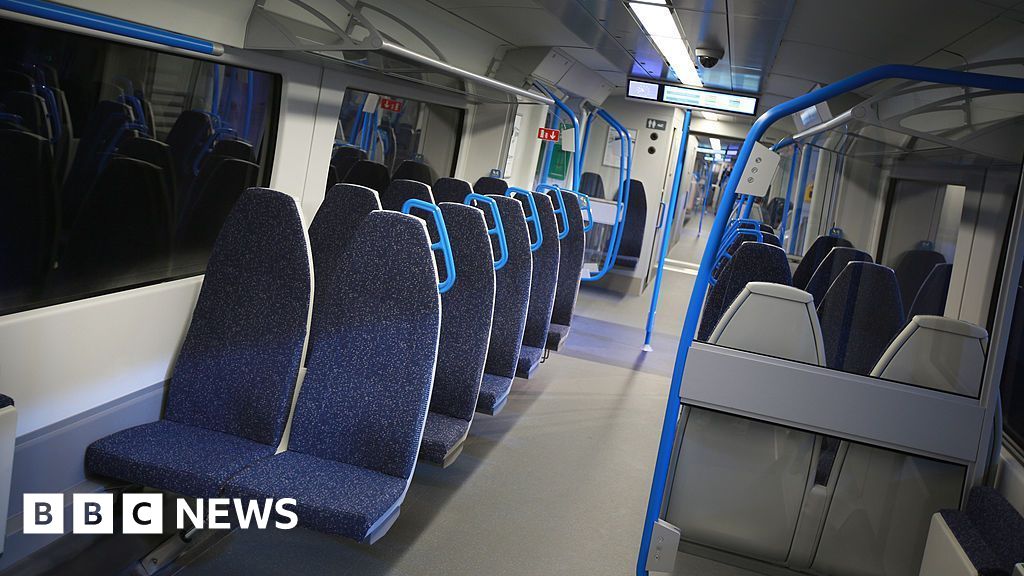
"Ironing board" seats on some commuter trains will get extra cushioning, the transport secretary has said, more than a decade after the government spent £1.6bn of public money building the fleet.
Heidi Alexander announced that more than 60,000 seats on all 115 Thameslink trains would get new cushions and backrests, replacing much-criticised thin and hard seats.
She said the work, set to begin in 2027 and last two years, was "public ownership of our railways in action" as part of the new Great British Railways programme.
However, some have criticised how the Department for Transport (DfT) awarded a £1.6bn contract for the trains despite being warned of the seat discomfort at the time.
The seat upgrades are part of wider improvements planned for the Thameslink network after Greater Thameslink Railway came into public ownership in May 2026 .
Other measures included an increase in Gatwick Express services from December and a programme to refurbish train toilets and remove graffiti across the fleet.
Alexander said: "We'll start getting rid of the dreaded 'ironing board seats' so passengers can enjoy comfier, more pleasant journeys on some of Britain's busiest commuter routes."
She said wider rail reforms would continue under the planned Great British Railways organisation, which is intended to oversee rail services across England.
The class-700 Thameslink trains were heralded by the DfT as "state-of-the-art" and "a fantastic deal" for taxpayers when they were rolled out between 2016 and 2019.
That followed the DfT spending £1.6bn of taxpayers' money for German manufacturer Siemens to build the trains in 2013, following a bidding process which began in 2008.
DfT's own procurement guidance document for the fleet, seen by the BBC, stressed that they should be "high capacity" and "reduced weight".
It said the new electric fleet would have a design that "must cater for [about] 1,000 people to board or alight at one time" and a "2+2 seat layout to ease flow and provide standing space".
Some have claimed that this aim to maximise capacity and standing space for commuters led to the seats being so thinly cushioned.
Responding to Alexander's post on X praising the new re-cushioning project, Graeme Pickering, senior correspondent at Railway Magazine, wrote: "Might have been wise not to frame this as 'public ownership fixes private sector mess' when it was the DfT which procured said trains."
Two years before the Thameslink trains were rolled out to the public, a prototype was unveiled at London's Excel centre in 2014.
A panel of volunteer experts at Railfuture, the UK's leading independent rail passenger campaign group, went to have a look and was not impressed.
In a report, they warned: "We found the seats very hard and imagine this will soon lead to complaints from passengers, particularly bearing in mind that some journeys on these trains will be up to 130 miles long such as Peterborough or Cambridge or Bedford to Gatwick & Brighton and taking over two hours."
Passenger comfort was "severely compromised" and "we strongly urge reconsideration of the design before series production takes place", their report warned.
Production went ahead without the seats being redesigned. The DfT argues that it was not possible to renegotiate a private sector contract until public ownership took effect earlier this year.
The BBC understands more details will be released in the autumn on the contract negotiations for the new cushions.
John Whitehurst, chief executive of GTR, said passenger feedback had played a key role in shaping the plans.
"Our customers told us that comfort matters, which was why we'd been working on plans to improve seating on Thameslink services," he said.
Thameslink operates services across the South East, including Sussex, Surrey and some areas of Kent.
Follow BBC Sussex on Facebook , X , and Instagram and listen to BBC Radio Sussex on Sounds . Send your story ideas to southeasttoday@bbc.co.uk or WhatsApp us on 08081 002250.
Biggest rail operator nationalised: What it means
First Great British Railway branded train unveiled
Train fares will not increase this year, Govia says
Topics in this story
Gathered from external sources. Rights to this text belong to whoever originally published it.