At 632 m, Shanghai Tower places sky gardens between two glass skins, using thermal buffer zones and natural updrafts to reduce heating and cooling demands
Explore the remarkable features of Shanghai Tower, the tallest building in China, known for its 24 sky gardens and energy-efficient design that naturally regulates temperature and airflow.
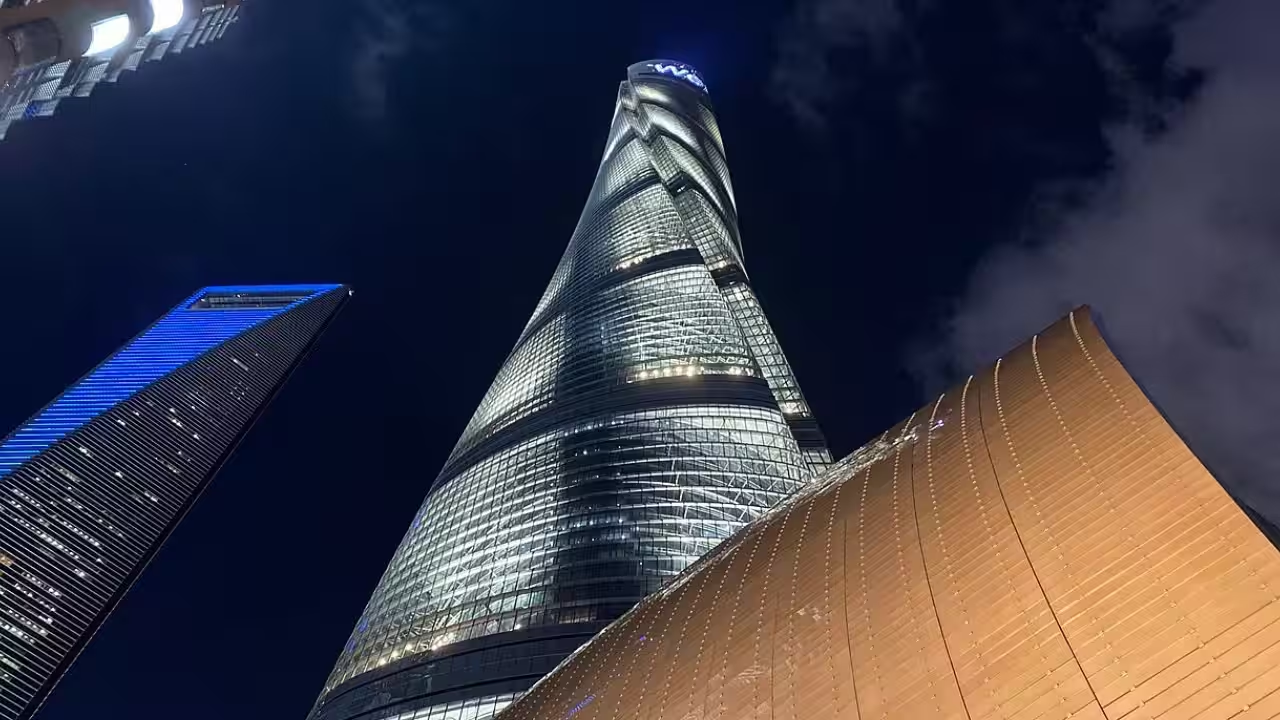
Shanghai Tower rises 632 meters above the ground, but one of its most interesting features is hidden behind its glass exterior. The skyscraper has a series of multi-story sky gardens and atria between two layers of glass. These elevated areas have been designed as part of the structure to control temperature and let air move naturally, so the building uses less energy on heating and cooling. Designed by architectural company Gensler, the tower stands at the centre of the Lujiazui Financial Zone of Shanghai. Architectural Record lists its completion date as December 2015 and Gensler says it opened to the public in 2016. According to the Institution of Civil Engineers, the building has 128 floors, 127 of which sit inside the inner layer of the glass facade. Of its above-ground floors, 121 are occupied. According to the Institution of Civil Engineers, the tower consists of nine cylindrical buildings stacked vertically. An inner glass wall encloses these sections, while a second glass skin wraps around the entire structure. The outer facade twists approximately 120 degrees as it rises.Sky gardens between two glass facadesMulti-story atria filled with gardens, cafes and stores fill the gap between the two glass shells. Such open, elevated areas provide opportunities for gathering while functioning as a buffer between the interiors and the external climate. The building features nine vertical sections, each containing a separate indoor garden and community areas. Between the inner glass layer and the twisting outer facade, Shanghai Tower has nine indoor zones that serve as public space for visitors. However, the exact number depends on how those areas are classified. The Institution of Civil Engineers describes nine indoor zones between the two glass layers, while Architectural Record counts 21 atria that it also calls sky gardens. Finally, the double facade contributes to energy efficiency. In the summer season, the air space between the glass shells contributes to cooling, while in the winter, it contributes to heating. This moderates the temperature difference between the interiors and the exterior environment. The role of such a buffer is recognised as one of the main elements of energy-efficient design of the tower by the Institution of Civil Engineers.How the tower uses natural air movementAdditionally, the atria between the facades also contribute to the effectiveness of ventilation. Warm air naturally rises, creating an upward force that can lead to airflow up towards the exhaust at the upper parts of these spaces. The ventilation system works by using the natural flow of air upwards with exhaust mechanisms and the release of air from the interior. According to Architectural Record, the first few feet of each atrium are heated and cooled with perimeter fan coil units, typically only during weather extremes.However, the rest of the atrium depends on natural upward airflow, regulated exhaust mechanisms and airflow from the mechanically conditioned interior. This does not mean that the whole building is completely un-air-conditioned. Office and other interior spaces continue to rely on mechanical heating and cooling. However, the double-skin technology allows the minimisation of the environmental loads on these systems.A twisting structure designed to save energyAnother element that improves the functionality of the tower is its curved design, which makes the external facade twist as it rises and decreases the effects of the powerful winds on the tower. Wind load testing enabled the architects to come up with a design that has 24 percent less wind load than a standard rectangular tower, according to Architectural Record, which cites Gensler. The building also has 270 wind turbines as well as water collection and water reuse systems at its upper levels. Shanghai Tower has been certified LEED Platinum by the US Green Building Council and holds China's Green Building Three Star rating, according to Gensler. Shanghai Tower still holds the title of China's tallest building. Its unique design merges both public space features and environmental aspects at great heights. Thanks to the presence of sky gardens, two glass facades and the ventilation system, the structure can regulate heat and airflow in the building while saving energy resources.You use AI every day. Now get your AI Quotient. Take the AIQ test.
Topics in this story
Gathered from external sources. Rights to this text belong to whoever originally published it.