Tensions run high in Northern Ireland after contentious march given go-ahead
British Prime Minister Andy Burnham called for calm in Northern Ireland on Sunday after a contentious parade was given the go-ahead by the High Court in Belfast in a late-night sitting.
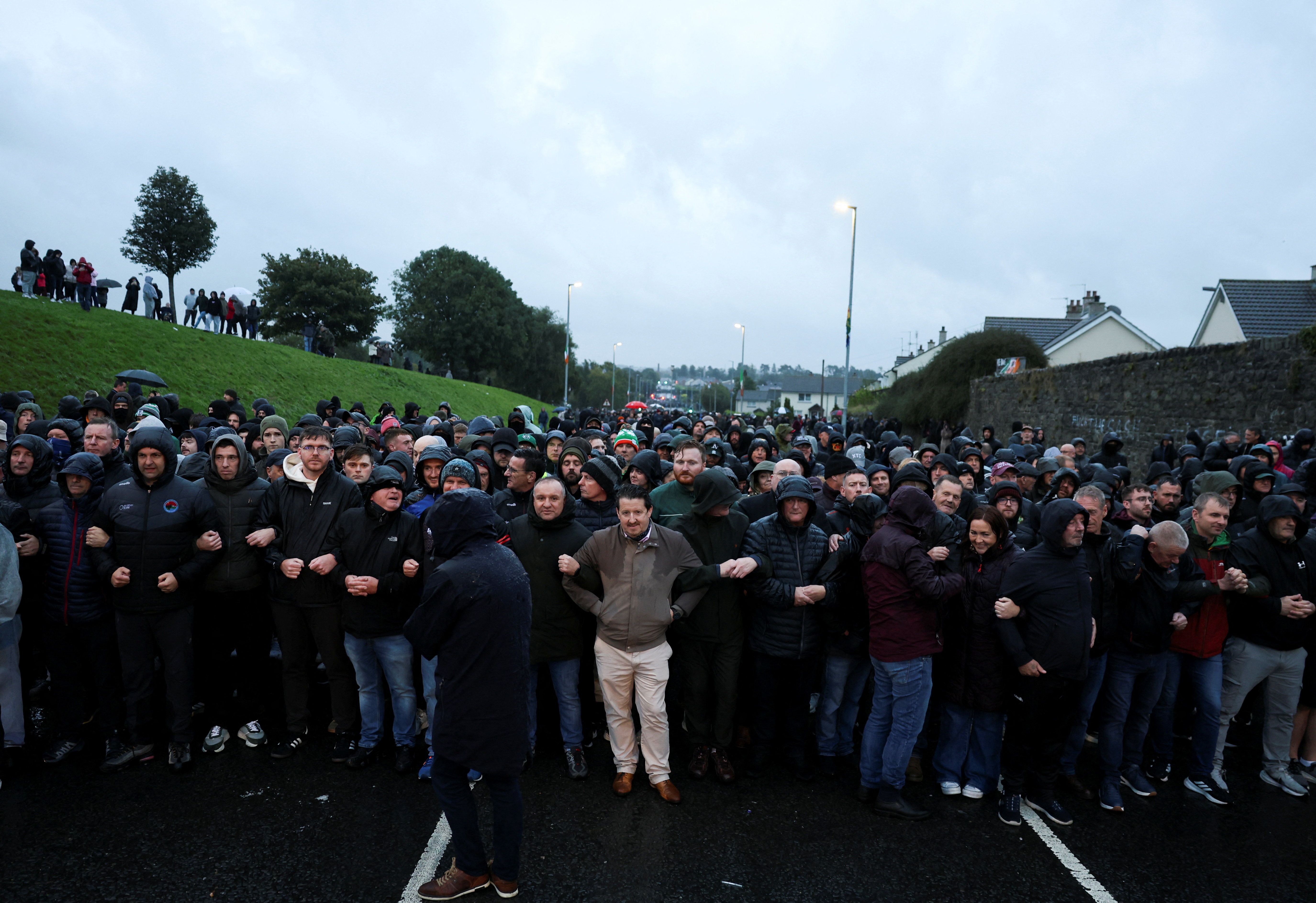
British Prime Minister Andy Burnham called for calm in Northern Ireland on Sunday after a contentious parade was given the go-ahead by the High Court in Belfast in a late-night sitting. Thousands of protesters, many wearing balaclavas, gathered to block the marchers from the Orange Order, a group hugely supportive of Northern Ireland being part of the UK, from proceeding down a street in the town of Portadown where many favor unification with the Republic of Ireland. Fireworks were set off nearby about five minutes before its 8 a.m. start time, and protesters were notified on a loudspeaker that they will be liable for arrest for taking part in an unlicensed counter parade. Burnham appealed for “calm on all sides” over the parade, saying there have been “big gains made in Northern Ireland, and we don’t want to see things go backwards.” Sunday’s march marks the first time in almost 30 years that an Orange Order parade has been allowed to go down Garvaghy Road. The road was a notorious flashpoint before the Good Friday Agreement of 1998 largely ended bloodshed that left 3,600 people dead, some 50,000 wounded and thousands bereaved. In the years before the agreement, there were violent clashes on Garvaghy Road over several summers and requiring major security operations. Ending the Troubles meant balancing competing identities in Northern Ireland, which remained in the United Kingdom when the rest of Ireland won independence a century ago. Irish nationalists in the north — most of them Catholic — seek union with the Republic of Ireland, while largely Protestant unionists want to stay part of the UK. Mary Lou McDonald, the president of Sinn Fein, the party historically linked to the Irish Republican Army, said the people of Garvaghy Road would “not be drawn back to the past.” “This is madness,” she said. “This, in fact, is primitive treatment of any community in the year 2026. It is intolerable, and it will not be tolerated.” Gavin Robinson, the leader of the Democrat Unionist Party, the largest pro-U.K. party in Northern Ireland, called out Sinn Fein leaders for inflaming the situation. “The rule of law cannot apply only when Sinn Fein likes the outcome,” he said. “Our institutions are founded on respect for the police, the courts and the rule of law.” The march was given the final go-ahead at a court hearing which concluded at 2.15 a.m. Sunday.
Topics in this story
Gathered from external sources. Rights to this text belong to whoever originally published it.