In 2024, Washington opened a first-in-the-nation eight-story spiral passage through a dam; young sockeye salmon could finally reach the river downstream
Washington has unveiled an innovative eight-story spiral fish passage at Cle Elum Dam, enabling young sockeye salmon to safely reach their downstream habitat for the first time in over 90 years. This groundbreaking facility could increase salmon populations significantly and restore vital river ecosystems.
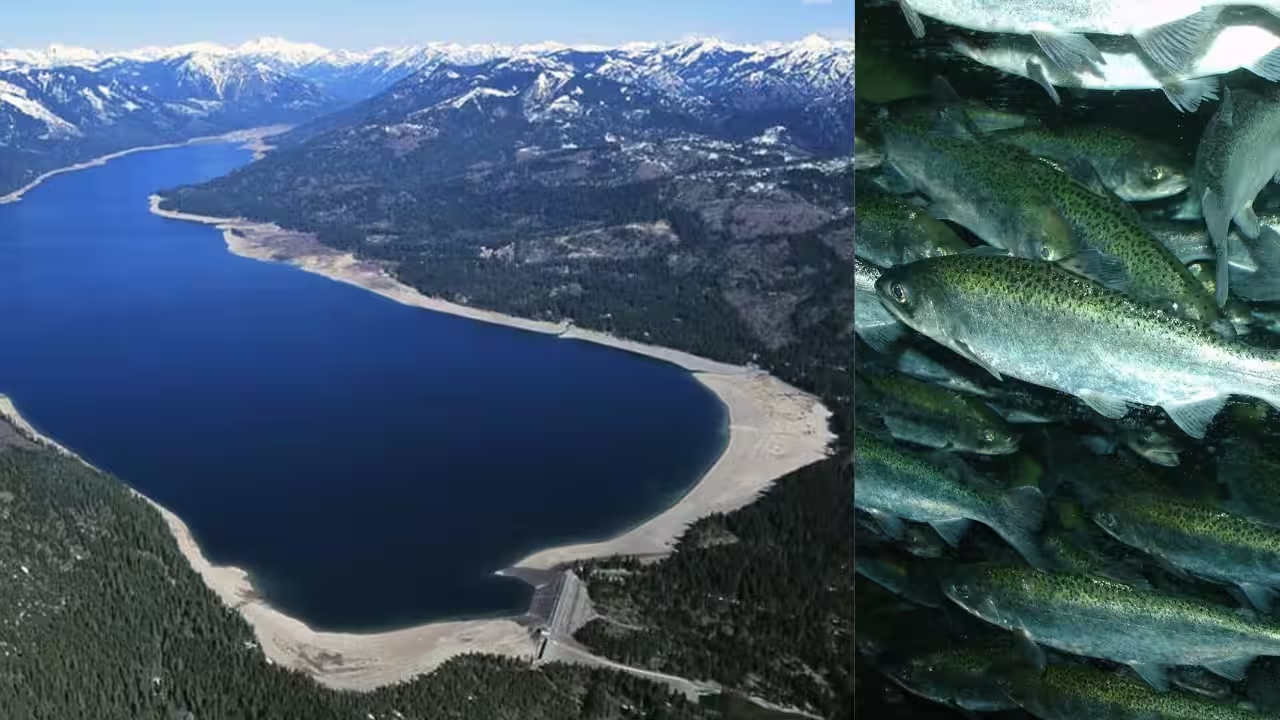
Washington completed a juvenile fish passage facility at Cle Elum Dam in 2024 with an eight-story-deep concrete helix that was designed to carry young salmon from the reservoir around the dam and into the Cle Elum River downstream. The state Department of Ecology described the structure as the first of its kind in the nation.The facility is part of the Yakima Basin Integrated Plan, with the intention of restoring fish passage at a dam that had separated salmon from habitat farther upstream, and the larger project is expected to provide access to about 30 miles of river habitat. Washington officials project that improved passage could help increase sockeye returns to the Yakima Basin from about 20,000 to 100,000 fish a year.The dam needed a way aroundCle Elum Dam was built in 1933 and stores water in the Cle Elum Reservoir. It created a barrier for fish that were moving between the reservoir and the river below it, and the U.S. Bureau of Reclamation began developing a downstream passage design specifically for Cle Elum. Its hydraulic research examined how juvenile sockeye salmon could safely travel more than 80 feet downward through a compact structure while still being able to maintain stable flow conditions.The resulting design combines a multilevel intake, the helix, a tunnel, and an outfall downstream of the dam; the intake allows fish to enter at different reservoir levels, while the helix carries them downward before they continue through the tunnel toward the river.The helix works like a giant waterslideThe concrete structure is similar to a spiral parking-ramp or waterslide, and fish enter from the reservoir and travel down the helix tail-first. Washington's Department of Ecology said that the fish can travel through the structure at speeds of up to 25 miles per hour, and the design was developed to reduce turbulence and provide a relatively smooth passage, with the trip through the helix itself taking about a minute. The helix drops the fish more than 80 feet in elevation before they enter a tunnel that leads to the Cle Elum River downstream of the dam.The concept had been tested long before construction began, with Bureau of Reclamation engineers using both numerical models and physical hydraulic models to refine the helix design and determine the geometry that was needed for continuous downstream fish passage. The modeling examined water flow through the structure and helped engineers develop a stable area within the channel where juvenile fish could travel safely.Young salmon began using the systemThe Bureau of Reclamation reported releasing thousands of young salmon through the newly built helix passage system in May 2024, which included hatchery-raised coho and wild-caught salmon, and researchers planned to track their survival as they moved downstream through the Yakima River toward the Pacific Ocean. The system initially benefits juvenile sockeye, while the wider fish-passage and reintroduction program also involves coho, spring Chinook, steelhead and Pacific lamprey. The Bureau of Reclamation says that the project is intended to restore access to habitat that was cut off when the dam was built.The Cle Elum facility therefore tackles a very specific problem that was created by a high dam, which is getting young fish out of a reservoir and into the river without sending them directly over the dam. Its eight-story helix provides that downstream route while engineers and fisheries agencies continue monitoring how fish use the system.You use AI every day. Now get your AI Quotient. Take the AIQ test.
Topics in this story
Gathered from external sources. Rights to this text belong to whoever originally published it.