A California family spent about $4,000 and more than 200 hours turning its front yard into Jurassic Park, building 13-foot gates and a dinosaur escape show that visitors can watch for free
A family in Granada Hills, California, has spent about $4,000 (£3,080) and more than 200 hours building a huge Jurassic Park display in their front yard.
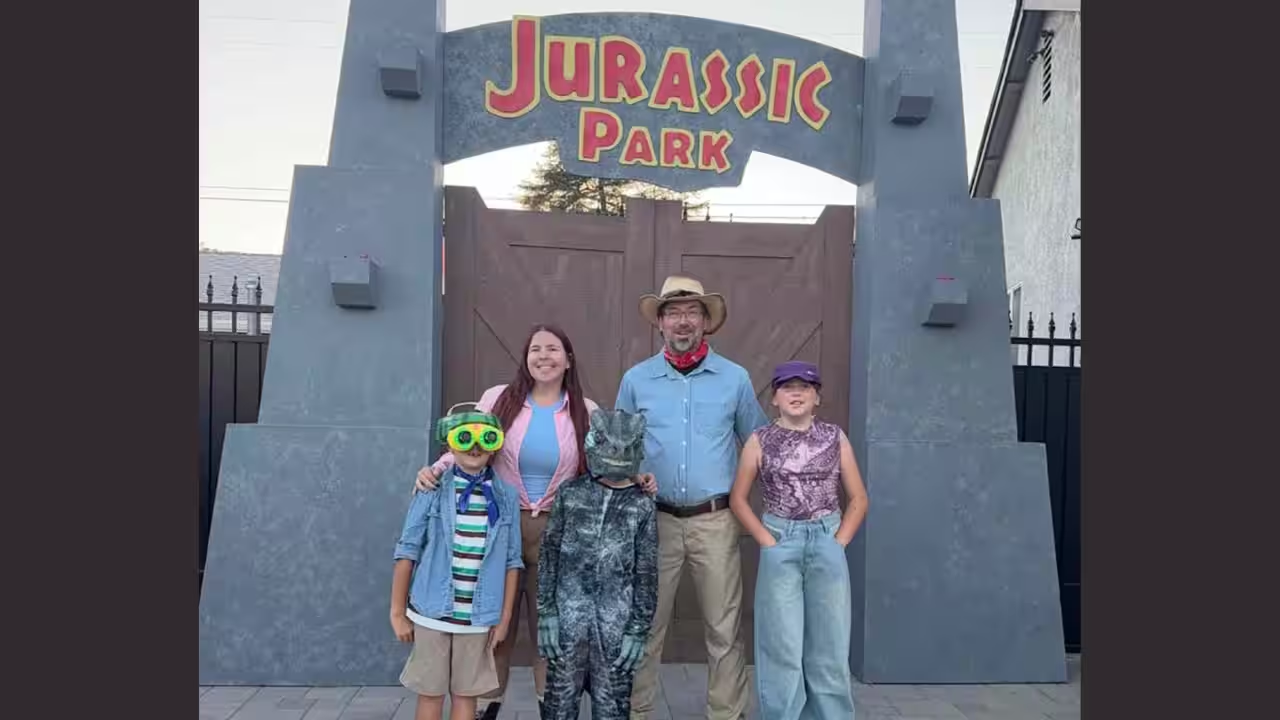
A family in Granada Hills, California, has spent about $4,000 (£3,080) and more than 200 hours building a huge Jurassic Park display in their front yard. The attraction features 13-foot entrance gates and a timed dinosaur escape show that is free for the public to watch. Rob and Kel Warner turned their suburban property into a detailed tribute to the 1993 Steven Spielberg film. According to an exclusive report by People magazine, the couple built tall wooden entrance gates that stand higher than their single-storey home. The gates serve as the main entrance for neighbourhood trick-or-treaters and visiting fans of the film. The display includes custom-made moving dinosaur models, themed lighting, artificial fog, music from the film, and several life-sized dinosaur figures spread across the lawn.Custom gates and mechanicsThe project took months of hard work, planning, and testing. According to details the family shared with People magazine, they spent around $4,000 in total. This covered raw timber, the internal frames, special electronic controllers, and strong weatherproofing materials to protect the display from the elements. To recreate the film's famous entrance, Rob Warner designed and built wooden pillars and hanging gates that stand 13 feet tall. The structure needed reinforced ground anchors to support its weight and keep the gates steady during strong winds. Behind the gates, the front lawn features fake electric fencing, emergency warning lights, and tropical plants. These details are designed to recreate Isla Nublar, the fictional island resort and research centre in the film.Automated dinosaur escape showThe main attraction is a regular automated show that recreates a dinosaur escape. Visitors gather along the pavement to watch a planned light and sound performance. Warning sirens flash and beep, red emergency lights brighten the lawn, and life-sized dinosaurs appear to break free from their enclosures. The show uses audio and visual equipment hidden in the garden. Custom timers and relays control the sequence. They switch floodlights on and off, play recorded dialogue from the film, and trigger mechanical movements in the dinosaur models. This allows the show to run without the owners having to operate everything by hand. Kel Warner shares themed design projects and family outings on social media under the name @themeparkmomlife. She told People magazine that the family wanted to give local residents an immersive theme park experience without charging an entrance fee.Community reception and family traditionThe family began planning the project early in the year, with construction picking up over several months. Together, they spent more than 200 hours designing, building, and testing the mechanical features. Most of the work took place in the evenings and at weekends around their regular schedules. For the Warner family, creating large seasonal displays has become an annual community tradition. Neighbours and local visitors often stop by throughout October to take photos of the setup. The family also puts crowd control measures in place along the street during the busiest evening hours. Despite the time and money they have invested, the family allows visitors to enjoy the entire outdoor display for free. The attraction is expected to remain open throughout the Halloween season before the family takes it down and stores it away.You use AI every day. Now get your AI Quotient. Take the AIQ test.
Topics in this story
Gathered from external sources. Rights to this text belong to whoever originally published it.