The internet's favorite dancing 'Rumpelstiltskin' meme has a surprising origin
That viral "Rumpelstiltskin" meme you're seeing everywhere? It's AI. But its faux Hollywood backstory "may invite more curiosity and sharing," says an expert...
As the kids like to say: "That's so AI."
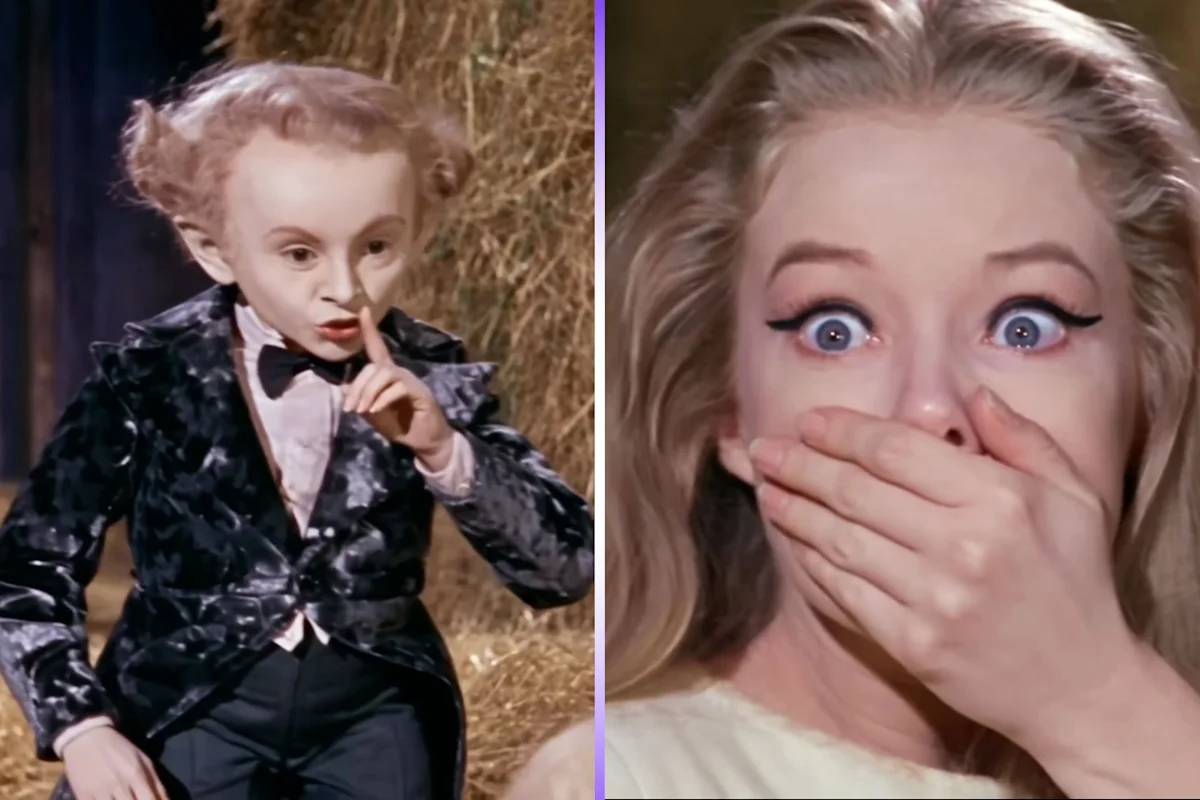
We're talking about the viral Rumpelstiltskin meme you may have seen — or even shared — on social media. The unusual-looking character has been dancing across feeds, often set to rapper Riff Raff's song "Tip Toe Wing in My Jawwdinz."
One TikTok user described the scene as the "type of dreams I be having after taking dollar store melatonin."
In other versions, he's raiding the fridge at 2 a.m. and dancing in Payless shoes.
Alongside the jokes, there's been confusion about where this odd scene originated. Some thought the tuxedoed toe-tapper was real footage from the 1987 movie Rumpelstiltskin — a musical fairy tale starring Amy Irving as the miller's daughter and Billy Barty as the scheming straw-to-gold spinner.
The viral character isn't Barty, though. As NBC reports, the clip is AI-generated , even if people may think they remember watching it long ago in the fantasy flick.
What's interesting is that it being AI doesn't necessarily spoil the fun. Raju Narisetti , who leads global publishing and marketing at McKinsey & Company and follows the intersection of AI, creativity and audience behavior, suspects that people sharing a funny meme aren't especially concerned with how it was made.
"If it makes them laugh, surprises them or gives them something amusing to pass along, that's often seemingly enough," he tells Yahoo.
Besides, research suggests AI-generated humor can land with audiences too. A 2025 study by researchers in Sweden and Germany found that, on average, AI-generated memes scored higher on humor, creativity and shareability than those made by people or human-AI teams. Humans still had the edge in humor among the top-performing memes, however.
Where in the crazy internet realm did the Rumpelstiltskin meme come from?
Know Your Meme traces the footage to an Aug. 27 Instagram post shared by @Stroinaya with accounts @Neuroferma and @anna_glinskaya_creatorai listed as collaborators.
The caption, in Russian, promotes a course on making AI films without actors, a camera or a big budget. The sequence resembles an old movie: A Rumpelstiltskin-like character walks into a straw-filled room where a woman is crying. She looks terrified at first, but then he starts dancing — and the straw turns into gold coins. Money changes everything, and suddenly she's so happy she kisses him and he transforms into a prince.
The original meme now has 1.7 million views — and its own Instagram .
In September, it started to snowball with the pumping addition of Riff Raff's 2014 ode to his sneakers and playful captions. That's what led to it being dubbed the "Rumpelstiltskin tiptoeing in my Jordans" meme — and it's become meme generator gold . Not to mention last-minute Halloween costume inspiration.
Along the way, some mistook its throwback look for having an actual cinematic connection. Then came the explainers about its AI, not Hollywood, origins.
Why does it feel like you've seen it before?
For some viewers, the confusion went beyond guessing which movie the clip came from. They felt they'd seen it before.
"There's some Mandela effect shit going on then, because I swear I've been seeing this guy for years," wrote an Instagram commenter.
The "Mandela effect " refers to a shared false memory. It takes its name from people incorrectly remembering that Nelson Mandela died in prison in the 1980s. He actually died in 2013, after being released in 1990 and going on to serve as South Africa's president.
University of Chicago researchers studied the visual form of the Mandela effect, including the widespread tendency to remember the Monopoly Man wearing a monocle. (He doesn't.) The research found that people can confidently make the same mistakes when recalling familiar characters.
Those findings don't confirm what's happening with this particular meme. But the comments show how convincing its apparent cinematic past has been.
Advances in AI are making it even more challenging to spot fakes . As we've seen with fake Met Gala arrivals in recent years and impostor Ryan Goslings , differentiating between real life and digital creation isn't always easy.
But figuring out how a meme was made and understanding why people like it are different questions. Narisetti suspects that, in this case, the supposed Hollywood backstory adds to its appeal.
"A clip that appears to be an obscure piece of 1980s movie history may invite more curiosity and sharing than one presented upfront as AI-generated," says Narisetti. "That backstory gives people something to discover, discuss and perhaps feel clever about recognizing."
But for Narisetti, honesty around a clip's origin matters.
"There's nothing inherently wrong with enjoying or sharing AI-generated entertainment, I think, but when a fictional origin is presented as fact, it raises a different issue about authenticity and trust," he says.
"We can enjoy the joke while still caring whether the story attached to it is true."
Topics in this story
Gathered from external sources. Rights to this text belong to whoever originally published it.