Chinese submarines face a new challenge: Japan's low-cost drones with quantum sensors
International News: Japan is moving to develop compact quantum magnetic sensors that can be mounted on small drones to detect submarines underwater, as Tokyo looks to exp.
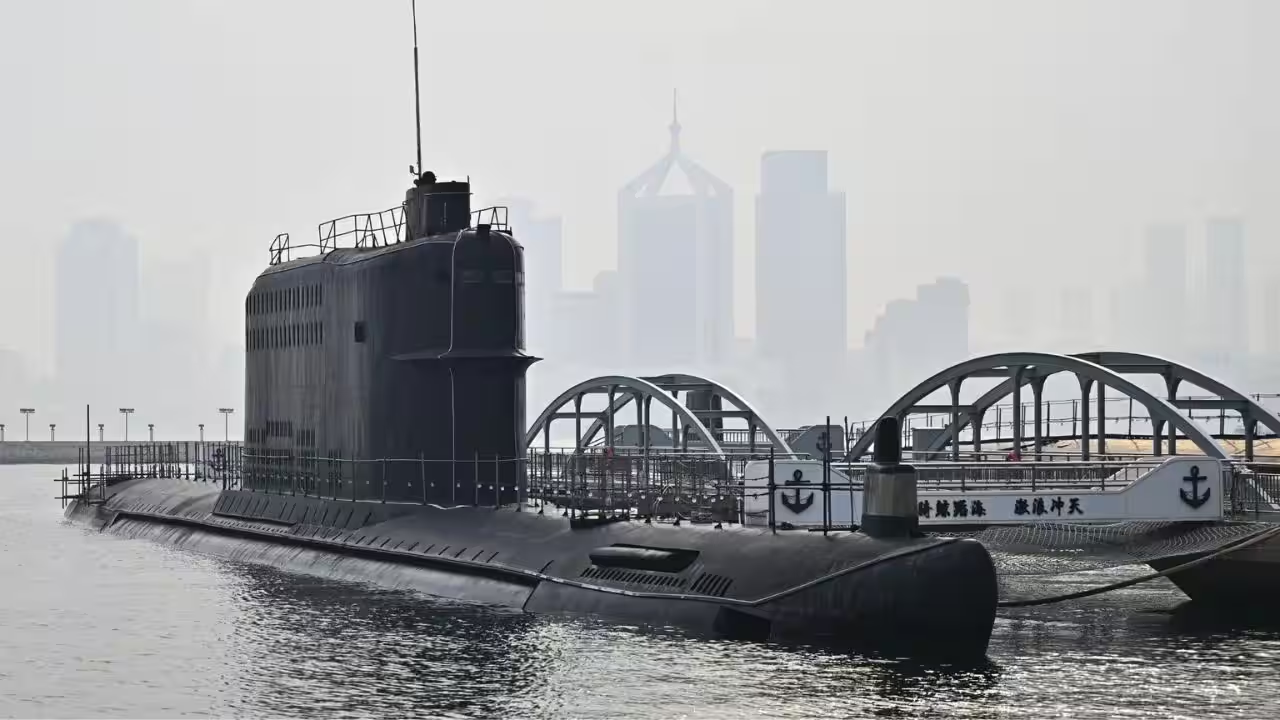
Japan is moving to develop compact quantum magnetic sensors that can be mounted on small drones to detect submarines underwater, as Tokyo looks to expand its anti-submarine surveillance capabilities amid growing Chinese naval activity in the Indo-Pacific.According to the Nikkei newspaper, the project has been included in Japan’s fiscal 2027 defence budget request, with the defence ministry targeting completion of development by fiscal 2031.The planned system would use low-cost drones flying close to the sea surface from warships to detect tiny changes in the Earth’s magnetic field caused by submerged vessels. The Japanese government has positioned the technology as part of its wider push to use unmanned systems to make underwater threats more visible while reducing reliance on crewed platforms.How the technology worksAccording to the South China Morning Post, Japan’s planned system will use a quantum magnetic sensor to detect tiny changes in the magnetic field that could indicate the presence of a submarine. The sensor uses the properties of atoms to make highly sensitive magnetic measurements.Nato's Science and Technology Organization says magnetic anomaly detection sensors are already used to help locate submarines, but conventional systems are too large and power-hungry for small UAVs. It says newer quantum magnetic sensors could overcome some of these limitations.In simple terms, the drone would fly over the sea and look for unusual changes in the magnetic field below it. A detected anomaly could indicate a submarine, which can then be investigated using other anti-submarine warfare systems.How the sensor will be used on dronesJapan plans to put the quantum magnetic sensor on a small, low-cost drone that can operate close to the sea surface. According to the South China Morning Post, the drones could be launched from warships and used to search for submarines without putting a crewed aircraft at risk.The main advantage is the possibility of using many inexpensive drones instead of relying only on larger, crewed aircraft. Each drone could carry the sensor over a designated area and send information about any detected magnetic anomaly back to the Japanese forces.ImplicationsThe biggest advantage for Japan would be the ability to deploy a large number of relatively cheap drones to monitor areas where Chinese submarines may pass. Experts told South China Morning Post that the limited range of magnetic sensing makes such systems more useful around narrow waterways and straits rather than across vast areas of ocean.The drones could add another layer to Japan's anti-submarine warfare network, working alongside maritime patrol aircraft, ships, sonar and other sensors. This could allow Japan to keep watch over important sea routes for longer without relying entirely on expensive crewed aircraft.The development also comes as China expands its own use of quantum sensing for military applications. Chinese researchers have reported testing a drone-mounted quantum magnetic sensor at sea, suggesting that underwater detection could become another area of competition between the two countries.
Topics in this story
Gathered from external sources. Rights to this text belong to whoever originally published it.