In 1912, five little spotted kiwi were moved to Kapiti Island; their population grew to about 1,200 and became the source for new colonies
Rest of World News: A single, small act of conservation a century ago may have saved an entire species. Five little spotted kiwi, moved from New Zealand's South Island to.
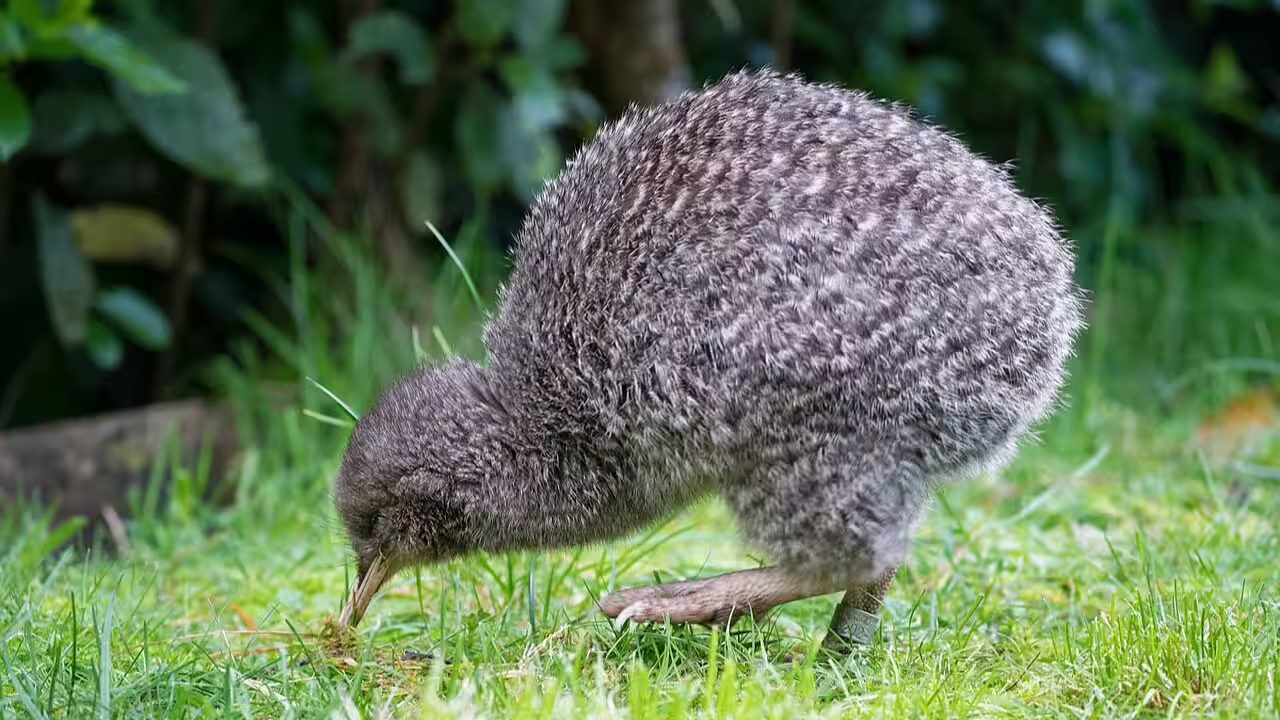
A single, small act of conservation a century ago may have saved an entire species. Five little spotted kiwi, moved from New Zealand's South Island to the predator-free Kapiti Island in 1912, became the sole ancestors of a population that has since swelled to roughly 1,200 birds. That island stronghold is now doing more than surviving; it supplies the stock used to establish additional colonies elsewhere, extending one early-1900s rescue into an ongoing conservation strategy across New Zealand.How five founder birds prevented the little spotted kiwi's extinctionThe little spotted kiwi (Apteryx owenii), often called LSK, was pushed toward extinction on mainland New Zealand as introduced predators took a heavy toll on the species across both islands. Its survival today traces back to one translocation, five birds were carried from Jackson Bay, on the South Island's west coast, to the predator-free sanctuary of Kapiti Island in 1912. Research titled ‘Genetic consequences of a century of protection: serial founder events and survival of the little spotted kiwi (Apteryx owenii)’ found that at the time, this was a small, uncertain gamble rather than a guaranteed fix. It is now regarded as the single move that kept the species from disappearing altogether; genetic testing of the sampled Long Island birds found no evidence of descent from the two D'Urville founders, suggesting the population is Kapiti-derived.The growth of the Kapiti Island kiwi populationFreed from the mainland predators that had driven their decline, the transplanted birds settled on Kapiti Island and began multiplying steadily in their safer new home. One hundred years later, the island's population stands at roughly 1,200 birds, a striking rebound from a founding group of just five. That expansion has made Kapiti Island the clear stronghold of the species, and it remains one of the more remarkable examples in conservation of a population rebuilding itself from an extremely narrow starting point, once its original threat, predation, was removed from the equation, allowing the birds' natural breeding rate to do the rest.Current Kapiti population supplies founders for further researchKapiti Island isn't just a standalone success story, it has become a working source population for the species' spread across New Zealand. Birds are periodically collected from Kapiti and relocated to establish new colonies on other predator-free islands beyond the original refuge. In effect, the group rebuilt from five birds a century earlier is now being used, in turn, to seed additional populations, extending the species' range well past the single island where it was first saved. Each new colony carries forward the same narrow genetic line first established in 1912, whether the birds are released on nearby islands or protected mainland reserves.What a century of isolation reveals about a genetic bottleneckBecause the entire Kapiti population, and every colony founded from it, descends from so few original birds, the case gives researchers a rare, long-running natural experiment in what happens genetically when a species is rebuilt from an extremely small starting group. Tracking this lineage across generations lets scientists observe how isolation and a narrow genetic base shape a population's diversity over time. The findings carry real implications for how conservationists plan future translocations, particularly when a rescue depends on moving only a handful of individuals to found an entirely new, isolated population elsewhere.Catch the latest World News and Live updates. Download the TOI app.
Topics in this story
Gathered from external sources. Rights to this text belong to whoever originally published it.