A New Mexico carver, Ross Ward, spent decades building Tinkertown from carved wood and 50,000 discarded bottles; the 22-room museum opened to visitors in 1983
US News: Explore Tinkertown Museum, a one-of-a-kind folk-art attraction in New Mexico created by artist Ross Ward. Journey through a maze of handcrafted scenes, mechanical animations, and 50,000 glass bottles that showcase his artistic legacy.
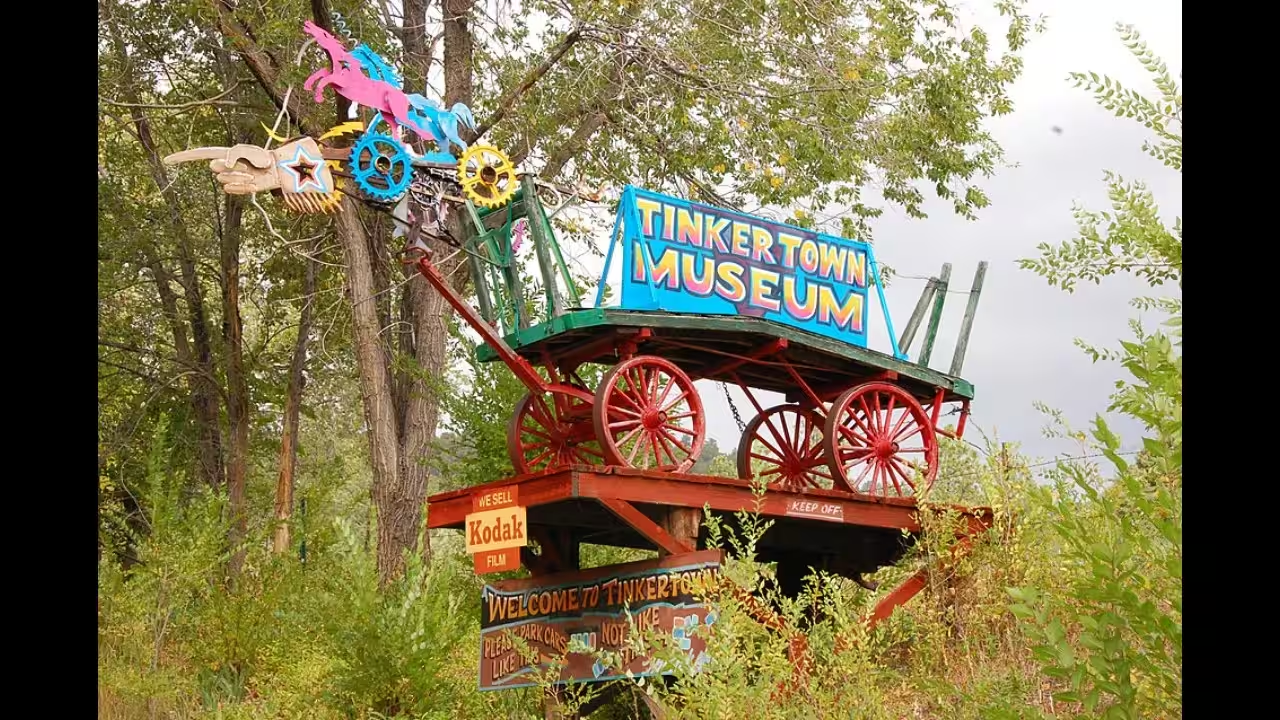
A childhood fascination with miniature figures eventually became one of New Mexico's most unusual folk-art attractions. In 1962, self-taught artist Ross Ward began carving small wooden figures as a hobby, initially creating scenes that could travel with him to fairs and carnivals. Over the next four decades, the hobby expanded into an elaborate handmade world at Sandia Park, where thousands of carved characters, animated displays, collections of Americana and walls made from tens of thousands of discarded glass bottles eventually became Tinkertown Museum.From carnival signs to tiny townsAccording to Spaces Archives, Ward was born in 1940 and developed his artistic skills without formal training. After working in roadside attractions, he spent years travelling with carnivals and circuses, painting banners and advertisements. At the same time, he was developing his own miniature figures. His carvings were first displayed as a travelling exhibit at county fairs and carnivals during the 1960s and 1970s, giving him a way to take his growing collection on the road. As the collection expanded, however, Ward began looking beyond the limitations of a portable display. After settling in New Mexico, he started building permanent settings for his figures, gradually transforming the travelling collection into a larger, interconnected environment. The figures were no longer simply individual carvings. He created a Western town, shops, a saloon, a hotel, a blacksmith and other scenes populated by tiny wooden inhabitants. The displays were designed to move as well as to be viewed, turning the miniature town into a kind of mechanical theatre. Visitors could also activate some of the scenes with coins, setting figures and machines into motion.The museum itself eventually became another part of Ward’s art. More than 50,000 glass bottles were incorporated into concrete walls around the building, many of them collected from roadsides, dumps and neighbours. What began as a practical use for discarded bottles developed into an architectural feature that gave Tinkertown its distinctive appearance. Ward also filled the site with discarded objects that might otherwise have been thrown away. Wagon wheels, old signs, tools, toys, agricultural equipment and other pieces of Americana became part of the surroundings. Over time, the portable miniature displays and the permanent architecture became increasingly interconnected, making the building itself part of the experience. The result was less like a conventional museum and more like a maze in which the building, collections and sculptures formed a single artwork.A museum built one piece at a timeAccording to Tinkertown Museum, the museum opened to the public in 1983 and had grown from Ross Ward’s small summer cabin into a 22-room collection of handmade displays. Its winding spaces contained an animated miniature Western town, a detailed circus, coin-operated attractions such as Otto the One-Man-Band, collections of antique tools and dolls, thousands of wedding-cake figures and the 35-foot antique sailboat Theodora R. By then, what had begun as a travelling collection had become a permanent environment that combined Ward’s carving, mechanical work, collecting and construction. He spent much of his adult life carving, painting, collecting and constructing, rather than producing a single finished work for a gallery. The museum therefore became as much a record of his interests as a display of his craftsmanship. His attraction to the Old West, travelling shows and everyday American life was reflected repeatedly in both the carved scenes and the objects surrounding them. The building’s handmade character also placed Tinkertown within the tradition of self-taught and outsider folk-art environments, where artists transformed private properties into immersive spaces rather than creating isolated artworks.Keeping Ward's world aliveThe Spaces archive also notes that Ward continued developing Tinkertown for decades, but his health eventually limited his work. He was diagnosed with Alzheimer’s disease in 1998 and died in 2002, leaving behind the museum he had spent much of his life constructing. His wife, Carla, and other family members continued caring for the attraction and keeping it open to visitors. According to the museum, the attraction grew from welcoming 943 visitors in 1983 to attracting around 25,000 visitors each season. In 2026, the family converted the museum into a public nonprofit, a step intended to support the long-term preservation of its buildings, artwork and Ward’s wider artistic legacy. More than six decades after Ward began carving his miniature figures, Tinkertown remains a testament to what can emerge from a lifelong hobby. Its maze of handmade scenes, collections and bottle walls preserves not only Ward’s craftsmanship but also his vision of creating an environment entirely on his own terms.Catch the latest World News and Live updates. Download the TOI app.
Topics in this story
Gathered from external sources. Rights to this text belong to whoever originally published it.