Global oil traffic shifts toward the US amid Iran war disruptions
Global oil traffic is significantly rerouting toward the United States as a result of disruptions in the Strait of Hormuz caused by the ongoing Iran war.
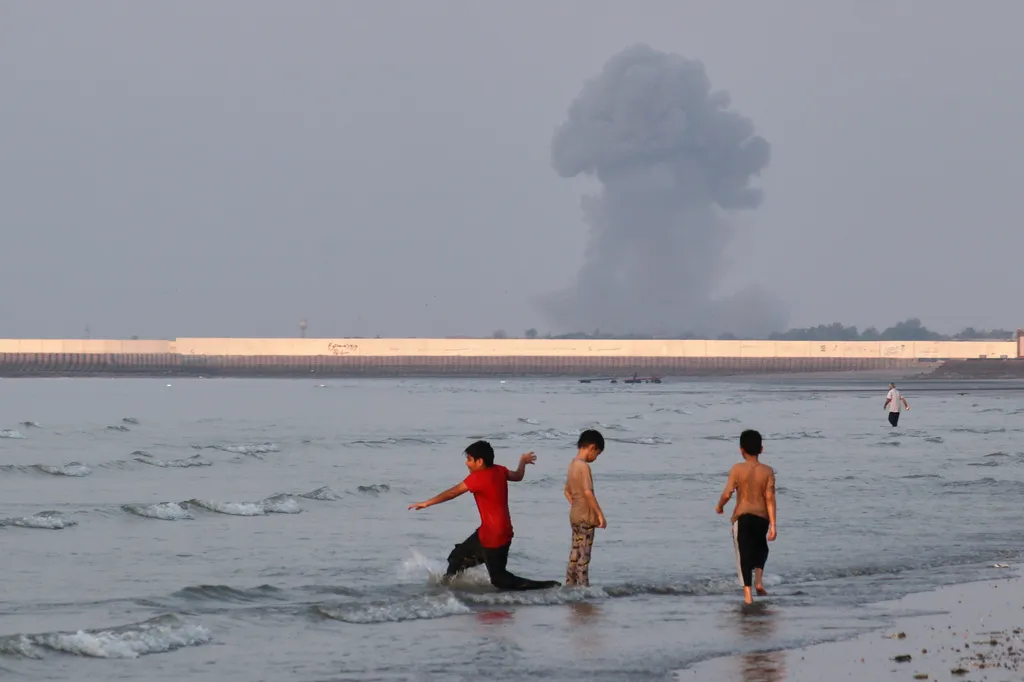
Wars have a way of rearranging the economic map along with the military one. One of the more consequential effects of the Iran war is already playing out on the world’s oceans. Global oil traffic is shifting away from the Middle East and toward the United States.
Before hostilities began, roughly 18 million barrels of oil passed through the Strait of Hormuz every day, according to data cited by Reuters . In July that figure had fallen to 4.8 million barrels per day. So far in August, flows have averaged between 2 million and 8 million , if U.S. estimates are to be believed.
Either way, overall Middle Eastern oil exports are far below the 21 million they averaged in 2025. That is not a hiccup in global commerce. That is a rerouting of it.
But the world’s refineries have not stopped needing oil. Those barrels have to come from somewhere. Increasingly, that somewhere is America. In April, maritime intelligence firm Windward counted 171 crude carriers reporting the U.S. as their destination, describing a “large-scale redirection of global flows toward the U.S. Gulf Coast.” A month later, U.S. crude exports surged to a record 5.7 million barrels per day.
Then something revealing happened. The U.S.-Iran interim agreement in June briefly allowed more vessels to escape the Gulf. Middle Eastern supply returned and U.S. crude exports promptly fell — to 3.66 million barrels per day in July.
Now Hormuz is tightening again. As of early August, at least two dozen empty very large crude carriers were steaming toward the United States to load crude. Vortexa estimates that number could reach 40 for late-August and September cargoes. Reuters called U.S. crude the “ go-to alternative ” for global buyers.
Modern warfare has always been inseparable from energy — from Pearl Harbor to Stalingrad, from Suez to Desert Storm.
But something fundamental has changed. The U.S. is now the largest crude-oil producer on earth. American output averaged a record 13.6 million barrels per day in 2025, roughly 40 percent higher than either Russia’s or Saudi Arabia’s. The Permian Basin alone produced about 6.6 million barrels a day.
Before the war, Persian Gulf crude moving through Hormuz represented only about 2 percent of total U.S. petroleum-liquids consumption, while roughly 89 percent of the crude and condensate passing through the strait was headed to Asia. China, India, Japan and South Korea accounted for almost three-quarters of those flows .
America is not immune to a closed Hormuz. Oil is globally priced, so Americans still pay more when millions of barrels disappear. But when the war began, some analysts forecast $150 or even $200 crude. Brent Crude futures ultimately peaked around $126 before retreating.
But increased U.S. production, strategic-stock releases and alternative barrels helped the market adapt .
We have seen something like this before. During the Civil War, the Confederacy withheld cotton from European customers under what was known as “King Cotton diplomacy.” Richmond calculated that Britain was so dependent on Southern cotton that cutting off supply would force London to intervene American cotton supplied approximately 77 percent of Britain’s consumption .
Cotton prices did soar, but markets adapted. British merchants found substitutes. High prices encouraged production elsewhere. India became a major alternative supplier. Brazil and Egypt rapidly expanded output. Those supplies did not eliminate the shortage, but they proved that Southern cotton was replaceable .
That is the danger of weaponizing a commodity. Scarcity creates enormous leverage in the short run, but those same high prices send everyone else a signal to find another source.
The Persian Gulf will remain crucial to the global energy system. But if buyers cannot reliably obtain Middle Eastern barrels, they will just look elsewhere. And the new trade routes and commercial relationships will not necessarily disappear when the crisis ends.
Shipowners don’t relish putting multimillion-dollar vessels into a shooting gallery if another cargo can be lifted safely somewhere else. Increasingly, it can — in Texas. Oil in the ground and oil that can be safely, reliably and economically delivered to a refinery are two different things. Reliability has value.
The shale revolution has given America something it lacked during the oil shocks of the 1970s: the ability to absorb a major Middle Eastern disruption while helping supply the rest of the world. Used intelligently, that can shift some geopolitical leverage traditionally wielded by Persian Gulf producers toward the U.S.
That does not make war desirable or higher gasoline prices painless. But a prolonged disruption of Hormuz could accelerate a reordering of the global petroleum trade toward a more diversified network in which the U.S. Gulf Coast plays a much bigger role.
I wrote in my trading memoir, “ Life in the Pits ,” that the grim reason the world pays far more attention when people die in Iraq or Kuwait than in places with no strategic resources is that there is oil there. Without energy, the modern world grinds to a halt. That has not changed.
What might finally be changing is who controls the marginal barrel. Watch the ships — they are increasingly turning toward America.
Brad Schaeffer is a commodities fund manager and author of three books. His newest book, “ A War For Half The World: How the Real Battle for the Future was Fought in the Pacific ,” will be released in spring 2027.
Topics in this story
Gathered from external sources. Rights to this text belong to whoever originally published it.