A family foundation began restoring 250 acres of overworked Ohio farmland in 1989; it is now a wildlife reserve with Walden Pond
At first glance, Thoreau Wildlife Reserve looks less like a former farm and more like a patchwork of Ohio landscapes.
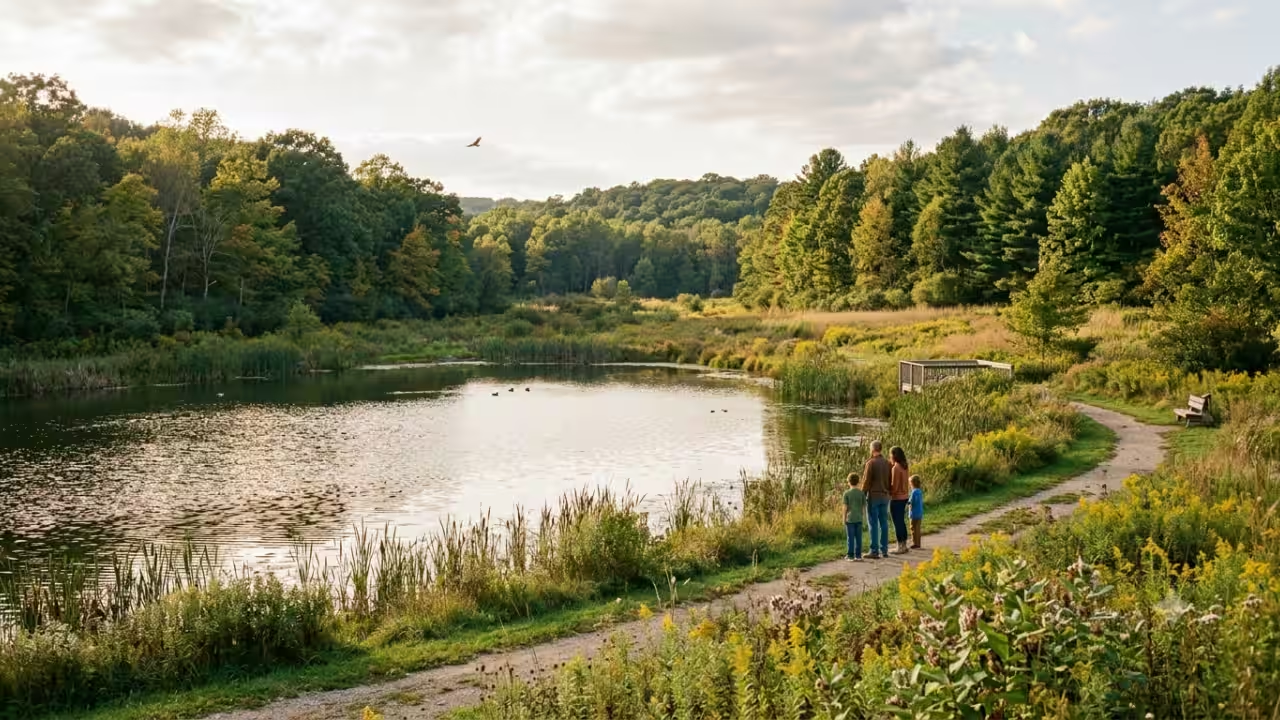
At first glance, Thoreau Wildlife Reserve looks less like a former farm and more like a patchwork of Ohio landscapes. Meadows give way to woodland, wetlands sit alongside prairie, and older sections of forest provide another layer of habitat. Across roughly 250 acres, two miles of walking trails now lead visitors through these different settings. Yet the land did not begin this way. In 1989, the Diehl Family Foundation began a long restoration effort on farmland that had been heavily worked. More than 30 years later, the property includes a pond created by a dam, planted woodland and areas allowed to develop into more natural habitats. The reserve opened to the public in 2020.The Diehl family’s 1989 project reshaped 250 acres of Ohio farmlandThe transformation began in 1989, when the Diehl Family Foundation started a programme intended to change the character of the 250-acre property. The farmland had been heavily used, so the first stage involved preparing the soil for a different kind of landscape.According to Thoreau Wildlife Reserve, that autumn, work began on the ground itself. The following year, a dam was constructed to hold water and create what is now known as Walden Pond. A meadow was seeded, prairie was established and the first trees for a pine plantation went into the soil.The changes were not completed in a single planting season. The project continued for years as the landowners, family members, local workers and volunteers carried out further work across the property.A man-made pond became part of the landscapeWalden Pond is one of the clearest examples of how the reserve's present landscape was deliberately created. The water body was formed after the dam was built as part of the early restoration work. Around it, the character of the property gradually became more varied. Wetlands, prairie, hardwood woodland and areas of old growth forest now occupy parts of the reserve. Rather than replacing the farmland with one uniform type of planting, the long-running project resulted in several distinct habitats across the site.The changes also created space for a range of plants and wildlife. The reserve sits among a landscape still dominated in part by farmland, making the restored property a contrasting area of habitat.The 250-acre reserve opens its restored habitats to visitorsVisitors can now explore the reserve on four nature trails covering about two miles. The routes pass through meadows, woodlands, wetlands and old growth forest, giving the property several different settings within the same 250-acre site. The reserve has also been used for educational purposes. Students and faculty from Defiance College have carried out ecology studies on the property over the years, adding an academic use to the land alongside its role as a wildlife habitat.Signs placed along the trails also feature thoughts associated with H.D. Thoreau, whose ideas and writing inspired the name of the reserve.Bird nesting becomes part of the reserve’s restoration workThe restoration effort has extended beyond trees and vegetation. Thoreau Wildlife Reserve works with the Audubon Sanctuary Program to encourage several bird species to nest on the property, including bluebirds, wood ducks and mallard ducks.The different habitats provide a mixture of conditions across the reserve. Wet areas, woodland and open spaces each form part of the wider landscape, while the continued management of the property is intended to support wildlife living and nesting there.The reserve opened to visitors in 2020Although the land had been undergoing changes for decades, public access came much later. In 2020, after years of preparation, Thoreau Wildlife Reserve opened its trails to visitors. The stated purpose was to make the property available for education, recreation and appreciation of the natural environment while maintaining its role as a refuge for plants and wildlife. Opening the land also marked a new stage in a project that had begun with soil preparation and planting more than 30 years earlier.Today, access remains fairly controlled. The reserve is open from dawn until dusk, with parking available but limited. Visitors are required to remain on the designated trails, and only walking is permitted within the preserve. Dogs can be brought in, but they must remain on a lead.A decades-long transformation created today’s wildlife reserveVisitors are asked to follow leave-no-trace principles and respect the site's natural resources. The restrictions are part of how the reserve manages public access while keeping the restored habitats intact. The property is located at 10485 Haller Road and covers approximately 250 acres. What began in 1989 as an effort to change the condition and use of heavily worked farmland has since developed into a mixture of planted and naturally developing habitats, centred partly around the man-made Walden Pond.The landscape is therefore the product of a long process rather than a single restoration project. Fields were prepared, water was held behind a new dam, trees and prairie were planted, and subsequent decades of work gradually changed the character of the property. By the time the public arrived in 2020, the site had become a wildlife reserve with trails running through several distinct ecosystems.You use AI every day. Now get your AI Quotient. Take the AIQ test.
Topics in this story
Gathered from external sources. Rights to this text belong to whoever originally published it.