Heatwaves ruined 40% of peppers, says Essex growers' association
Lea Valley Growers' Association says it has lost 27,000kg of sweet peppers during picking season.
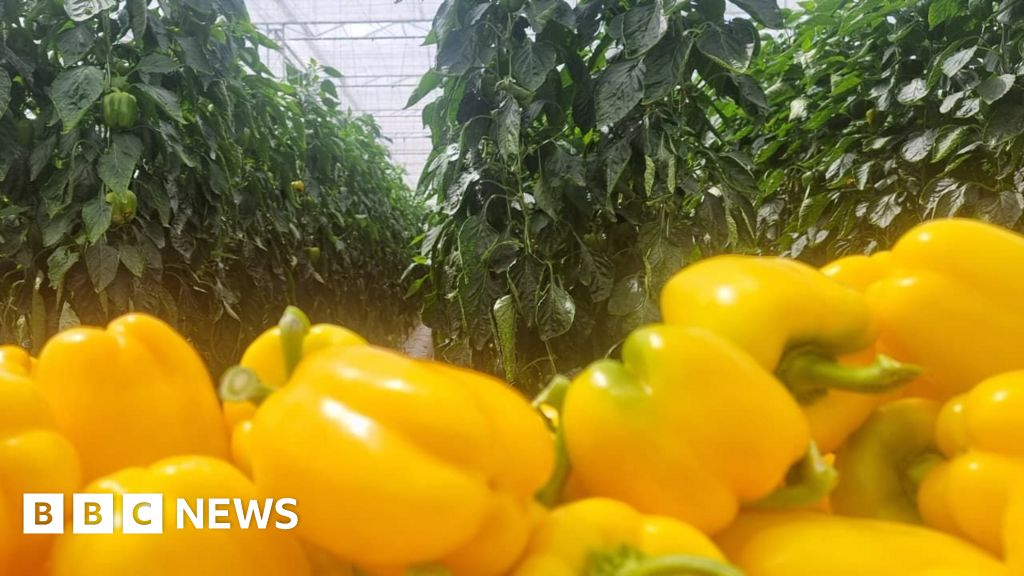
One of the largest fruit and vegetable producers in England said it has lost up to 40% of its peppers due to British heatwaves.
Lea Valley Growers' Association, which produces about three-quarters of Britain's cucumbers and sweet peppers in glasshouses across London, Essex and Hertfordshire , said it has lost 27,000kg of peppers over the 10 weeks of picking season.
Several heatwaves throughout the summer meant 2026 was the hottest on record , according to the Met Office.
Jimmy Russo, the association's director, called it a "disastrous" year and said the "sheer heat" had impacted the peppers' roots and farmers would have to "reconsider" how they were grown in the future.
Russo, from Nazeing, Essex, added the drop in yield has meant less income from selling the produce.
A spokesperson for the association added in the last year it had experienced a 120% rise in fuel costs and a 60% increase in fertiliser costs.
Lee Stiles, the association's secretary, said: "Lea Valley growers have collectively lost around £15m this year following price increases in energy and inputs such as fertiliser due to the Iran war.
"This is on top of increase in labour costs following wage increases and employers National Insurance.
"The majority of supermarkets have refused to increase the price paid to growers for their vegetables this year, which has seen many growers lose money and some enter administration.
"Growers have been making efficiencies for decades and work on very thin margins, therefore cannot absorb cost of production increases caused by global events outside of their control."
Lea Valley Growers' Association said it has also seen a drop of between 3% and 5% in tomato production.
Hot weather has also hindered bees' ability to pollinate the plants.
Russo said they buy "hundreds of thousands" of bees, but insects were collapsing due to heat exhaustion.
This affected the tomato crops in particular, as they cannot self-pollinate.
He said: "We were losing bees everywhere and so if you can't pollinate you don't get the fruit."
Russo said the financial impact of the market is divided between the supplier, the supermarket and the consumers.
"When suppliers' costs go up, supermarkets can decide to keep the prices down and take less of a cut or pass it on [to the consumer] so the increase reflects in the price tag," he explained.
"If [the supermarkets] sort of take a view and say, 'Look, instead of making X percentage, we won't put the retail up. We'll take less money, we'll keep the retail the same and we'll keep everybody happy'... the consumer wins, the supermarket doesn't get as much, and the grower gets a bit more money to affront the day-to-day problems."
However he added, like every autumn, the country will soon begin to import crops from Spain due to "poor light levels" affecting local production.
He added that this would also be more expensive due to transport costs increasing.
"The only good thing is we've managed to have better results on pest and control diseases," he said.
The British Retail Consortium said costs for supermarket have also increased.
A spokesperson said higher wages, National Insurance costs, packaging taxes and business rates surtax have all played a part in driving up expenses.
They added that would have an impact on prices "further down the line".
They said: "Retailers are absorbing as much of these costs as they can but cannot do so indefinitely while also maintaining sustainable prices for suppliers."
A National Farmers' Union spokesperson said British farmers have endured "historically low harvests" caused by the "worst drought in 50 years".
It added: "Without immediate action, next year's food production and the future of the next generation of farmers are at risk."
Do you have a story suggestion for Essex? Contact us below.
Follow Essex news on BBC Sounds , Facebook , Instagram and X .
Record heat leaves flower growers short of blooms
How will extreme weather affect our food?
Researchers developing heatwave-resistant potatoes
Topics in this story
Gathered from external sources. Rights to this text belong to whoever originally published it.