In the 1960s, an Italian taxi driver covered his Rimini home with 12,000 seashells; his daughter still preserves it today
In Rimini, Italy, a house was transformed into a striking shell-covered artwork after taxi driver Alfonso Rinaldi began decorating its exterior in the
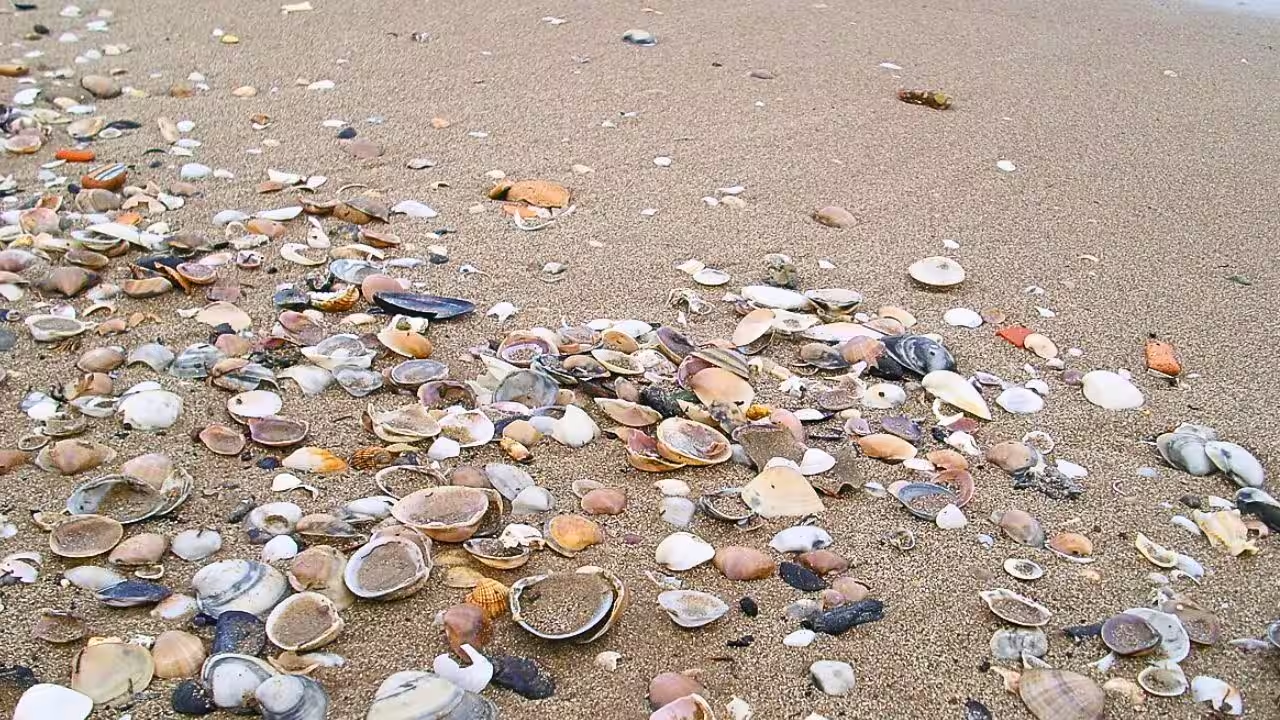
In Rimini, Italy, a house was transformed into a striking shell-covered artwork after taxi driver Alfonso Rinaldi began decorating its exterior in the 1960s. He used about 12,000 shells in different shapes and colours, creating a large-scale architectural souvenir of the resort town. The shells, including mussels, scallops and clams, were apparently given to Rinaldi by local fishermen and restaurant owners.He arranged them across the outside walls, flowerpots, surrounding fence and veranda, using specially coloured concrete as part of the decoration. After Rinaldi died in 1983, his daughter inherited the house and, in agreement with local authorities, maintained the exterior as her father had created it.Where the House of Shells was created in RiminiThe Casa delle Conchiglie, or House of Shells, is located at 40 Via del Fante in Rimini, Emilia-Romagna, Italy. The SPACES Archives lists the site as extant, which means the house and its exterior work remain in place. Work on the house began in the 1960s, when Alfonso Rinaldi started decorating its exterior with shells. Rinaldi was a taxi driver by profession, and the decoration eventually grew into a large-scale work covering several parts of the property. He used the shells across the façades, flowerpots, surrounding fence and veranda rather than restricting them to a single wall. The result was a distinctive shell-covered home in Rimini, the resort town where the house remains located today.How did Alfonso Rinaldi decorate the house with shellsRinaldi used around 12,000 shells to decorate the house by selecting shells in different shapes and colours. The SPACES Archives identifies three types used in the work, including mussels, scallops, and clams. Local fishermen and restaurant owners apparently gave the shells to Rinaldi, who then incorporated them into the exterior of the house.He used specially coloured concrete along with the shells as part of the decoration. The work was not limited to the main façades. Rinaldi also covered the flowerpots, surrounding fence and veranda with shells. The finished work is described as a large-scale architectural souvenir of Rimini itself, linking the shell-covered home with the resort town where it is located.How Rinaldi’s daughter preserved the House of ShellsThe house remained in the family after Rinaldi died in 1983. His daughter inherited the property and, in agreement with the local authorities, she maintained the exterior as her father had designed and created it. The shell decoration was therefore preserved after his death, rather than being removed or altered.The SPACES Archives records the site as extant, with the exterior work still visible from outside the house. The preserved design covers the façades, flowerpots, surrounding fence, and veranda. These elements remain part of the shell-covered exterior at 40 Via del Fante in Rimini, keeping Rinaldi’s original work visible at the property.How the House of Shells remains preserved in RiminiThe SPACES Archives records the House of Shells as an artist-built environment created by Alfonso Rinaldi in Rimini, Italy. The archive lists the address as 40 Via del Fante, Rimini, Emilia-Romagna, 47921, Italy, and records the site as extant.Work on the house began in the 1960s, with Rinaldi covering its exterior with about 12,000 mussel, scallop and clam shells. He also used specially coloured concrete across the façades and other outdoor features. The exterior remains visible from outside the property. Rinaldi’s daughter continued to maintain the house after inheriting it, in agreement with local authorities.You use AI every day. Now get your AI Quotient. Take the AIQ test.
Topics in this story
Gathered from external sources. Rights to this text belong to whoever originally published it.