Tesla plans to wind down Cybertruck production after sales slump
Tesla Cybertruck production is winding down at Gigafactory Texas to make room for Cybercab robotaxi manufacturing, but key questions remain for owners.
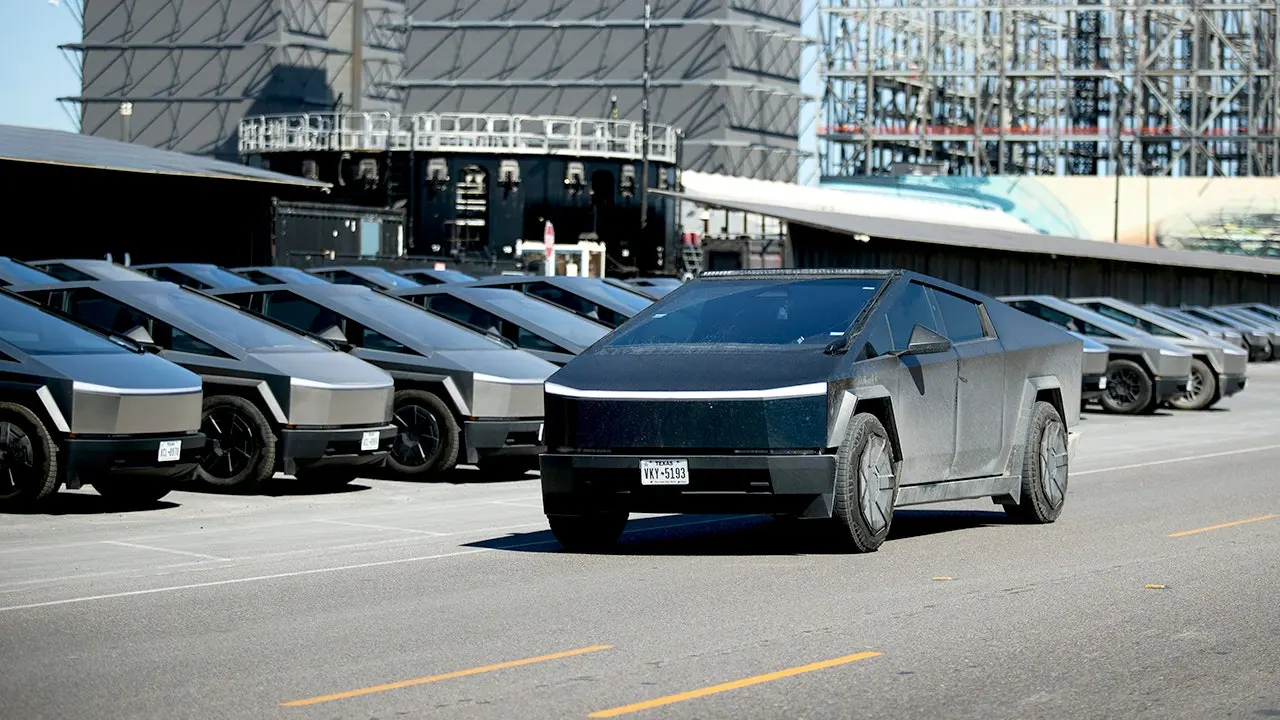
You have to give Tesla credit for one thing. The Cybertruck certainly got people talking. With its sharp angles and stainless steel body, it looked unlike anything else pulling into a supermarket parking lot. Some people loved it. Others couldn't understand why anyone would want one. Either way, you couldn't miss it. Now, the truck that Elon Musk once promoted as the future of pickup trucks appears to be heading toward an early retirement. On November 6, 2026, Musk announced plans to wind down Tesla Cybertruck production at its Texas factory around the middle of 2027. The reason? Tesla wants to make more Cybercabs, its self-driving taxis. For a vehicle that arrived with enormous expectations, that's quite a turnaround. And if you already own a Cybertruck, you may be wondering what this means for your investment. Missed CyberGuy LIVE? Watch the replay and discover 5 ways to travel smarter and save money. Our free CyberGuy LIVE class, 5 Ways to Travel Smarter and Save Money, has ended, but you can still watch the full replay. Kurt "CyberGuy" Knutsson walks you through five practical ways to protect your phone and personal information, avoid common travel scams, find better deals, save money on bookings and use technology to make your travels easier and less stressful. No technical experience is needed. Watch the free replay + downloadable checklist now at CyberGuyLive.com. TESLA ROADSTER FLIES, FLIPS AND HITS 60 MPH IN A FLASH Why Tesla Cybertruck production is winding down Musk made the announcement in a post on X, explaining that Tesla plans to use more of its Texas factory for Cybercab production. The move signals a major change in direction for a company that once expected the Cybertruck to become a significant part of its vehicle lineup. However, there's an important detail worth pointing out. Musk specifically discussed winding down production at Gigafactory Texas. Tesla has not confirmed whether it will move Cybertruck manufacturing elsewhere or discontinue the vehicle entirely. Texas is currently the only known Tesla factory equipped to manufacture its specialized stainless steel body components. Still, the announcement raises an obvious question. Why would Tesla scale back one of its most recognizable vehicles so soon after introducing it? The sales numbers offer a pretty convincing explanation. We reached out to Tesla for clarification on its Cybertruck production plans and what they mean for current owners, but did not hear back before our publication deadline. Cybertruck sales never lived up to the hype When Tesla unveiled the Cybertruck in November 2019, enthusiasm seemed enormous. Musk reported approximately 250,000 reservations within five days. At one point, he suggested demand could support annual sales of 250,000 vehicles. There was plenty of excitement. But those early reservations required relatively small refundable deposits, and many never became actual vehicle purchases. According to Kelley Blue Book estimates, Tesla reportedly sold 38,965 Cybertrucks in the United States during 2024. That number dropped to just 20,237 in 2025, a decline of 48%. Things didn't improve much in 2026. Kelley Blue Book data indicates that Tesla sold 11,586 Cybertrucks during the first nine months of the year, down 28% compared with the same period in 2025. Those figures tell a very different story from the excitement surrounding the original launch. And then there's the price. Tesla originally promised a single-motor Cybertruck starting at $39,900 when it unveiled the truck in 2019. That model never reached customers at the advertised price. On November 5, 2026, Tesla raised Cybertruck prices again. The Dual-Motor AWD version climbed to $82,490, although Tesla paused new orders for that model. That left the Premium AWD as the least expensive version available to order, starting at $92,490 before additional fees. Of course, the Cybertruck offers impressive technology, including powerful electric motors and the ability to supply electricity to external equipment. But at those prices, buyers have plenty of other vehicles to consider. ELON MUSK REVEALS PRICE OF TESLA'S CYBERCAB Cybertruck recalls added to its problems Sales were only part of the Cybertruck's difficult journey. The vehicle also developed a reputation for recalls and manufacturing concerns. According to the National Highway Traffic Safety Administration, Tesla has issued 11 Cybertruck recalls since customer deliveries began in late 2023. Some involved software problems that Tesla could fix remotely. Others required owners to have their vehicles physically repaired. One of the most concerning recalls came in April 2024, when Tesla recalled 3,878 Cybertrucks because an accelerator pedal pad could come loose. In certain circumstances, the pad could become trapped by interior trim and leave the accelerator pressed down, increasing the risk of a crash. Then, in March 2025, Tesla recalled 46,096 Cybertrucks because a stainless steel exterior trim panel could detach while driving. That created a potential hazard for other motorists. The problems continued in 2026. An April recall affected 173 Cybertrucks equipped with certain 18-inch steel wheels. Tesla warned that cracks could develop around brake rotor stud holes, potentially allowing a wheel stud to separate from the hub. That could increase the risk of losing vehicle control. Importantly, Tesla reported no known crashes, injuries or fatalities related to that particular defect when it issued the recall. To be fair, these recalls varied significantly in severity and the number of vehicles affected. A recall alone doesn't establish that every Cybertruck has a safety problem. However, repeated headlines about repairs hardly helped a vehicle already struggling to attract buyers. And remember the famous Cybertruck unveiling? During the 2019 demonstration, two windows cracked when Tesla attempted to demonstrate the strength of the glass. That moment went viral before the first customer ever drove one home. Tesla is betting its future on Cybercab Tesla is making room for a car you may never actually drive. It's called Cybercab, and Musk believes these two-seat, self-driving taxis could become a huge part of Tesla's future. There's no steering wheel or traditional pedals. You get in, tell it where you want to go and let the technology do the driving. At least, that's the idea. Tesla began carrying paying Cybercab passengers in Austin, Texas, in September 2026. We've already covered some of the restrictions Tesla has placed on younger passengers. And while the technology sounds promising, there are still some important questions about safety. Federal regulators are examining how Tesla certified that Cybercab meets vehicle safety standards. That review has yet to establish any safety violations, but Tesla still has questions to answer. What I find especially interesting is how much Musk is willing to bet on this technology. He's scaling back a pickup truck people waited years to buy so Tesla can build more vehicles that drive themselves. That's a pretty big gamble, especially when self-driving technology still has plenty to prove. And I wonder how many people are actually ready to climb into a car with no steering wheel and trust it to get them home safely. TESLA TO WIND DOWN CYBERTRUCK PRODUCTION AT TEXAS FACTORY NEXT YEAR TO MAKE ROOM FOR CYBERCAB What this means to you If you already own a Cybertruck, there's no reason to panic or rush out and sell it because of this announcement. Tesla has not announced that existing owners will lose warranty coverage or access to service. Tesla currently lists a basic vehicle warranty of four years or 50,000 miles for new Cybertrucks, whichever comes first. Its battery and drive unit warranty runs eight years or 150,000 miles, subject to the applicable terms. You can review the details on Tesla's official warranty page. However, the long-term availability of replacement parts deserves attention, especially given the truck's specialized body panels. Tesla has not provided a detailed public explanation of how its production plans will affect future parts supplies. If you're thinking about buying a Cybertruck, consider how long you intend to keep it. Ask Tesla about service support and any outstanding recalls before making a purchase. You can check whether a specific vehicle has an open safety recall by entering its VIN at NHTSA's recall website. Resale value is another consideration. Limited production sometimes makes a vehicle more desirable to collectors. However, weaker demand can push prices in the opposite direction. Nobody can say with certainty where Cybertruck values will go. And if you're shopping for any expensive new vehicle, the Cybertruck offers a useful reminder. Exciting technology can attract attention, but long-term ownership costs deserve just as much consideration. Kurt's key takeaways Here's what gets me about the Cybertruck. Tesla spent years building up excitement around this vehicle. People put down deposits, waited for deliveries and ended up paying a lot more than the original advertised price. Now, roughly three years after the first trucks reached customers, Tesla is preparing to move on. I understand why Musk is excited about Cybercab. The idea of getting into a car and having it drive you home is pretty remarkable. But if I owned a Cybertruck, I'd want some reassurance that Tesla will continue supporting it for years to come. These owners spent serious money believing in Tesla's vision. I think they deserve some straight answers about what happens next. CLICK HERE TO DOWNLOAD THE FOX NEWS APP Do you think Elon Musk is making the right decision by moving on to self-driving taxis? Let us know by writing to us at Cyberguy.com Sign up for my FREE CyberGuy Newsletter Copyright 2026 CyberGuy.com. All rights reserved.
Gathered from external sources. Rights to this text belong to whoever originally published it.