In 2001, architect James Corner won the plan to cap 150 million tonnes of New York rubbish; Freshkills is becoming a 2,315-acre park with restored forests
US News: Discover how Freshkills, once New York City's largest landfill, is transforming into a massive 2,315-acre park featuring restored ecosystems, trails, and recreational areas.
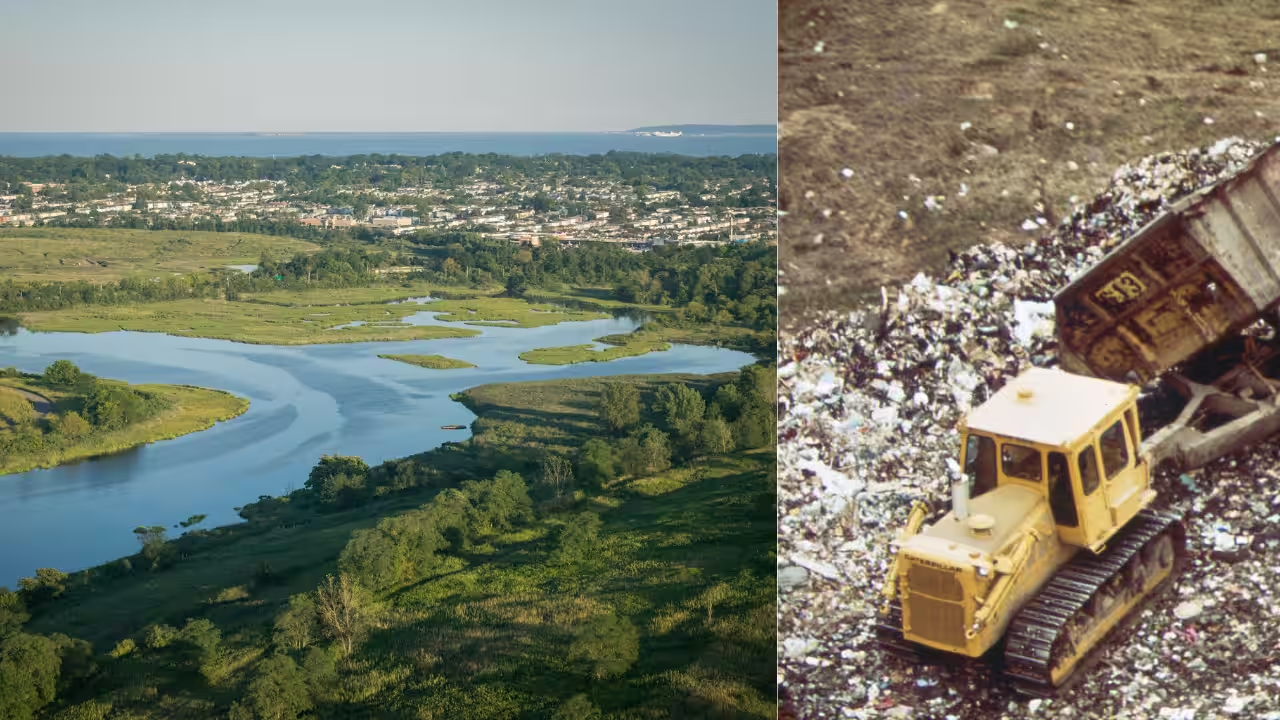
New York City announced the international design competition for Fresh Kills Park in 2001, when the site was still closely associated with its previous role as the city's enormous garbage dump. Fresh Kills had operated on Staten Island since 1948, and contained roughly 150 million tons of garbage by the time it stopped receiving household waste.The winning proposal came from landscape architecture firm Field Operations, led by James Corner. The city's Freshkills Park timeline records December 18, 2001, as the date Field Operations won the design competition. The site had to be capped, monitored and engineered while its landscape was gradually rebuilt around the existing landfill infrastructure.The original plan covered 2,315 acresThe Draft Master Plan described Fresh Kills as a 2,315-acre site, which is nearly three times the size of Central Park. Its proposal included converting the former landfill into a large public landscape that contained tidal marshes, creeks, trails, recreational areas and wildlife habitat. The plan divided the property into five major landscape areas and treated the transformation as a process that would unfold over decades.The scale of the project was partly determined by the landfill itself, and the enormous mounds could not simply be excavated and removed. Instead, the waste would remain underground beneath engineered layers that were designed to isolate it from the surrounding environment. The park's eventual landscape would therefore sit partly on top of a massive waste system.James Corner's plan turned a closed landfill into a landscapeNew York City launched the international design competition for Fresh Kills Park on September 5, 2001, as officials prepared for the landfill's final closure and considered how the enormous Staten Island site could eventually be reused. Three months later, on December 18, the city selected Field Operations, the landscape architecture firm led by James Corner, as the competition winner. Corner's team envisioned a large public landscape built over the capped landfill, with restored wetlands, forests, grasslands, waterways, trails and areas for recreation. The design also worked with the landfill's existing topography, turning the massive waste mounds into rolling hills that would become part of the future park. According to the New York City Department of Parks & Recreation's Fresh Kills project history, the competition was followed by master planning and public outreach beginning in 2003, while the city's draft master plan described the site as a 2,315-acre landscape containing about 150 million tons of residential waste. The project therefore required more than landscape design, since the landfill had to be capped and monitored before large sections could safely support the forests, wetlands and public spaces that were envisioned in Corner's winning proposal.The landfill's engineering remains underneathThe city's master plan described the landfill as a highly engineered landscape, and sections of the site were covered with layers designed to contain the waste and manage water and landfill gases. That infrastructure remains part of Freshkills' long-term operation.The park's landscape was therefore designed around the realities of the landfill rather than treating those realities as something that could be erased. The large mounds that eventually became grassy hills and viewpoints were created by decades of waste disposal, while drainage systems, landfill-gas infrastructure and monitoring remain necessary beneath the park.Parts of the park are already openFreshkills Park is now generally described by its current management as a 2,200-acre landfill-to-park project, and is being developed in phases, with the edges of the site opening before the interior areas. Schmul Park was redesigned in 2012, while Owl Hollow Soccer Fields opened in 2013, and the New Springville Greenway opened in 2015.North Park Phase 1 opened in 2023, and includes paths for walking and biking, a bird observation tower, a wetland overlook and newly planted vegetation. Visitors can look across Main Creek and the restored wetlands from the park's elevated areas. Most of Freshkills remains closed outside scheduled tours and events because the larger transformation is still underway.A park built around what could not be removedThe waste that created the landfill has not disappeared; instead, the city has spent decades engineering the site so that a new landscape can exist above and around it. The original plan called for more than 40 miles of trails and pathways across the 2,315-acre site, and also proposed extensive ecological restoration.Some of those plans have changed as the project has moved from design to construction, and the park is now described as 2,200 acres. The hills, wetlands and forests that are taking shape on Staten Island are being built around the infrastructure that still contains the city's former garbage dump.Catch the latest World News and Live updates. Download the TOI app.
Topics in this story
Gathered from external sources. Rights to this text belong to whoever originally published it.