In 2005, Missy Hammerstrom gave a Louisville child her apple for the weekend; Blessings in a Backpack later provided 30 million hunger-free weekends to more than 1 million children
Discover how a simple act of kindness led to the creation of Blessings in a Backpack, providing 30 million hunger-free weekends for over 1 million children across the US since 2005. Learn about the impact and growth of this vital program.
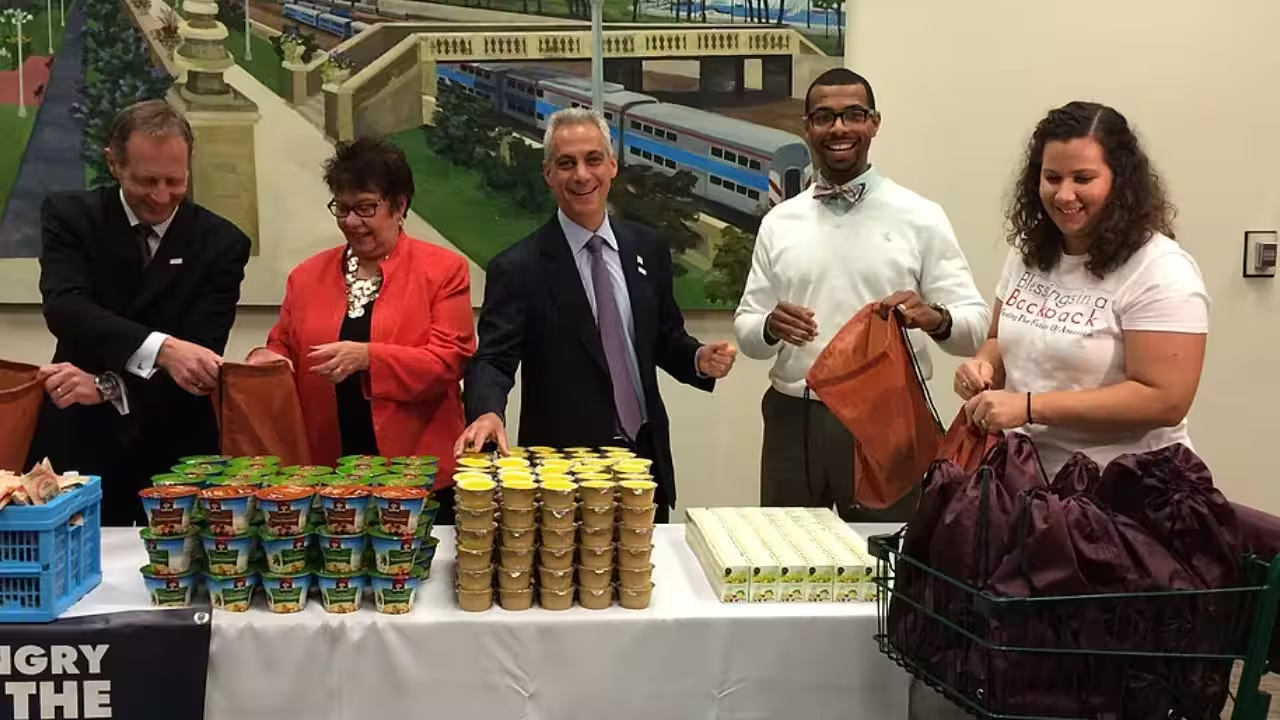
In 2005, a simple request from a child at a Louisville elementary school gave Missy Hammerstrom a glimpse of a problem that could easily go unnoticed. While having lunch with students, Hammerstrom was asked if she could give a young girl her apple. When she asked why, the child explained that she wanted to take it home so she would have something to eat over the weekend. That small moment helped inspire Blessings in a Backpack, which says it has since provided 30 million hunger-free weekends to more than 1 million children across the United States.According to Blessings in a Backpack, Hammerstrom was volunteering at an elementary school in Louisville, Kentucky, in 2005 when a little girl asked for her apple because she wanted to take it home for the weekend, saying she did not have enough to eat. The encounter inspired Hammerstrom to take action. She cleared space in her garage, bought backpacks, filled them with food and donated them to the school. That first effort fed 30 children that weekend. From those first backpacks, Blessings in a Backpack grew into a national organisation providing food to children over weekends.From one Louisville school to a national programmeWorking with community leaders and a Louisville philanthropist, Hammerstrom founded the first Blessings in a Backpack program at Roosevelt Perry Elementary School. The program spread throughout Louisville and Kentucky before being launched in other states. In December 2008, Blessings in a Backpack launched the first program outside Kentucky and incorporated as a 501(c)(3) charitable organisation. Children who might otherwise face food shortages over the weekend receive food to take home on Friday, helping bridge the period when school-based meals are unavailable. The organisation says its mission is to mobilise communities, individuals and resources to provide weekend food for school-aged children who might otherwise go hungry.However, the programme has grown considerably since those early days. According to Blessings in a Backpack, during the 2024–2025 academic year, more than 2.7 million bags of ready-to-eat food were distributed to children at nearly 1,000 schools across the US. The programme has also expanded to more than 1,200 community initiatives nationwide. The organisation also states that its work since 2009 has helped more than 1 million children and provided 30 million hunger-free weekends.Why the weekend gap mattersThese programmes are designed to fill a gap that appears when the school week ends. Children may receive breakfast and lunch at school during the week, but those meals are not provided on Saturdays and Sundays. For families already trying to stretch their budgets, covering those extra meals can add another challenge.There is also growing interest in whether weekend food programmes can offer benefits beyond putting food on the table. Blessings in a Backpack conducted its own evaluation in collaboration with Ipsos and Quaker Oats, with participants reporting that they felt cared for by their community and found it easier to focus on school. These responses point to possible wider benefits, although they do not by themselves establish that the programme was the direct cause.A legacy that outgrew one appleIn 2018, Hammerstrom’s family joined Louisville volunteers to distribute more than 400 food-filled bags at Engelhard Elementary School. The city also honoured her work by declaring September 29, 2018, as Missy Hammerstrom Day. Hammerstrom had died in 2010, but her family continued to take part in the effort, keeping her connection to the programme alive.Her story is also a reminder that community efforts can take on a life of their own. What began as a local response to a child’s need eventually became a much larger organisation, with volunteers, schools and communities across the country taking part. By the time her family returned to Engelhard Elementary in 2018, the programme had moved well beyond its Louisville beginnings, while still carrying the same basic idea of making sure children had food to take home for the weekend.You use AI every day. Now get your AI Quotient. Take the AIQ test.
Topics in this story
Gathered from external sources. Rights to this text belong to whoever originally published it.