Trump says he would ‘love’ to see a united Ireland during visit for golf tournament
President Donald Trump said Saturday he would “love” to see Ireland unify with the U.K.’s Northern Ireland, remarks that received immediate pushback from unionists in the region.
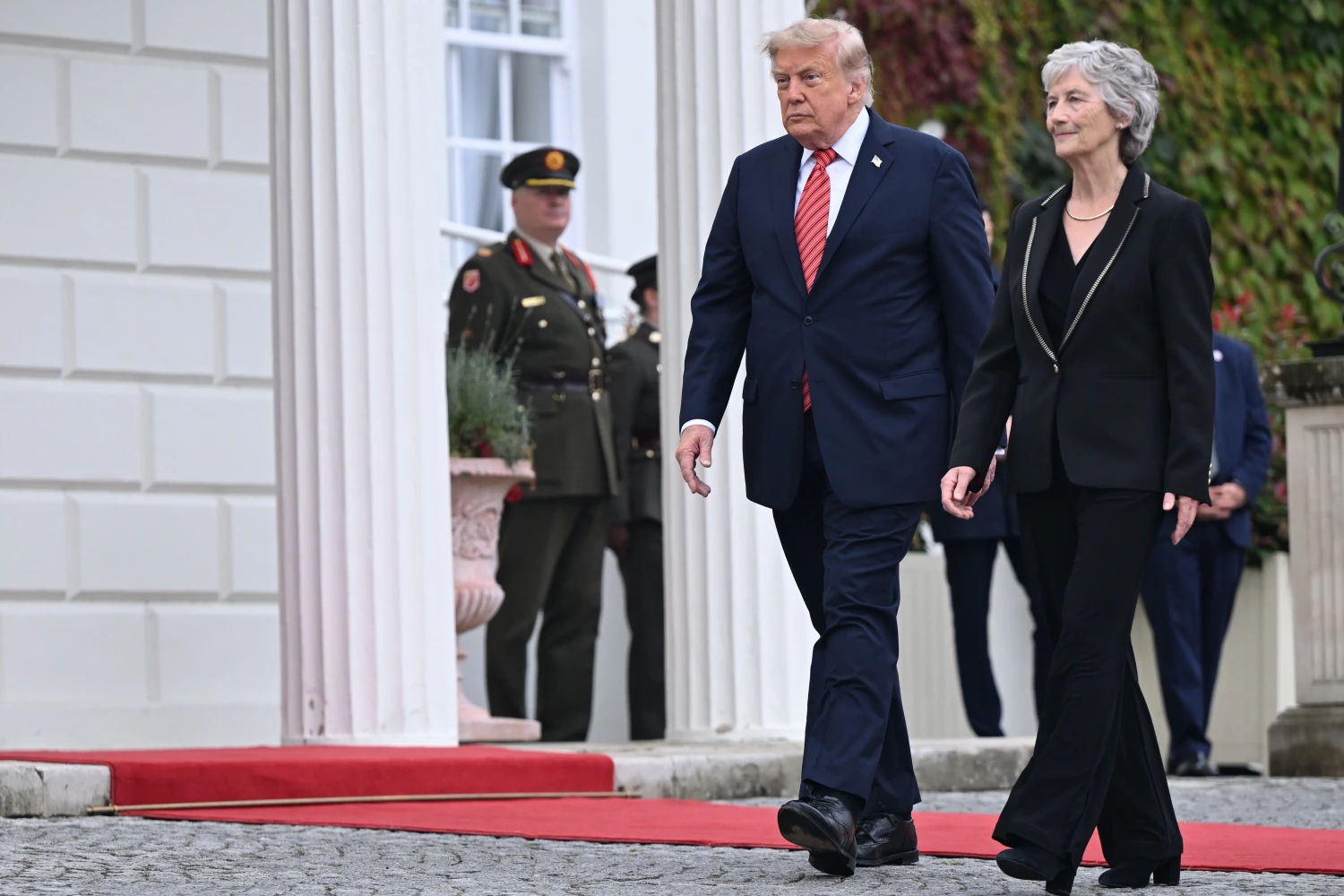
President Donald Trump said Saturday he would “love” to see Ireland unify with the U.K.’s Northern Ireland, remarks that received immediate pushback from unionists in the region. The comments come two weeks after new British Prime Minister Andy Burnham said a referendum on Northern Ireland leaving the United Kingdom was “off the table.” Trump, who is visiting Dublin ahead of a golf tournament at one of his resorts, told reporters: “Well, I don’t want to cause any problems, but I will tell you, I’d love to see it unified. It’s going to happen eventually.” “Now the U.K. will have something to say about it ... but I think it would be a great thing,” he added, while sitting next to Ireland’s Prime Minister Micheál Martin. At a later event with business leaders, Trump said that there was “no good answer” to the question, but reaffirmed: “It would be, I think, a very cool thing, to be honest with you.” Under the terms of the 1998 Good Friday Agreement, the power to call a referendum in Northern Ireland sits with the British government, with a duty to call a border poll if it appears likely that a majority of people in Northern Ireland would vote for Irish unification. The accord ended decades of violence between Irish nationalists seeking a united Ireland and unionists who wanted Northern Ireland to remain part of the U.K. Polling continues to show a comfortable majority in Northern Ireland favor remaining in the U.K., though the gap has narrowed slightly since Britain’s departure from the European Union. Ireland remains in the bloc, with bespoke arrangements for Northern Ireland put in place to avert fears of a hard border and substantial trade barriers on the island. Asked by NBC News whether Downing Street had a response to the president’s remarks, a spokesperson said British Prime Minister Andy Burnham intends to adhere to the Good Friday Agreement. Under the accord, the matter would be reviewed “when public opinion has changed to the point at which the call has to be considered,” Burnham said earlier this week. The leader of Northern Ireland’s Democratic Unionist Party, Gavin Robinson, pushed back at Trump’s comments, stressing that Northern Ireland is part of the United Kingdom “because that is the settled democratic will of its people.” “President Trump knows better than most that elections matter,” he wrote in a post on X. “Northern Ireland’s constitutional future will be decided by the people of Northern Ireland, not by commentary in London, Dublin or Washington.” Kemi Badenoch, leader of Britain’s opposition Conservative Party, said Trump was “shooting from the hip as usual” in his remarks, adding: “This sort of loose talk about the future of democratic countries is deeply unhelpful and creates unnecessary tension.” Trump’s remarks did not win him much approval from the largest nationalist party, Sinn Féin, which is left-wing and deeply opposed to many of the U.S. president’s other political views. Chris Hazzard, an MP for the party, wrote on X: “Broken clocks and all that…” On his visit, Trump also met Irish President Catherine Connolly, who was elected head of state last year. When Trump last visited Ireland as president in 2019, Connolly, an outspoken politician with far-left foreign policy views, protested outside Shannon Airport in western Ireland. Some supporters had urged her to speak out against U.S. military actions around the world and defend Ireland’s neutrality. Anti-war and anti-Trump protests were planned in Dublin and in western Ireland near the Trump International Golf Links in Doonbeg. One protester held a Palestine flag over a fence near the Irish president’s residence. Ireland is one of the European Union’s most pro-Palestinian countries and in July passed a law restricting trade in goods with settlements in the Israeli-occupied West Bank. U.S. lawmakers and the U.S. ambassador to Ireland criticized the law. Strong ties Martin, the Irish prime minister, has so far avoided political flaps with the U.S. “The relationship between Ireland and the United States is very important economically,” he told reporters ahead of the visit. “It’s very, very significant both ways.” U.S.-owned companies employ about 10% of workers in Ireland after successive governments prioritized their jobs and corporate tax revenue over decades, handing Ireland the healthiest public finances in Europe in recent years. Including Trump, eight sitting U.S. presidents have visited Ireland, starting with John F. Kennedy in 1963. But this trip has some hallmarks of Trump’s typical weekends, which often revolve around golf outings at his company’s properties. The Trump Organization took control in 2014 of the Doonbeg course, which is hosting the Irish Open golf tournament this weekend. Trump is expected to help present the trophy on Sunday to the tournament champion.
Topics in this story
Gathered from external sources. Rights to this text belong to whoever originally published it.