In 1887, Robert Lincoln transferred his family home to Illinois with conditions for its preservation; today it anchors Lincoln Home National Historic Site
US News: Explore the fascinating history of Abraham Lincoln's family home in Springfield, Illinois, and how it became a National Historic Site dedicated to preserving Lincoln's legacy and ensuring public access for generations to come.
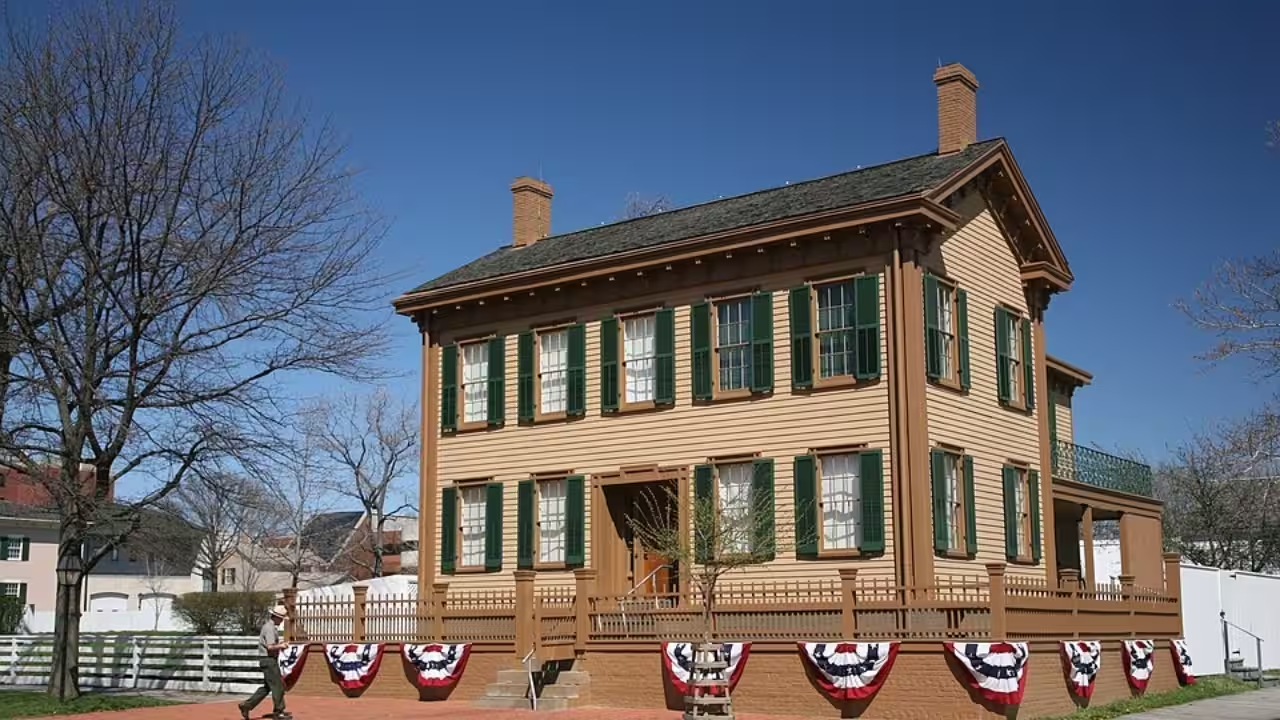
In 1887, Robert Todd Lincoln transferred his family’s Springfield home to the State of Illinois, ensuring that the house where Abraham Lincoln and his family had lived for 17 years would be preserved for the future. Robert’s deed imposed two important conditions: the homestead had to be forever kept in good repair and should remain open to the public without an admission charge. Today, the same house is the centrepiece of Lincoln Home National Historic Site, which preserves the Lincoln residence and 14 other houses from the Lincoln-era neighbourhood in Springfield.The house where Abraham Lincoln and his family lived for 17 yearsThe house was completed in December 1839 and stood only one and a half storeys high. Five years later, it became the home of Abraham Lincoln, Mary Todd Lincoln and their young son Robert. The family moved into the house on May 1 1844, and it remained their home until they left Springfield for Washington, DC, in 1861.During the Lincolns’ years there, the property changed considerably, with the family carrying out a series of alterations and additions between 1846 and 1860. Bedrooms and other rooms were added, the kitchen was moved, stoves were installed, a barn was constructed, and the original one-and-a-half-storey cottage was gradually transformed into the twelve-room, full two-storey residence that visitors see today.By 1860, the Springfield home had also become the setting from which Lincoln’s political career reached the presidency. After winning the presidential election that November, Lincoln and his family prepared to move to the nation’s capital. The National Park Service reported that following their move to Washington, DC, the house was not sold; instead, it was rented to another family while the Lincolns stored their best furniture in anticipation of a potential return.However, they never returned because Abraham Lincoln was assassinated on 14 April 1865 and died the following morning. Mary Lincoln did not return to live in Springfield after her husband’s death, and the property subsequently became a rental home, passing through several occupants before its preservation history began to take place.Robert Lincoln made preservation a conditionIn 1883, Osborn H. Oldroyd, a Lincoln admirer and collector, became the property’s fifth and final tenant. The NPS reported that the following year, Oldroyd opened a Lincoln and Civil War museum inside the house. However, his approach was not the same as the preservation model Robert Lincoln would impose later. According to the federal organisation, Osborn H. Oldroyd charged visitors admission and even sold pieces of the house and other features of the property.The decisive change came on 16 June 1887 when Robert Lincoln deeded the family home to the State of Illinois. The NPS describes this as a donation, while other Illinois historical documents describe the transfer as a symbolic $1 transaction. Rather than a commercial conflict, this nominal fee functioned as a standard legal consideration to formalize the contract, confirming the important outcome that Robert Lincoln gave up private ownership while imposing conditions intended to protect the house and its public character.The deed specified that the homestead was to be kept in good repair permanently and remain free to the public. That condition was significant because it linked the transfer of ownership directly to the property’s future preservation. Following the transfer, Oldroyd was named the homestead’s first caretaker as the state wanted to regulate the site's existing tourist trade and lived on its second floor, thus bringing his rogue souvenier sales to a strict legal end. Notably, the preservation requirement Robert Lincoln established in 1887 would eventually outlast both the original family and the state ownership that followed.From Illinois landmark to national historic siteWhile the state continued to preserve the house for decades, a major restoration was completed in 1955, after which the second floor was opened to the public. Five years later, in 1960, the Lincoln Home was designated a National Historic Landmark, recognising its importance as a place directly associated with Abraham Lincoln’s life and political career.The next major change came on 18 August 1971 when President Richard Nixon came to Springfield to authorise the establishment of Lincoln Home National Historic Site. The site officially became a National Historic Site on 9 October 1972. The property remained under state ownership until that year, after which it was transferred to the National Park Service. The federal organisation now preserves 14 other houses dating from the Lincoln-era neighbourhood, in addition to the Lincoln Home, along with the surrounding neighbourhood.The original requirement for public access also survives in modern form. While the NPS utilises a free ticketing system to manage crowd capacity and preserve the historic structure, admission to the guided tours remains completely free of charge. Today, the house remains a focal point of the national historic site and continues to be interpreted as the only home Abraham Lincoln ever owned.Catch the latest World News and Live updates. Download the TOI app.
Topics in this story
Gathered from external sources. Rights to this text belong to whoever originally published it.