Bessbrook: Pair sentenced for human trafficking crimes
The pair were arrested in November 2022 in what was described at the time as the PSNI's largest operation against human trafficking.
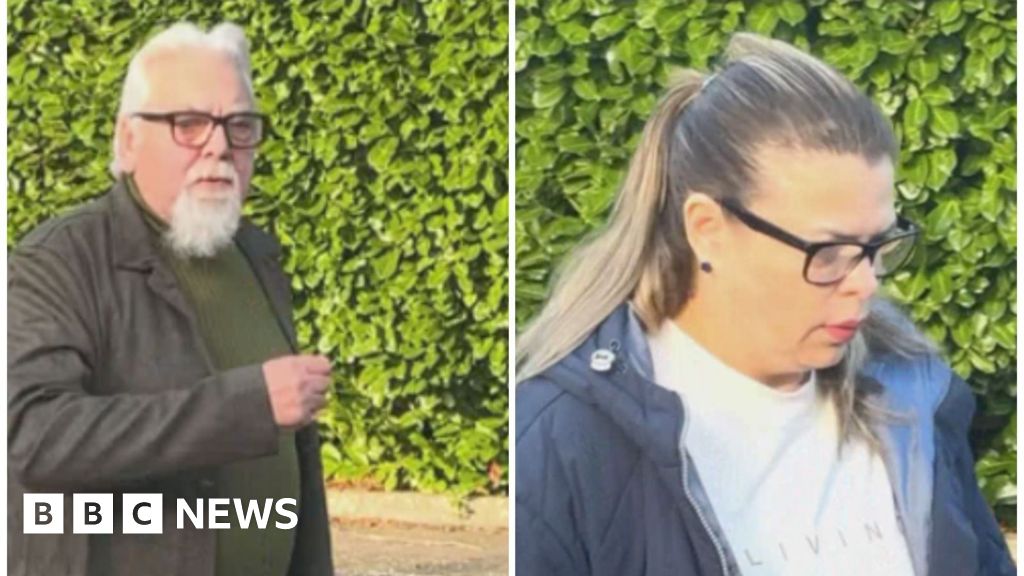
A man and woman have been sentenced for a series of offences including human trafficking.
Gerald Corrigan, 66, of Keeragh Park, Pomeroy, previously pleaded guilty to human trafficking, possessing criminal property and transferring criminal property. He was sentenced to 16 months; this was broken down as eight months in custody and eight months on license.
Mavie Martins Mariano 51, of Ard Aveen Park, Bessbrook, previously pleaded guilty to human trafficking, acquiring criminal property, possessing criminal property, transferring criminal property, brothel keeping and controlling prostitution.
Mariano, who is originally from Brazil, was given a three year sentence.
This is broken down as three months in custody and 33 months on license.
The court heard that both defendants had already spent time in custody on remand and therefore it was likely that time in custody had been served.
Speaking at Dungannon Crown Court on Tuesday, Judge Brian Sherrard said he took into account the fact that both defendants had pleaded guilty and had expressed remorse.
He said he also considered the impact of imprisonment on Mariano's family and Corrigan's health issues when delivering his sentence.
Judge Sherrard said: "You were both concerned in the trafficking of women for the purpose of sexual exploitation and you both acquired a considerable amount of money during this offending period."
He added: "I acknowledge this is not a case involving threats or violence and it is accepted by the prosecution in this case there is no evidence of coercion and the defence contend these women were acting voluntarily."
The pair were arrested in November 2022 in what was described at the time as the Police Service of Northern Ireland's (PSNI) largest operation against human trafficking.
During the operation police said that 27 brothels were raided across Northern Ireland, with some 150 officers involved.
The offences took place between 23 March 2020 and 21 November 2022.
The court had previously heard that a large amount of money in the region of £174,000 was transferred between the two defendants.
At a previous sentencing hearing in Dungannon Crown Court on 22 September the prosecution summarised their case against Corrigan and Mariano.
The prosecution said the case boiled down to "the organisation of sex work and controlling of prostitution" in an operation that spread throughout Northern Ireland over a period of two years and eight months.
In relation to Mariano, a prosecuting barrister said she had a lead role in the offending and there was evidence that £174,000 passed between the accounts of the two defendants.
The barrister said that Mariano had admitted at police interview to being involved in the booking of property for women described as "escorts" and that an apartment had been booked by her on 22 occasions for "sex workers".
The prosecuting barrister added that "once you get into arranging the properties and organising them, it is controlling prostitution".
The prosecution said Mariano had also admitted during police interview to helping to organise escort adverts and organising the moving of around "five to six girls a week".
The judge asked if there had been any "evidence of lifestyle change or any large amounts of money benefiting her".
The prosecuting barrister outlined that Mariano had funded a trip to Turkey for gastric implant surgery for a "not insignificant amount".
A prosecution barrister also said that the case revolved around "the exploitation of sex workers" and there was "always harm in this type of offending" adding that "it is built into it".
In relation to Corrigan, the prosecution outlined how he was primarily a driver of sex workers and he had a role of getting and collecting money.
A prosecution barrister said that Corrigan had accepted he had "lodged money into his bank account knowing the money came from prostitution".
A prosecution barrister also said Corrigan's role was "the moving of sex workers with the knowledge and acceptance that were being exploited".
One of the central arguments from the defence barristers in the case was there was no sign of coercion of the women in these cases.
A defence barrister also addressed the prosecution's point about Mariano's trip to Turkey.
A defence barrister said: "In respect of when the prosecution can only muster that this lady went to Turkey to get a gastric band fitted, this speaks for itself.
"Citizens have been advised not to go Turkey because [these procedures are] alarmingly cheap and inquests have identified that people have died.
"This lady does not have money, she has no trappings of wealth, zero, had she had money she would have went privately to somewhere like Dublin."
On Mariano's role a defence barrister added that she was "not a principal, she was not an organiser and she played no leading role".
The defence barrister also raised concerns about the impact that a custodial sentence for Mariano could have on her family.
A defence barrister added: "There was no coercion in this case, these were adult women engaging in sex work voluntarily".
Commenting on Corrigan's role, a defence barrister said that he "wasn't involved in the overall scheme, he knew he was driving prostitutes, but any planning was limited" and that he gained "a very modest amount of financial gain".
A defence barrister also outlined that Corrigan had already spent 10 months in jail and that he suffered from ill health, including prostate cancer.
Det Insp Rachel Miskelly, from the Police Service of Northern Ireland's organised crime branch, said many of the victims were originally from Brazil and were brought here with "false promises of a better life".
"We believe the victims were specifically targeted due to their vulnerability, namely their lack of English language and their immigration status," she said.
"This is so typical of what human traffickers do. They prey on victims who are in any way vulnerable, and those who are afraid or unable to speak out."
Topics in this story
Gathered from external sources. Rights to this text belong to whoever originally published it.