A Colorado landowner protected more than 7,400 acres from future development in 2025; the vast ranch remains home to elk, bears and river otters
Scenic Mesa Ranch in Colorado receives permanent protection from development, conserving wildlife habitats and agricultural land for future generations. Discover the importance of conservation easements.
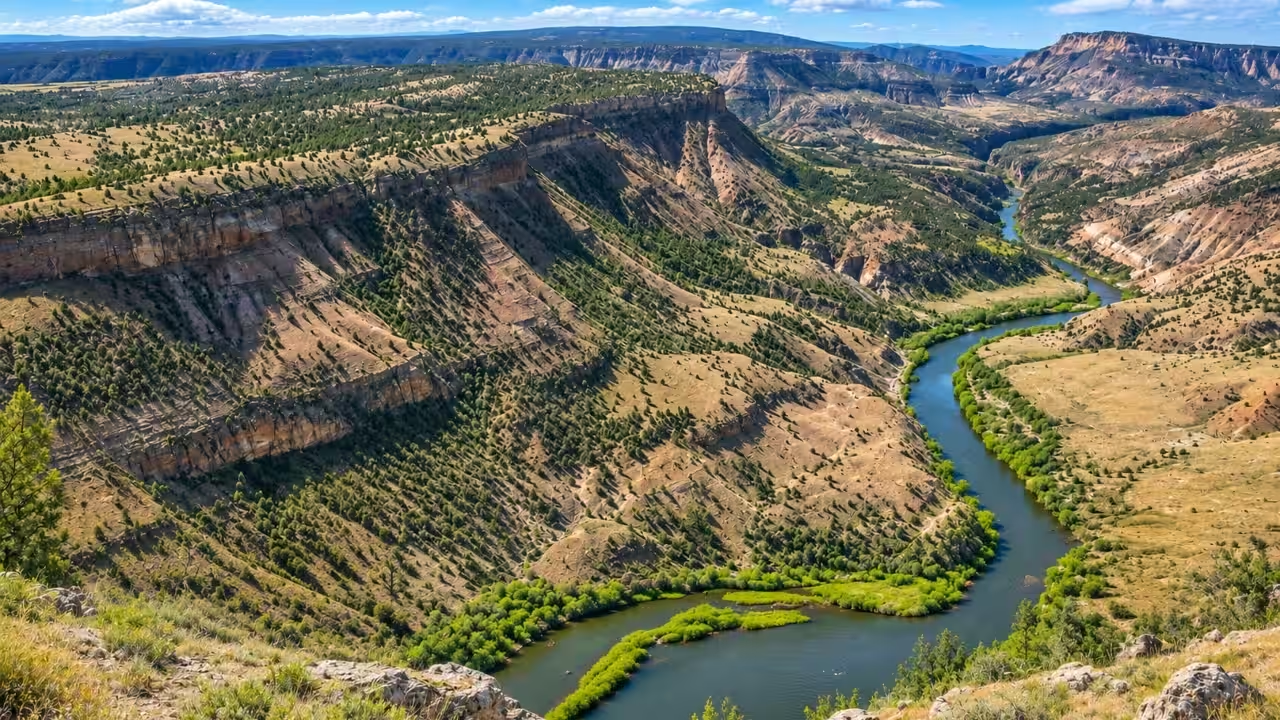
In western Colorado, a huge working ranch has received permanent protection from future development. This move has safeguarded the landscape in which agriculture, wildlife and river ecosystems all coexist. The Colorado West Land Trust, in February 2025, announced that owner Peter Slaugh had entered into a partnership with the organisation to conserve Scenic Mesa Ranch, which is a 7,419-acre estate located south of Hotchkiss in the North Fork Valley. Situated close to the confluence of two major waterways, the ranch contains extensive river corridors, canyons, grazing land and wildlife habitats. Therefore, the property’s agricultural legacy and ecological importance are protected by the easement while also allowing permitted ranching activities to continue.Why this 7,400-acre ranch is important for wildlife The location of the Scenic Mesa Ranch is considered strategically important as it is located south of Hotchkiss, stretching along the river corridors upstream from the meeting junction of the North Fork of the Gunnison River and the mainstem of the Gunnison River. According to the Colorado West Land Trust, the region also helps connect lower-elevation public lands with the West Elk Wilderness. The ranch is adjacent to more than 13,000 acres of already conserved land. This conservation easement, therefore, adds to an existing network of protected landscapes.On the other hand, the landscape’s ecological value comes from the variety of environments contained within the boundaries. The vegetated zones alongside rivers and streams fall under its riparian areas and provide habitat for aquatic wildlife and water-dependent bird species. The organisation identifies bald eagles, golden eagles, river otters, elk, mule deer, bighorn sheep, mountain lions and black bears among animals associated with the estate. In addition to that, the ranch contains winter range that elk use, providing forage and cover during colder months. Protecting these various habitats within one estate helps retain the environmental conditions and connections on which wildlife depends.How a conservation easement protects land without completely ending ranchingThrough a conservation easement, the protection of Scenic Mesa Ranch was achieved. In other words, this was a voluntary legal agreement that allows a landowner to retain private ownership while permanently restricting specified development rights. Under this agreement, the Colorado West Land Trust holds the easement and is responsible for enforcing its terms. Usually, these restrictions prevent prohibited subdivision and development, although the exact conditions depend on the individual agreement. In an interview with KVNF in April 2025, the organisation’s conservation director Ilana Moir explained that the arrangement allows land to remain privately owned while also preserving its values.This distinction is important at Scenic Mesa Ranch because the estate continues to support agricultural production. As per the original conservation arrangement, its existing uses include livestock grazing, irrigated hay production and dryland pastures. Furthermore, the agreement permanently secures the ranch’s senior water rights. This helps protect the legal water resources linked to its continued agricultural use. Slaugh, in a statement, shed light on the importance of water in Colorado’s dry climate, explaining that it plays a key role in maintaining healthy habitats.The landowner’s long-term vision for the ranchSlaugh’s decision to establish the easement was also influenced by his thinking about the future of the property. In an interview with KVNF’s Local Motion on April 15, 2025, he mentioned that he was born in Pennsylvania and spent most of his adulthood in California’s Bay Area and the Tahoe region before moving to western Colorado. He had not originally come to the North Fork Valley to raise cattle or grow crops; instead, he was drawn to the landscapes.One of Slaugh’s concerns was whether his children would be able to retain the entire property eventually. He reportedly said that establishing the conservation easement helped resolve such questions regarding the ranch’s long-term future, as the agreement provides a way to protect the landscape’s conservation values even if it sees a change in ownership in coming years.The next steps for the Scenic Mesa conservation effort will involve improving the conditions of the natural habitats. The organisation, along with Slaugh, reportedly plans to collaborate on aquatic and upland restoration projects, such as river restoration work with the Western Colorado Conservation Corps. The broader restoration effort is also expected to address invasive species and riparian corridors.You use AI every day. Now get your AI Quotient. Take the AIQ test.
Topics in this story
Gathered from external sources. Rights to this text belong to whoever originally published it.